- Salary statistics
- Stucco salary
Stucco salary
Latest available salary statistics are for 2025. Compare average pay, salary range and related job listings.
41 600 - 42 300 SEK / month
Bygg & anläggning
Related tools
Salary progression Stucco
What does a stuccator do? – Tasks and work environment
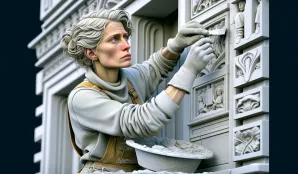
A stuccator works with creating and restoring decorative surfaces in plaster, stucco, or concrete, both indoors and outdoors. Tasks include shaping stuccatures for ceilings and walls, repairing and preserving historic building details in cultural heritage sites. The profession requires high craftsmanship, attention to detail, and sometimes work at heights or in confined spaces. The work is often performed on construction sites, in historic environments, and sometimes in private homes, with material choices and techniques varying depending on the project.
Salary development over time
Over the past three years, the salary of a stuccator has shown relatively stable development. In 2022, the average salary was 36,200 SEK per month. Between 2022 and 2023, the average salary increased by about 3% to 42 300 SEK, where it has remained through 2024. This stability indicates that the market for stuccators is balanced, with continued demand for skilled craftsmen in construction and restoration. Salary development is influenced by factors such as the construction industry's economic situation, the availability of larger renovation projects, and the need for specialized skills in cultural environments.
Stuccator salary – comprehensive overview
- Average salary: 42 300 SEK/month
- Lowest/Highest salary: Varies depending on experience and project, but average values are around 42 300 SEK
- Hourly wage: 224 SEK
- Gender differences: Men earn 42 400 SEK, data on women is not available
- Regional differences: Specific regional differences are not available, but variations may occur depending on demand and project type
Education and qualifications
To work as a stuccator, a high school education in construction and civil engineering or an apprenticeship with practical training in masonry and stucco is typically required. Practical experience is highly valued, especially in restoration and advanced formwork. Additional courses or certifications can increase employability and enable specialization within the field.
- High school education: Construction and civil engineering program, masonry specialization (3 years)
- Vocational/apprenticeship training: Practical training with supervision
- Certificates: Any industry-specific certifications for craftsmen
- Internship: Strongly recommended to gain professional experience
- Prerequisites: Good physical condition and interest in craftsmanship
Many stuccators work on restoring historic buildings, which involves using traditional techniques and materials to preserve cultural heritage. This makes the profession an important link between the past and present within the construction industry.
Common benefits and compensations
Stuccators are often offered benefits such as work clothing, wellness allowances, insurance, and sometimes access to tools and equipment via the employer. Some employers also provide opportunities for skill development and further training within specialized areas.
Competition and challenges
Competition in the stuccator profession is influenced by economic conditions and the availability of construction and renovation projects. A shortage of experienced stuccators has been noted nationally, which can lead to good employment opportunities but also increased demands for craftsmanship and flexibility. Challenges include physically demanding work, exposure to dust, and sometimes working at heights or in difficult environments. Digitalization and new materials may also require continuous skills development.
Tips for aspiring stuccators
To succeed as a stuccator, it is good to combine accuracy and patience with a genuine interest in craftsmanship and building preservation. Practical skills are best developed through extensive training, so early internships and working with experienced colleagues are highly recommended. Creativity and a sense of form facilitate the creation of decorative details, while good physical condition and endurance are needed to handle heavy materials and long workdays. Flexibility and a willingness to learn new techniques are important to meet the demands of different clients and projects. Being solution-oriented and having good teamwork skills make it easier to work in teams and handle challenges on site.
Key facts about Stucco Artist
- Education level: High school or vocational training in construction
- Work environment: Construction sites, cultural environments, and private homes
- Demand: Great opportunities for work nationwide
- Employment form: Often employed but sometimes self-employed
- Special skills: Restoration and traditional techniques
Career paths and future prospects
After three to five years in the profession, a stuccator can develop into a supervisor, a specialist in restoration, or start their own business in construction and crafts. The employment agency’s forecast for the trades of bricklayers and tilers, which includes stuccators, indicates a very good job market with high demand and a shortage of skilled workers. Over five years, demand is expected to remain unchanged, providing stable career opportunities and good access to jobs. With increased experience and further education, a stuccator can also take on more advanced and artistic projects or work as a consultant in building preservation.
Frequently asked questions about Stucco Artist
- What is the average salary of a stuccator?
- A stuccator has an average salary of 42 300 SEK per month. - How do you become a stuccator?
- Most commonly, it requires a vocational training in construction and civil engineering or an apprenticeship with practical training. - In what work environments do stuccators work?
- Stuccators work on construction sites, in cultural heritage environments, and sometimes in private homes. - Are there many job opportunities for stuccators?
- Yes, there is high demand and a shortage of stuccators, with many vacancies nationwide. - What is the hourly wage for a stuccator?
- The hourly wage for stuccators is 224 SEK according to current data. - What personal qualities are important?
- Attention to detail, patience, creativity, and good physical condition are important qualities for stuccators. - Are there wage differences between men and women?
- Salary statistics show that men earn 42 400 SEK; data on women is not available.

Salary distributed by age and sector
| Age | Base salary | Monthly salary | |
|---|---|---|---|
| 45-54 | 42400 kr | 43700 kr | |
| 55-64 | 41000 kr | 41800 kr | |
| Snitt | 41600 kr | 42300 kr |
| Age | Base salary | Monthly salary | |
|---|---|---|---|
| Snitt | 36800 kr | 36800 kr |
| Age | Base salary | Monthly salary | |
|---|---|---|---|
| Snitt | 36800 kr | 36800 kr |
| Age | Base salary | Monthly salary | |
|---|---|---|---|
| 45-54 | 42400 kr | 43700 kr | |
| 55-64 | 41000 kr | 41800 kr | |
| Snitt | 41600 kr | 42300 kr |
| Age | Base salary | Monthly salary | |
|---|---|---|---|
| 45-54 | 42400 kr | 43700 kr | |
| 55-64 | 41000 kr | 41800 kr | |
| Snitt | 41600 kr | 42300 kr |
| Age | Base salary | Monthly salary | |
|---|---|---|---|
| 45-54 | 42400 kr | 43700 kr | |
| 55-64 | 41000 kr | 41800 kr | |
| Snitt | 41700 kr | 42400 kr |
| Age | Base salary | Monthly salary | |
|---|---|---|---|
| Snitt | 37000 kr | 37000 kr |
| Age | Base salary | Monthly salary | |
|---|---|---|---|
| Snitt | 37000 kr | 37000 kr |
| Age | Base salary | Monthly salary | |
|---|---|---|---|
| 45-54 | 42400 kr | 43700 kr | |
| 55-64 | 41000 kr | 41800 kr | |
| Snitt | 41700 kr | 42400 kr |
| Age | Base salary | Monthly salary | |
|---|---|---|---|
| 45-54 | 42400 kr | 43700 kr | |
| 55-64 | 41000 kr | 41800 kr | |
| Snitt | 41700 kr | 42400 kr |

About the data
All information displayed on this page is based on data from the Swedish Central Bureau of Statistics (SCB), the Swedish Tax Agency and the Swedish employment agency. Learn more about our data and data sources here.
All figures are gross salaries, meaning salaries before tax. The average salary, or mean salary, is calculated by adding up the total salary for all individuals within the profession and dividing it by the number of individuals. For specific job categories, we have also considered various criteria such as experience and education.
Profession Stucco has the SSYK code 7112, which we use to match against the SCB database to obtain the latest salary statistics.
-

Plasterers and Masons Wanted – Developmental Construction Roles
Bricklayers etc.
Fri, 10 Jul 2026 - 21:55



Compare salary, work tasks and job outlook in adjacent occupations to find roles with similar skills or pay levels.
-

Average salary: 40 500 SEK/month • Bygg & anläggning
Concrete workers
Compare with Stucco
Tue, 14 Jul 2026 - 17:57 -

Average salary: 40 800 SEK/month • Bygg & anläggning
Insulation installers
Compare with Stucco
Wed, 15 Jul 2026 - 00:52 -

Moisture technician, inspector salary
Average salary: 50 800 SEK/month • Bygg & anläggning
Engineers and technicians in construction and engineering
Compare with Stucco
Wed, 15 Jul 2026 - 04:22 -

Average salary: 50 800 SEK/month • Bygg & anläggning
Engineers and technicians in construction and engineering
Compare with Stucco
Wed, 15 Jul 2026 - 00:26 -

Average salary: 40 500 SEK/month • Bygg & anläggning
Concrete workers
Compare with Stucco
Tue, 14 Jul 2026 - 22:34 -

Average salary: 45 800 SEK/month • Bygg & anläggning
Miners and quarry workers
Compare with Stucco
Tue, 14 Jul 2026 - 22:42


