- Salary statistics
- Scaffolding fitter salary
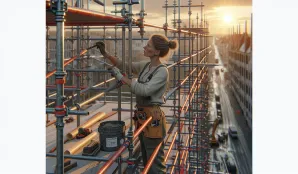
Scaffolding fitter salary
Latest available salary statistics are for 2025. Compare average pay, salary range and related job listings.
39 400 - 40 000 SEK / month
Bygg & anläggning
Related tools
Salary progression Scaffolding fitter
What does a scaffolder do? – Tasks and work environment
A scaffolder works with assembling, dismantling, and inspecting construction scaffolding for various building and construction projects. Tasks include transporting materials, erecting scaffolding according to safety regulations, and performing inspections to ensure the structure is stable and safe for use. The work is often outdoors and at varying heights, requiring both precision and physical strength. The work environment can be challenging with exposure to weather conditions, and safety work is always a central part of the role.
Salary development over time
The salary for a scaffolder has shown a clear upward trend over the past three years. In 2022, the average salary was 33,100 SEK per month, increasing to 37 700 SEK in 2023. During 2024, the average salary has risen further to 40 000 SEK, representing a total increase of approximately 14% over the period. This positive salary development can be partly explained by high demand for skilled workers in construction, as well as increased requirements for safety training and certifications. The market is also influenced by regional needs and economic conditions, where large construction projects drive up wages. Although salary data for women is missing, a general increase across the entire profession is observed.
Scaffolder salary – comprehensive overview
- Average salary: 40 000 SEK/month
- Lowest/Highest salary: Data unavailable
- Hourly wage: 227 SEK/hour (based on 166 hours/month)
- Gender differences: Men earn 40 000 SEK, salary data for women is missing
- Regional differences: Data unavailable
Education and qualifications
To work as a scaffolder, a high school education in construction and civil engineering or equivalent is usually required, combined with practical experience and sometimes certification courses. Many employers seek documented experience or industry-specific training to ensure the work is performed safely and correctly. Since the profession is physically demanding and involves work at heights, both education and a strong safety mindset are crucial.
- High school education: Construction and civil engineering program (3 years)
- Certification courses: For example, scaffolding 2–9 meters
- Practical experience: Often through apprenticeships or trainee programs
- Prerequisites: Good physical health, height tolerance, and safety awareness
- Tip: Choose education focused on construction or civil engineering for the best prospects
Scaffolders often work in teams where good communication and cooperation are crucial for safety. It is common for the workday to start early, and work sites can vary greatly from week to week. Those who enjoy variety and seeing the results of their work directly on site can find great satisfaction in the role.
Common benefits and compensations
Scaffolders are often offered benefits such as overtime pay for evening and weekend work, per diems for work at other locations, and allowances for work clothes and safety equipment. Occupational pension schemes and insurance are common, as well as opportunities for skill development through the employer.
Competition and challenges
The profession as a scaffolder is characterized by intense competition, especially in larger cities where construction projects are numerous. At the same time, it can be challenging to find experienced and certified scaffolders, which means employers in some regions may have difficulty recruiting. Physical demands and work at heights mean not everyone is suited for the profession, and safety regulations are strict. Seasonal variations can affect workload, and periods of economic boom in the construction sector often lead to more temporary employment.
Tips for those who want to become a scaffolder
To succeed as a scaffolder, it is good to have good physical fitness and be comfortable working at heights, as the work is often physically demanding and performed on construction scaffolding. Being precise and having a strong safety awareness are crucial, since even small mistakes can have serious consequences for yourself and colleagues. Flexibility and the ability to quickly adapt to different workplaces and projects are important qualities, as the work environment can vary day by day. It is recommended to gain practical experience early through internships or summer jobs in the construction sector to build understanding of the profession’s daily life. Investing in certification courses and staying updated on new safety regulations enhances employment opportunities. Finally, good teamwork and communication skills facilitate collaboration, as the work is often performed in teams where mutual trust is essential.
Key facts about Scaffolders
- Education level: High school diploma, construction and civil engineering program
- Work environment: Outdoors, often at high elevations and in varying weather conditions
- Work form: Teamwork and mobile workplaces
- Demand: 379 job openings in the profession (May 2024)
- Safety requirements: Certification and ongoing training required
Career paths and future prospects
After 3–5 years as a scaffolder, there are opportunities to advance to supervisory roles, such as foreman or site manager within larger construction projects. Some choose to specialize in advanced scaffolding or further education in project management. Forecasts from the Employment Service indicate that it is difficult to make precise predictions about the future outlook for the profession due to limited data. Nevertheless, the number of job openings shows that demand remains stable, especially in larger cities and where the construction sector is expanding. The industry’s increasing focus on work environment and safety means that certified and experienced scaffolders have good prospects in the job market.
Frequently asked questions about Scaffolders
- What is the average salary for a scaffolder?
- A scaffolder has an average salary of 40 000 SEK per month. - What does the hourly wage look like for a scaffolder?
- The hourly wage averages 227 SEK (based on 166 hours per month). - What education is required to become a scaffolder?
- High school education with a focus on construction and civil engineering, along with certification courses. - Are there regional salary differences for scaffolders?
- No available information on regional differences at the moment. - What is the job market like for scaffolders?
- There are 379 job openings in the profession according to the latest survey. - What personal qualities are important for the profession?
- Good physical fitness, height tolerance, precision, and teamwork skills are essential.

Salary distributed by age and sector
| Age | Base salary | Monthly salary | |
|---|---|---|---|
| 25-34 | 38700 kr | 39300 kr | |
| 35-44 | 38900 kr | 39600 kr | |
| 45-54 | 40100 kr | 41400 kr | |
| Snitt | 39400 kr | 40000 kr |
| Age | Base salary | Monthly salary | |
|---|---|---|---|
| 25-34 | 38700 kr | 39300 kr | |
| 35-44 | 38900 kr | 39600 kr | |
| 45-54 | 40100 kr | 41400 kr | |
| Snitt | 39400 kr | 40000 kr |
| Age | Base salary | Monthly salary | |
|---|---|---|---|
| 25-34 | 38700 kr | 39300 kr | |
| 35-44 | 38900 kr | 39600 kr | |
| 45-54 | 40100 kr | 41400 kr | |
| Snitt | 39400 kr | 40000 kr |
| Age | Base salary | Monthly salary | |
|---|---|---|---|
| 25-34 | 38900 kr | 39500 kr | |
| 35-44 | 38900 kr | 39600 kr | |
| 45-54 | 40100 kr | 41400 kr | |
| Snitt | 39500 kr | 40000 kr |
| Age | Base salary | Monthly salary | |
|---|---|---|---|
| 25-34 | 38900 kr | 39500 kr | |
| 35-44 | 38900 kr | 39600 kr | |
| 45-54 | 40100 kr | 41400 kr | |
| Snitt | 39500 kr | 40000 kr |
| Age | Base salary | Monthly salary | |
|---|---|---|---|
| 25-34 | 38900 kr | 39500 kr | |
| 35-44 | 38900 kr | 39600 kr | |
| 45-54 | 40100 kr | 41400 kr | |
| Snitt | 39500 kr | 40000 kr |

About the data
All information displayed on this page is based on data from the Swedish Central Bureau of Statistics (SCB), the Swedish Tax Agency and the Swedish employment agency. Learn more about our data and data sources here.
All figures are gross salaries, meaning salaries before tax. The average salary, or mean salary, is calculated by adding up the total salary for all individuals within the profession and dividing it by the number of individuals. For specific job categories, we have also considered various criteria such as experience and education.
Profession Scaffolding fitter has the SSYK code 7116, which we use to match against the SCB database to obtain the latest salary statistics.



Compare salary, work tasks and job outlook in adjacent occupations to find roles with similar skills or pay levels.
-

Calculation manager, construction and civil engineering salary
Average salary: 50 800 SEK/month • Bygg & anläggning
Engineers and technicians in construction and engineering
Compare with Scaffolding fitter
Wed, 22 Jul 2026 - 23:16 -

Average salary: 40 400 SEK/month • Bygg & anläggning
Construction workers
Compare with Scaffolding fitter
Wed, 22 Jul 2026 - 14:10 -

Average salary: 40 800 SEK/month • Bygg & anläggning
Insulation installers
Compare with Scaffolding fitter
Wed, 22 Jul 2026 - 16:13 -

Armor, construction and civil engineering salary
Average salary: 40 500 SEK/month • Bygg & anläggning
Concrete workers
Compare with Scaffolding fitter
Tue, 21 Jul 2026 - 00:43 -

Average salary: 41 068 SEK/month • Bygg & anläggning
Construction divers
Compare with Scaffolding fitter
Thu, 23 Jul 2026 - 03:30 -

Average salary: 42 300 SEK/month • Bygg & anläggning
HVAC installers etc.
Compare with Scaffolding fitter
Wed, 22 Jul 2026 - 21:09


