- Salary statistics
- Sculptor salary
Sculptor salary
Latest available salary statistics are for 2025. Compare average pay, salary range and related job listings.
43 692 - 41 986 SEK / month
Kultur, media, design
Related tools
Salary progression Sculptor
What does a sculptor do? – Tasks and work environment
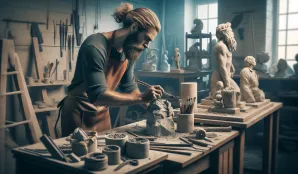
A sculptor works on creating three-dimensional artworks using materials such as stone, clay, metal, wood, or other modern media. Tasks can range from designing and modeling small figures to working on large public art installations or sculptures. Many sculptors work independently in their own studios, but collaborations with other artists, architects, or clients are common, especially for larger projects. The work environment varies depending on the material and process; it can be dusty, noisy, and sometimes physically demanding, especially when handling or transporting heavy materials. Creativity, precision, and technical skill are central to the profession.
Salary development over time
The salary of a sculptor has shown a steady increase over the past three years. In 2022, the average salary was 36,200 SEK per month, followed by an increase to 39 779 during 2023. The latest data from 2024 shows a further rise to 41 986, which corresponds to a total salary increase of about 10% over the period. This salary trend can be explained by increased interest in art and design in society, as well as higher demand for unique and personalized artworks both in the public sector and among private clients. At the same time, the profession is competitive and dependent on economic cycles, which can influence salary levels in the long term. Despite this, the trend has been positive and indicates growing recognition for sculptors' work in Sweden.
Sculptor salary – comprehensive overview
- Average salary: 41 986 SEK/month
- Lowest/Highest salary: Data unavailable
- Hourly wage: 239 SEK/hour
- Gender differences: Data unavailable
- Regional differences: Data unavailable
Education and qualifications
To become a sculptor, a higher artistic education at university level is usually required, often within fine arts or with a specialization in sculpture. Many combine formal education with practical experience and self-study to develop their own style and techniques. It is also common to supplement with courses in new materials or techniques, and to participate in workshops and networks within the art world.
- Artistic higher education: 3–5 years, often at Konstfack or similar institutions
- Courses and certifications: For example in modeling, casting, or digital sculpture
- Internships and apprenticeships: Opportunities for apprenticeships with established artists
- Prerequisites: Often portfolio submissions and basic artistic talent
- Self-study and studio work: Important for developing technical skills and personal expression
Many sculptors combine their artistic practice with teaching, public commissions, or collaborations with architects and designers. This provides both financial stability and artistic development, as well as opportunities to expand their network and reach new audiences.
Common benefits and compensations
In addition to base salary, sculptors can access studio support, project grants, exhibition allowances, and sometimes scholarships from artistic organizations. For public commissions, compensation often includes materials and production costs, as well as insurance for larger installations. Opportunities for sales commissions or royalties from recurring use of works also exist.
Competition and challenges
The profession of sculptor is characterized by high competition, both for exhibition spaces and public commissions. Many artists need to supplement their income with teaching or work in related fields. A major challenge is establishing oneself in the market and building a network of galleries, clients, and fellow artists. Uncertain income and the need for self-marketing are common, as is the difficulty of reaching a broader audience. At the same time, digital platforms and social media can open new avenues for exposure and sales, which has changed the industry landscape.
Tips for aspiring sculptors
To succeed as a sculptor, it is important to be persistent and able to work independently on longer projects. Creativity is essential, as is technical curiosity to explore different materials and techniques. Building a professional network early, participating in exhibitions, and engaging in artistic communities are recommended to gain visibility. Flexibility and openness to collaborations with other artists and clients can lead to more commissions and growth opportunities. Good business understanding helps with pricing and contracts, and self-promotion is crucial. The ability to handle criticism and setbacks is also central, as the artistic career often involves periods of uncertainty.
Key facts about Sculptor
- Average salary: 41 986 SEK/month
- Education level: Artistic higher education (3–5 years)
- Work environment: Own studio or project-based environment
- Available jobs in the profession: 620
- Hourly wage: 239 SEK
Career paths and future prospects
After three to five years in the profession, a sculptor may have established themselves with solo exhibitions, public commissions, or collaborations within the art and design sectors. Opportunities for further development include specialization in specific materials or techniques, or combining artistic work with teaching, project management, or consulting. The future outlook for sculptors is considered uncertain by the Employment Service, as the profession is small and competition is high. No clear forecast is available, but digital development and increased interest in unique crafts may create new opportunities for established and niche sculptors.
Frequently asked questions about Sculptors
- What is the average salary of a sculptor?
- The average salary for a sculptor is 41 986 SEK per month. - What does the job market look like for sculptors?
- There are approximately 620 available jobs in the profession, but competition is high and future prospects are uncertain. - What education is needed to become a sculptor?
- A higher artistic education, often 3–5 years, is most common, preferably with a focus on sculpture. - Are there regional differences in salaries for sculptors?
- Specific information about regional salary differences is lacking for the profession of sculptor. - What benefits are common for sculptors?
- Studio support, project grants, compensation for materials, as well as scholarships and exhibition allowances are common. - How can a sculptor develop their career?
- By participating in exhibitions, collaborating with other artists, and taking on public commissions, there are good opportunities for development. - Is it difficult to get a job as a sculptor?
- Competition is high and many work as self-employed or combine their artistic work with other professions.

Salary distributed by age and sector

About the data
All information displayed on this page is based on data from the Swedish Central Bureau of Statistics (SCB), the Swedish Tax Agency and the Swedish employment agency. Learn more about our data and data sources here.
All figures are gross salaries, meaning salaries before tax. The average salary, or mean salary, is calculated by adding up the total salary for all individuals within the profession and dividing it by the number of individuals. For specific job categories, we have also considered various criteria such as experience and education.
Profession Sculptor has the SSYK code 2651, which we use to match against the SCB database to obtain the latest salary statistics.

Compare salary, work tasks and job outlook in adjacent occupations to find roles with similar skills or pay levels.
-
Average salary: 41 986 SEK/month • Kultur, media, design
Visual artists etc.
Compare with Sculptor
Mon, 13 Jul 2026 - 13:28 -

Average salary: 39 900 SEK/month • Kultur, media, design
Interior designers, decorators and scenographers etc.
Compare with Sculptor
Tue, 14 Jul 2026 - 03:30 -

Average salary: 51 700 SEK/month • Kultur, media, design
Other designers and creators
Compare with Sculptor
Fri, 10 Jul 2026 - 20:56 -

Average salary: 40 600 SEK/month • Kultur, media, design
Translators, interpreters and linguists etc.
Compare with Sculptor
Tue, 14 Jul 2026 - 09:20 -

Average salary: 41 986 SEK/month • Kultur, media, design
Visual artists etc.
Compare with Sculptor
Tue, 14 Jul 2026 - 10:16 -

Average salary: 38 900 SEK/month • Kultur, media, design
Librarians and archivists
Compare with Sculptor
Tue, 14 Jul 2026 - 04:07


