- Salary statistics
- Shoe repairer salary
Shoe repairer salary
Latest available salary statistics are for 2025. Compare average pay, salary range and related job listings.
34 100 - 34 100 SEK / month
Hantverksyrken
Related tools
Salary progression Shoe repairer
What does a shoe repairer do? – Tasks and work environment
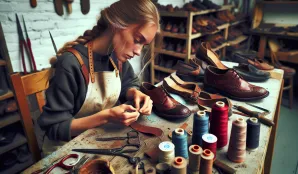
A shoe repairer works with repairing, maintaining, and sometimes manufacturing shoes and other leather goods. The profession involves identifying damages, replacing worn soles, mending seams, as well as polishing and treating materials to extend product lifespan. The work is mainly carried out in workshops or small retail environments where craftsmanship and customer contact are important parts of the workday. Tools and machines are used daily, and the work environment can be both sedentary and physical, depending on the scope and type of repair. Quality, precision, and the ability to handle different materials are key requirements in the profession.
Salary development over time
Over the past three years, the salary for shoe repairers has increased noticeably. In 2022, the average salary was 28,600 SEK per month, which rose to 33 300 SEK in 2023. In 2024, the average salary reached 34 100 SEK, representing an increase of nearly 16% from 2022 to 2024. This salary development indicates a rising demand for craftsmanship skills within the trade sector, reflecting a general trend of higher wages in the craft industry. Although the profession is part of a smaller occupational group, competition for skilled workers and the need for specialized knowledge can drive up salary levels. The market for shoe repairers is also influenced by consumers' increased interest in sustainability and reuse, which can lead to more job opportunities and higher wage levels compared to previous years.
Shoe Repairer salary – comprehensive overview
- Average salary: 34 100 SEK/month
- Lowest/Highest salary: Data not available
- Hourly wage: 200 SEK
- Gender differences: Men earn 34 000 SEK, specific data for women is not available
- Regional differences: No available data
Education and qualifications
To work as a shoe repairer, solid vocational training in craftsmanship is required, often focusing on shoemaking or leatherwork. The training can vary in length and content but combines theoretical knowledge with practical experience. Internships at workplaces are common to develop skills and gain insight into the daily work of the profession. Self-study and supplementary courses can be valuable for broadening competence, especially regarding new materials and techniques.
- Formal education: Vocational training in craftsmanship/shoemaking and leatherwork (1–2 years)
- Practical training: Workplace-based internships or apprenticeship periods
- Additional courses: Specialization in material science, machine handling, or customer service
- Prerequisites: Basic craftsmanship interest and some manual dexterity
- Self-studies: Possible through online courses and industry meetings
Many shoe repairers build long-term customer relationships and become a central part of their local community. The ability to provide personal service and advice can be as important as technical craftsmanship, especially in smaller towns where repeat customers are crucial for business stability.
Common benefits and compensations
The profession often includes benefits such as flexible working hours, the possibility of bonuses based on performance, and discounts on materials and personal repairs. Some employers offer further training or support for participating in craft fairs and industry meetings. Occupational health services and wellness allowances may also be included depending on employment type and workplace.
Competition and challenges
The job market for shoe repairers is characterized by a limited number of positions and a high degree of specialization. Digitalization and changing consumer habits have affected demand, but increased focus on sustainability and reuse have enhanced the profession's relevance. Challenges can arise in attracting new customers and adapting to modern materials and techniques. Since the profession is small-scale and often run independently, business skills are also necessary. Competition for available jobs can be significant, especially in larger cities where the supply is greater but so is the demand for skilled craftsmen. The number of available jobs in the profession is 341, but it is important to note that these also include other leather artisans.
Tips for aspiring shoe repairers
To succeed as a shoe repairer, patience and attention to detail are important, as the work often requires precision and careful execution. Being service-minded and able to interact professionally with customers strengthens both customer relations and the company's reputation. A genuine interest in craftsmanship makes it easier to motivate oneself to develop new techniques and material knowledge. Flexibility and problem-solving skills are helpful when dealing with unusual damages or tasks. The ability to work independently is crucial, especially for those running their own workshop. Staying updated on industry developments and networking with other professionals can create new opportunities. Finally, perseverance and dedication are necessary, as the profession sometimes involves monotonous tasks but also a wide variety of customer assignments.
Key facts about Shoe Repairers
- Education level: Vocational training in craftsmanship (1–2 years)
- Work environment: Workshop, store, or small workplace
- Work form: Self-employed or employed
- Demand: Limited number of positions, 341 available jobs in the profession
- Special skills: Material knowledge, precision, and customer service
Career paths and future prospects
After three to five years in the profession, many shoe repairers have built a stable customer base and developed specialist skills, for example in exclusive materials or advanced leather repairs. It is common to move on to own business, expand the range to include other craft services, or take leading roles in larger workshops. The future outlook for the profession is difficult to assess according to the Employment Service, as the data is limited and the occupational group is small. However, the number of available jobs and increased interest in sustainability suggest continued demand for skilled shoe repairers. Opportunities to develop within related professions such as leatherworker, saddler, or orthopaedic shoemaker are also available for those wishing to broaden their skills and job market.
Common questions about Shoe Repairers
- What is the average salary of a Shoe Repairer?
- The average salary is 34 100 SEK per month. - How has the salary development for shoe repairers looked?
- It has increased from 28,600 SEK (2022) to 34 100 SEK (2024). - Is education necessary to become a shoe repairer?
- Yes, vocational training in craftsmanship or shoemaking is highly recommended. - How high is the demand for shoe repairers?
- There are 341 available jobs, but demand varies regionally. - Can I work as a self-employed person?
- Many shoe repairers run their own businesses, especially after a few years of experience. - What personal qualities are important?
- Accuracy, patience, and a service-oriented attitude are central to success in the profession.

Salary distributed by age and sector
| Age | Base salary | Monthly salary | |
|---|---|---|---|
| Snitt | 34100 kr | 34100 kr |
| Age | Base salary | Monthly salary | |
|---|---|---|---|
| Snitt | 34100 kr | 34100 kr |
| Age | Base salary | Monthly salary | |
|---|---|---|---|
| Snitt | 34100 kr | 34100 kr |
| Age | Base salary | Monthly salary | |
|---|---|---|---|
| Snitt | 33900 kr | 34000 kr |
| Age | Base salary | Monthly salary | |
|---|---|---|---|
| Snitt | 33900 kr | 34000 kr |
| Age | Base salary | Monthly salary | |
|---|---|---|---|
| Snitt | 33900 kr | 34000 kr |

About the data
All information displayed on this page is based on data from the Swedish Central Bureau of Statistics (SCB), the Swedish Tax Agency and the Swedish employment agency. Learn more about our data and data sources here.
All figures are gross salaries, meaning salaries before tax. The average salary, or mean salary, is calculated by adding up the total salary for all individuals within the profession and dividing it by the number of individuals. For specific job categories, we have also considered various criteria such as experience and education.
Profession Shoe repairer has the SSYK code 7534, which we use to match against the SCB database to obtain the latest salary statistics.
-

Orthotist/Prosthetist Position at Ottobock Care in Solna
Leather craftsmen and shoemakers
Sat, 30 May 2026 - 02:15 -
Orthopedic Technical Patient Receptionist in Jönköping
Leather craftsmen and shoemakers
Wed, 20 May 2026 - 22:43
Compare salary, work tasks and job outlook in adjacent occupations to find roles with similar skills or pay levels.
-

Average salary: 34 000 SEK/month • Hantverksyrken
Musical instrument makers and other artisans
Compare with Shoe repairer
Tue, 14 Jul 2026 - 10:55 -

Average salary: 34 000 SEK/month • Hantverksyrken
Musical instrument makers and other artisans
Compare with Shoe repairer
Fri, 10 Jul 2026 - 13:12 -

Average salary: 34 000 SEK/month • Hantverksyrken
Musical instrument makers and other artisans
Compare with Shoe repairer
Tue, 14 Jul 2026 - 11:56 -

Average salary: 40 900 SEK/month • Hantverksyrken
Precision mechanics
Compare with Shoe repairer
Tue, 14 Jul 2026 - 13:55 -

Upholstered furniture worker salary
Average salary: 32 200 SEK/month • Hantverksyrken
Upholsterers
Compare with Shoe repairer
Tue, 14 Jul 2026 - 15:02 -

Average salary: 34 000 SEK/month • Hantverksyrken
Musical instrument makers and other artisans
Compare with Shoe repairer
Tue, 14 Jul 2026 - 11:57


