- Salary statistics
- Forest workers, other salary
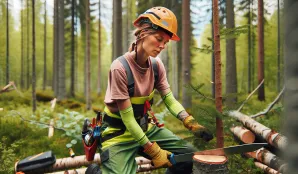
Forest workers, other salary
Latest available salary statistics are for 2025. Compare average pay, salary range and related job listings.
32 300 - 38 900 SEK / month
Women earn 99% of what men do.
Naturbruk
Related tools
Salary progression Forest workers, other
What does a forestry worker do – tasks and working environment
A forestry worker with broad skills performs various tasks within the forestry industry. Common tasks include planting forest seedlings, clearing, thinning, harvesting, manual or machine-based forest management, and simple nature conservation efforts. The work environment is often outdoors under changing weather conditions, sometimes in difficult terrain. Physical endurance and good familiarity with working with machines and tools are central prerequisites. The work pace may vary depending on the season, with higher intensity during planting and thinning periods.
Salary development over time
The salary for a forestry worker, other, has shown a stable and positive development in recent years. In 2022, the average salary was 29,600 SEK, increasing in 2023 to 31 800 SEK. In 2024, the trend continued upward with an average salary of 33 600 SEK, which is a 7.4% increase over three years. This salary development reflects a relatively stable demand for labor in forestry, while inflation and increased requirements for specialized skills have contributed to some salary adjustments. It is also clear that the profession is affected by seasonal variations and the long-term value chains of the forest, which can make salary development less volatile than in many other industries.
Forestry worker, other salary – complete overview
- Average salary: 33 600 SEK/month
- Lowest salary: 31,500 SEK/month (men), 32,400 SEK/month (women)
- Highest salary: 38,100 SEK/month (men), 34,900 SEK/month (women)
- Hourly wage: 191 SEK
- Gender differences: Women earn 99% of what men do (men: 33 700 SEK, women: 33 400 SEK)
- Regional differences: Data on regional salary differences are not available
Education and qualifications
To work as a forestry worker in a broad sense, a high school education with a focus on forestry is usually required, but internal training and internships are also common to ensure the right skills. The practical nature of the profession means that work experience and ability to handle machines often weigh heavily in hiring. Special courses in chainsaw handling, brush saw, and nature conservation are common complements.
- High school education: Forestry high school (3 years)
- Certifications: Chainsaw license, brush saw license
- Internship: Industry internships or trainee programs are recommended
- Prerequisites: Good physical condition and interest in outdoor work
- Further education: Special courses in nature conservation, work environment, and machinery handling
Many forestry workers develop a deep knowledge of ecosystems and sustainable forestry over time, which provides opportunities to work closely with nature and sometimes influence important environmental decisions in practice.
Common benefits and compensations
Forestry workers often have access to wellness allowances, work clothing, and sometimes per diems when working in other locations. Some employers also offer training in work environment and safety, as well as opportunities for further education. Compensation for inconvenient working hours and overtime may occur, especially during busy seasons.
Challenges and competition
There are generally good employment opportunities within the forestry profession, but recruitment difficulties exist as many leave the industry, and both physical endurance and technical competence are required. The job is physically demanding and sometimes involves working in tough weather conditions and remote environments, which can be challenging for newcomers. At the same time, environmental considerations and documentation requirements are increasing, which demands higher education and responsibility. Seasonal variations can affect job security, but demand for labor is expected to remain unchanged in the coming years according to the Swedish Public Employment Service.
Tips for those who want to become a forestry worker, other
To succeed as a forestry worker, it is good to have genuine endurance and be prepared for varying working environments. Developing technical skills, especially in machinery and tool handling, provides a competitive advantage and increases employability. Flexibility is important, as tasks and workplaces can change quickly with the seasons and weather. Precision and safety awareness are crucial to minimize risks of accidents and injuries. Good teamwork skills facilitate collaboration in work teams, while independence is required when working alone in the field. An interest in nature and the environment provides extra motivation and can open doors to specialized roles. Finally, continuous further education and staying updated on new methods and legal requirements in the industry are wise.
Key facts about forestry workers, other
- Average salary: 33 600 SEK/month
- Education level: High school education (forestry) and certifications
- Work environment: Outdoors, often in varied and tough terrain
- Gender differences: Women earn 5% more than men in the profession
- Job vacancies: About 360 available positions within the profession
Career paths and future prospects
After 3–5 years as a forestry worker, opportunities exist to advance to supervisor, machine operator, or specialize in areas such as nature conservation, planning, or ecological forest management. The Swedish Public Employment Service assesses that job opportunities are good and that demand is expected to remain unchanged over five years. However, recruitment is affected by many leaving the profession, which means new and educated workers can often find work quickly. For those wishing to broaden their skills, further education in forest machinery, environmental certification, or work management is also available.
Frequently asked questions about forestry workers, other
- What does a forestry worker, other earn?
- The average salary is 33 600 SEK/month, with an hourly wage of 191 SEK. - Are there gender differences in salary for forestry workers?
- Yes, women earn on average 33 400 SEK/month and men 33 700 SEK/month, which means women earn 5% more. - What education is required to become a forestry worker?
- High school education in forestry and certificates for chainsaw and brush saw are common requirements. - What is the job market like for forestry workers?
- There are good opportunities, with approximately 360 job openings and stable demand according to the Swedish Public Employment Service. - What are the tasks of a forestry worker?
- Common tasks include planting, clearing, thinning, harvesting, and forest management. - How has salary developed?
- It has increased from 29,600 SEK (2022) to 33 600 SEK (2024), a 7.4% increase over three years. - What are the highest and lowest salaries?
- Highest: 38,100 SEK/month (men) and 34,900 SEK/month (women); lowest: 31,500 SEK/month (men), 32,400 SEK/month (women).

Salary distributed by age and sector
| Age | Base salary | Monthly salary | |
|---|---|---|---|
| 18-24 | 32300 kr | 32500 kr | |
| 25-34 | 33700 kr | 34700 kr | |
| 35-44 | 33200 kr | 33700 kr | |
| 45-54 | 32400 kr | 33100 kr | |
| 55-64 | 33600 kr | 34800 kr | |
| Snitt | 99% | 33000 kr | 33600 kr |
| Age | Base salary | Monthly salary | |
|---|---|---|---|
| 25-34 | 87% | 33300 kr | 33800 kr |
| 35-44 | 92% | 35800 kr | 36700 kr |
| 45-54 | 37100 kr | 37500 kr | |
| 55-64 | 36800 kr | 37300 kr | |
| Snitt | 89% | 36200 kr | 36900 kr |
| Age | Base salary | Monthly salary | |
|---|---|---|---|
| 25-34 | 87% | 33300 kr | 33800 kr |
| 35-44 | 92% | 35800 kr | 36700 kr |
| 45-54 | 37100 kr | 37500 kr | |
| 55-64 | 36300 kr | 36800 kr | |
| Snitt | 89% | 36000 kr | 36700 kr |
| Age | Base salary | Monthly salary | |
|---|---|---|---|
| 18-24 | 32300 kr | 32500 kr | |
| 25-34 | 33700 kr | 34700 kr | |
| 35-44 | 33100 kr | 33600 kr | |
| 45-54 | 32300 kr | 33000 kr | |
| 55-64 | 33400 kr | 34700 kr | |
| Snitt | 99% | 32900 kr | 33600 kr |
| Age | Base salary | Monthly salary | |
|---|---|---|---|
| 18-24 | 32300 kr | 32500 kr | |
| 25-34 | 33700 kr | 34700 kr | |
| 35-44 | 33100 kr | 33600 kr | |
| 45-54 | 32300 kr | 33000 kr | |
| 55-64 | 33400 kr | 34700 kr | |
| Snitt | 99% | 32900 kr | 33600 kr |
| Age | Base salary | Monthly salary | |
|---|---|---|---|
| 25-34 | 34100 kr | 34800 kr | |
| 35-44 | 33100 kr | 33500 kr | |
| 45-54 | 32400 kr | 33000 kr | |
| 55-64 | 33700 kr | 34800 kr | |
| Snitt | 99% | 33100 kr | 33700 kr |
| Age | Base salary | Monthly salary | |
|---|---|---|---|
| 25-34 | 87% | 34700 kr | 35500 kr |
| 35-44 | 92% | 36200 kr | 37500 kr |
| 45-54 | 37100 kr | 37500 kr | |
| 55-64 | 36800 kr | 37300 kr | |
| Snitt | 89% | 36600 kr | 37300 kr |
| Age | Base salary | Monthly salary | |
|---|---|---|---|
| 25-34 | 87% | 34700 kr | 35500 kr |
| 35-44 | 92% | 36200 kr | 37500 kr |
| 45-54 | 37100 kr | 37500 kr | |
| 55-64 | 36300 kr | 36800 kr | |
| Snitt | 89% | 36400 kr | 37100 kr |
| Age | Base salary | Monthly salary | |
|---|---|---|---|
| 25-34 | 34100 kr | 34800 kr | |
| 35-44 | 33100 kr | 33400 kr | |
| 45-54 | 32300 kr | 32900 kr | |
| 55-64 | 33500 kr | 34700 kr | |
| Snitt | 99% | 33000 kr | 33600 kr |
| Age | Base salary | Monthly salary | |
|---|---|---|---|
| 25-34 | 34100 kr | 34800 kr | |
| 35-44 | 33100 kr | 33400 kr | |
| 45-54 | 32300 kr | 32900 kr | |
| 55-64 | 33500 kr | 34700 kr | |
| Snitt | 99% | 33000 kr | 33600 kr |
| Age | Base salary | Monthly salary | |
|---|---|---|---|
| Snitt | 99% | 31800 kr | 33400 kr |
| Age | Base salary | Monthly salary | |
|---|---|---|---|
| 25-34 | 87% | 30900 kr | 30900 kr |
| 35-44 | 92% | 34700 kr | 34700 kr |
| Snitt | 89% | 33200 kr | 33200 kr |
| Age | Base salary | Monthly salary | |
|---|---|---|---|
| 25-34 | 87% | 30900 kr | 30900 kr |
| 35-44 | 92% | 34700 kr | 34700 kr |
| Snitt | 89% | 33200 kr | 33200 kr |
| Age | Base salary | Monthly salary | |
|---|---|---|---|
| Snitt | 99% | 31700 kr | 33400 kr |
| Age | Base salary | Monthly salary | |
|---|---|---|---|
| Snitt | 99% | 31700 kr | 33400 kr |

About the data
All information displayed on this page is based on data from the Swedish Central Bureau of Statistics (SCB), the Swedish Tax Agency and the Swedish employment agency. Learn more about our data and data sources here.
All figures are gross salaries, meaning salaries before tax. The average salary, or mean salary, is calculated by adding up the total salary for all individuals within the profession and dividing it by the number of individuals. For specific job categories, we have also considered various criteria such as experience and education.
Profession Forest workers, other has the SSYK code 6210, which we use to match against the SCB database to obtain the latest salary statistics.
-

Seasonal Reed Cutting Employee / Outdoor Environment Worker
Forestry workers
Mon, 13 Jul 2026 - 09:02 -
Team Leader for Nature Management – County Administrative Board of Västra Götaland
Forestry workers
Fri, 10 Jul 2026 - 22:16 -
Practical Nature Conservationist Needed for Nature and Water Department
Forestry workers
Fri, 10 Jul 2026 - 21:08

Compare salary, work tasks and job outlook in adjacent occupations to find roles with similar skills or pay levels.
-

Average salary: 28 200 SEK/month • Naturbruk
Berry pickers and planters etc.
Compare with Forest workers, other
Mon, 13 Jul 2026 - 20:12 -
Average salary: 30 200 SEK/month • Naturbruk
Horticulturists
Compare with Forest workers, other
Tue, 14 Jul 2026 - 08:19 -

Average salary: 44 800 SEK/month • Naturbruk
Specialists and advisors in forestry
Compare with Forest workers, other
Tue, 14 Jul 2026 - 06:03 -

Tractor driver, forestry salary
Average salary: 33 500 SEK/month • Naturbruk
Operators of agricultural and forestry machinery
Compare with Forest workers, other
Mon, 13 Jul 2026 - 15:51 -

Operations manager, agriculture, horticulture salary
Average salary: 30 200 SEK/month • Naturbruk
Horticulturists
Compare with Forest workers, other
Mon, 13 Jul 2026 - 06:56 -

Tractor driver, agriculture salary
Average salary: 33 500 SEK/month • Naturbruk
Operators of agricultural and forestry machinery
Compare with Forest workers, other
Sun, 12 Jul 2026 - 20:17


