- Salary statistics
- Sack filler salary
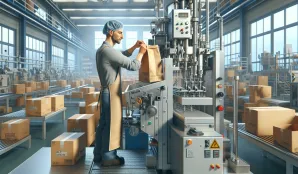
Sack filler salary
Latest available salary statistics are for 2025. Compare average pay, salary range and related job listings.
33 300 - 36 100 SEK / month
Women earn 97% of what men do.
Industriell tillverkning
Related tools
Salary progression Sack filler
What does a Sack Filler do? – Tasks and Work Environment
A sack filler primarily works with monitoring and operating machines that fill, seal, and sometimes weigh sacks with various materials, such as grains, chemicals, food products, or construction materials. Tasks often include quality control of the material being filled, ensuring machines function properly, and troubleshooting minor operational issues. Safety and accuracy are important aspects of the profession, as work often occurs in industrial environments with heavy lifting and repetitive tasks. The work environment can vary depending on the industry and company, but shift work, noise, and dust are common.
Salary development over time
The salary for sack fillers has steadily increased over the past three years. In 2022, the average salary was 31,600 SEK per month, rising to 33,000 SEK in 2023. In 2024, the average monthly salary is 34 800, representing an increase of about 5.7% over three years. This salary trend largely follows the general industry pattern, where demand for experienced machine operators and increased automation have contributed to higher wages. Variations in salary growth can also depend on union negotiations, regional differences, and employer size. Despite the positive trend, gender pay gaps within the profession remain noticeable.
Sack Filler salary – comprehensive overview
- Average salary: 34 800 SEK/month
- Lowest salary: 32,400 SEK/month
- Highest salary: 34,500 SEK/month
- Hourly wage (average): 201 SEK/hour
- Women: 32,400 SEK/month (97% of men's salary)
- Men: 35 100 SEK/month
- Regional differences: Salary levels can vary depending on region and employer, with the biggest difference seen between large cities and smaller towns.
Education and qualifications
To work as a sack filler, typically no extensive formal education is required. Many employers prefer a basic high school diploma, preferably with a focus on industry or technology, along with good understanding of safety procedures and machine handling. Practical experience and internal training are often key parts of the introduction to the profession. Some workplaces may require specific certifications or training depending on the work environment and materials handled.
- High school education: Industry or technology programs
- On-the-job training: Common upon hiring
- Work environment training: Basic safety training often required
- Practical experience: Meritorious but not always mandatory
- Certifications: May be required for certain materials or machines
Working as a sack filler often involves close collaboration with colleagues and other machine operators, making good communication and teamwork especially valuable. Many skilled sack fillers quickly learn new machines and processes, opening opportunities for further development within the industry.
Common benefits and compensations
Common benefits for sack fillers include shift allowances, overtime pay for unsocial hours, and compensation for overtime work. Other benefits may include wellness contributions, work clothing, and sometimes opportunities for further training or certification courses paid by the employer.
Challenges and competition
The competition in the profession of sack filler is relatively low, as the job market is characterized by steady demand for industrial manufacturing labor. Challenges mainly include monotonous tasks, physically demanding work, and environments with noise and dust. Automation has reduced the need for manual labor in some areas, but there is still a demand for skills in operating and monitoring modern machinery. Employers value flexibility and the ability to quickly learn new routines, which can be a challenge for some applicants.
Tips for aspiring sack fillers
To succeed as a sack filler, it is important to have a strong work ethic and be precise in routines and safety. Showing flexibility and willingness to learn new machines can quickly make you valuable at your workplace. Good teamwork skills are an asset, as work often occurs in teams, and clear communication with colleagues facilitates the workday. Being resilient to stress and able to handle monotonous tasks without losing focus are also important. Demonstrating initiative and attention to detail can lead to more responsibilities and development opportunities. Finally, an interest in technology and machinery is advantageous, as it facilitates learning and makes the work more stimulating.
Key facts about Sack Fillers
- Education level: High school education (industry/technology) recommended
- Work environment: Industrial setting, often with shift work
- Typical employment: Permanent or hourly employment
- Demand: 1,437 available jobs according to the latest survey
- Salary differences: Women earn 97% of men’s salary in the profession
Career paths and future outlook
After three to five years as a sack filler, opportunities exist to advance to leadership roles such as team leader, process operator, or supervisor within the industry. Some choose to further their education in automation or production technology to broaden their career options. According to the Swedish Public Employment Service’s forecast for machine operators in filling, packaging, and labeling, it is difficult to provide an exact outlook due to limited data, but demand for labor in the profession remains. Automation and technological development are expected to influence tasks, but skills in machine handling and process technology will continue to be valuable.
Frequently asked questions about Sack Fillers
- What does a Sack Filler earn?
- The average salary is 34 800 SEK per month, with an hourly wage of around 201 SEK. - Are there regional salary differences for Sack Fillers?
- Yes, salaries vary between big cities and smaller towns, but the differences are generally moderate. - What education is required to become a Sack Filler?
- A high school education with a focus on industry or technology is recommended, along with on-the-job training upon employment. - How do gender differences in salary look for Sack Fillers?
- Women earn on average 97% of what men do in the profession. - What development opportunities are available for Sack Fillers?
- Opportunities exist to advance to team leader, process operator, or further education within the industry. - What is the job market like for Sack Fillers?
- There is good demand for jobs with 1,437 available positions according to the latest survey. - What does the work environment for Sack Fillers involve?
- The work environment is industrial, often with shift work, noise, and dusty conditions.

Salary distributed by age and sector
| Age | Base salary | Monthly salary | |
|---|---|---|---|
| 18-24 | 94% | 29200 kr | 33700 kr |
| 25-34 | 96% | 30500 kr | 35100 kr |
| 35-44 | 97% | 31200 kr | 34900 kr |
| 45-54 | 98% | 31700 kr | 34500 kr |
| 55-64 | 99% | 32200 kr | 35700 kr |
| Snitt | 97% | 31000 kr | 34800 kr |
| Age | Base salary | Monthly salary | |
|---|---|---|---|
| 18-24 | 94% | 29200 kr | 33700 kr |
| 25-34 | 96% | 30500 kr | 35100 kr |
| 35-44 | 97% | 31200 kr | 34900 kr |
| 45-54 | 98% | 31700 kr | 34500 kr |
| 55-64 | 99% | 32200 kr | 35700 kr |
| Snitt | 97% | 31000 kr | 34800 kr |
| Age | Base salary | Monthly salary | |
|---|---|---|---|
| 18-24 | 94% | 29200 kr | 33700 kr |
| 25-34 | 96% | 30500 kr | 35100 kr |
| 35-44 | 97% | 31200 kr | 34900 kr |
| 45-54 | 98% | 31700 kr | 34500 kr |
| 55-64 | 99% | 32200 kr | 35700 kr |
| Snitt | 97% | 31000 kr | 34800 kr |
| Age | Base salary | Monthly salary | |
|---|---|---|---|
| 18-24 | 94% | 29500 kr | 34400 kr |
| 25-34 | 96% | 30500 kr | 35400 kr |
| 35-44 | 97% | 31500 kr | 35200 kr |
| 45-54 | 98% | 32000 kr | 34800 kr |
| 55-64 | 99% | 32300 kr | 35800 kr |
| Snitt | 97% | 31100 kr | 35100 kr |
| Age | Base salary | Monthly salary | |
|---|---|---|---|
| 18-24 | 94% | 29500 kr | 34400 kr |
| 25-34 | 96% | 30500 kr | 35400 kr |
| 35-44 | 97% | 31500 kr | 35200 kr |
| 45-54 | 98% | 32000 kr | 34800 kr |
| 55-64 | 99% | 32300 kr | 35800 kr |
| Snitt | 97% | 31100 kr | 35100 kr |
| Age | Base salary | Monthly salary | |
|---|---|---|---|
| 18-24 | 94% | 29500 kr | 34400 kr |
| 25-34 | 96% | 30500 kr | 35400 kr |
| 35-44 | 97% | 31500 kr | 35200 kr |
| 45-54 | 98% | 32000 kr | 34800 kr |
| 55-64 | 99% | 32300 kr | 35800 kr |
| Snitt | 97% | 31100 kr | 35100 kr |
| Age | Base salary | Monthly salary | |
|---|---|---|---|
| 18-24 | 94% | 28500 kr | 32500 kr |
| 25-34 | 96% | 30500 kr | 34100 kr |
| 35-44 | 97% | 30700 kr | 34200 kr |
| 45-54 | 98% | 31200 kr | 34100 kr |
| 55-64 | 99% | 32000 kr | 35500 kr |
| Snitt | 97% | 30600 kr | 34000 kr |
| Age | Base salary | Monthly salary | |
|---|---|---|---|
| 18-24 | 94% | 28500 kr | 32500 kr |
| 25-34 | 96% | 30500 kr | 34100 kr |
| 35-44 | 97% | 30700 kr | 34200 kr |
| 45-54 | 98% | 31200 kr | 34100 kr |
| 55-64 | 99% | 32000 kr | 35500 kr |
| Snitt | 97% | 30600 kr | 34000 kr |
| Age | Base salary | Monthly salary | |
|---|---|---|---|
| 18-24 | 94% | 28500 kr | 32500 kr |
| 25-34 | 96% | 30500 kr | 34100 kr |
| 35-44 | 97% | 30700 kr | 34200 kr |
| 45-54 | 98% | 31200 kr | 34100 kr |
| 55-64 | 99% | 32000 kr | 35500 kr |
| Snitt | 97% | 30600 kr | 34000 kr |

About the data
All information displayed on this page is based on data from the Swedish Central Bureau of Statistics (SCB), the Swedish Tax Agency and the Swedish employment agency. Learn more about our data and data sources here.
All figures are gross salaries, meaning salaries before tax. The average salary, or mean salary, is calculated by adding up the total salary for all individuals within the profession and dividing it by the number of individuals. For specific job categories, we have also considered various criteria such as experience and education.
Profession Sack filler has the SSYK code 8181, which we use to match against the SCB database to obtain the latest salary statistics.
-
Production Team Member at Ankarsrum Kitchen in Västervik
Machine operators, filling, packing and labeling
Fri, 10 Jul 2026 - 20:39 -
Machine Operator for Modern Production Environment
Machine operators, filling, packing and labeling
Thu, 9 Jul 2026 - 00:07 -

Packager Wanted for Packaging Department
Machine operators, filling, packing and labeling
Wed, 1 Jul 2026 - 09:20 -
Machine Operator for Modern Production
Machine operators, filling, packing and labeling
Mon, 29 Jun 2026 - 20:48 -
Machine Operator for Modern Production Environment
Machine operators, filling, packing and labeling
Mon, 22 Jun 2026 - 21:43
Compare salary, work tasks and job outlook in adjacent occupations to find roles with similar skills or pay levels.
-

Metal construction fitter salary
Average salary: 39 700 SEK/month • Industriell tillverkning
Steel construction assemblers and heavy plate workers
Compare with Sack filler
Mon, 13 Jul 2026 - 10:41 -

Wood industry worker, wood fiber salary
Average salary: 38 300 SEK/month • Industriell tillverkning
Operators in sawmills, planing mills and plywood etc.
Compare with Sack filler
Tue, 14 Jul 2026 - 07:16 -

Average salary: 36 300 SEK/month • Industriell tillverkning
Machine setters and machine operators, metal work
Compare with Sack filler
Mon, 13 Jul 2026 - 05:38 -

Average salary: 32 200 SEK/month • Industriell tillverkning
Other machine operators, textile, leather and leather industry
Compare with Sack filler
Sun, 12 Jul 2026 - 21:48 -

Average salary: 42 500 SEK/month • Industriell tillverkning
Process operators, paper
Compare with Sack filler
Tue, 14 Jul 2026 - 07:14 -

Machine operator, food industry, fruit and vegetables salary
Average salary: 33 700 SEK/month • Industriell tillverkning
Other machine operators, food industry etc.
Compare with Sack filler
Sun, 12 Jul 2026 - 19:00


