- Salary statistics
- Pipe insulator salary
Pipe insulator salary
Latest available salary statistics are for 2025. Compare average pay, salary range and related job listings.
40 800 - 40 800 SEK / month
Bygg & anläggning
Related tools
Salary progression Pipe insulator
What does a Pipe Insulator do? – Tasks and Work Environment
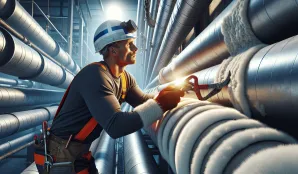
A pipe insulator works with insulating pipes, ventilation ducts, and other installations in buildings and industries to reduce energy losses and protect against moisture, fire, and noise. The work is often performed on construction sites, in industrial facilities, or properties where both new installations and maintenance are carried out. Pipe insulators use various types of insulation materials and tools, and the work environment can be indoors or outdoors, often in confined spaces or at heights. The profession requires precision, physical endurance, and good teamwork skills, as the work is often done in teams and in collaboration with other trades within construction and installation.
Salary Development Over Time
The salary for pipe insulators has shown a clear positive trend in recent years. In 2022, the average salary was 32,700 SEK per month, which increased to 40 000 SEK in 2023 and further to 40 800 SEK in 2024. This corresponds to a total salary increase of approximately 22% over three years. The increase can largely be explained by high demand for skilled insulation installers and an increasing focus on energy-saving measures in the construction sector. The shortage of trained personnel in the profession has also driven up wages, while the general price development in the construction industry has contributed to raising salary levels further. Salary development is expected to remain stable moving forward, in line with continued strong demand for labor in construction and installation.
Pipe Insulator Salary – Complete Overview
- Average salary: 40 800 SEK/month
- Lowest salary: Not specified
- Highest salary: Not specified
- Hourly wage: 240 SEK/hour
- Gender differences: Only data for men, 40 800 SEK/month (women: no specific data)
- Regional differences: Data missing
Education and Qualifications
To work as a pipe insulator, a high school education in plumbing and property management, with a specialization in insulation or ventilation, is usually required. After completing the education, a period of apprenticeship is often undertaken to gain practical experience under supervision. Some employers may also offer internal training, and there are opportunities for further education through courses or certifications for specialized tasks.
- High school education: Plumbing and property management program, specialization in insulation (approx. 3 years)
- Apprenticeship: Practical training under supervision for 1–2 years after education
- Certifications: Possibility to obtain industry-specific certificates
- Additional courses: For example, in fire insulation or energy saving
- Prerequisites: Basic high school eligibility
Pipe insulators often work in project teams alongside electricians, plumbing installers, and other specialists. Good collaboration and understanding of other professional roles on the construction site are crucial for smooth project execution and high-quality insulation work.
Common Benefits and Compensation
Pipe insulators are often covered by collective agreements that provide access to occupational pensions, insurance, and extra vacation. Additional benefits may include wellness allowances, work clothing, and sometimes opportunities for further training at the employer’s expense. During project work, per diems and compensation for inconvenient working hours may also be provided.
Competition and Challenges
The profession of pipe insulators is characterized by a shortage of trained workers, which means that competition for jobs is low for those with the right skills. At the same time, high demands are placed on precision and work environment, as improper insulation can have significant consequences for both energy consumption and safety. Physically demanding tasks, working at heights, and heavy lifting are common in the profession. Technological changes and increased environmental requirements mean that continuous skills development is essential to remain attractive on the job market. Additionally, the varying work environments can pose challenges such as noise, dust, and working in confined spaces.
Tips for Aspiring Pipe Insulators
To succeed as a pipe insulator, it is good to be precise and detail-oriented, as the quality of insulation directly affects the result. Good physical condition is helpful since the work often involves heavy lifting and working in uncomfortable positions. Flexibility and adaptability are important qualities, especially as workplaces and projects vary. Being cooperative and able to communicate effectively with other trades contributes to smooth project execution. Furthermore, showing interest in technical solutions and materials is advantageous, as developments in insulation are rapid. Staying updated through courses and industry information can give an edge. Finally, a responsible attitude is appreciated, as safety and work environment must always be prioritized.
Key Facts about Pipe Insulators
- Education level: High school education (VVS & property management) + apprenticeship
- Work environment: Construction sites, industries, and properties
- Demand: Significant opportunities for employment nationwide
- Typical work form: Full-time, project-based
- Special skills: Insulation techniques, material knowledge, safety regulations
Career Paths and Future Outlook
After 3–5 years in the profession, a pipe insulator can take on more advanced tasks, such as supervisory roles, project management, or specialize in fire or energy-saving insulation. According to the Employment Service, the job opportunities are very good, and there is a nationwide shortage of insulation installers. The five-year forecast indicates that demand will remain unchanged, providing stable career prospects and low risk of unemployment for those with the right skills. The number of available jobs is high, with 379 vacancies according to current statistics. The profession thus offers good chances for employment and opportunities for further development within the construction and installation sectors.
Frequently Asked Questions about Pipe Insulators
- What does a Pipe Insulator earn?
- A pipe insulator has an average salary of 40 800 SEK per month. - What education is required to become a pipe insulator?
- High school education in plumbing and property management, followed by an apprenticeship, is most common. - Are there job opportunities for pipe insulators?
- Yes, the job market is very good with 379 available positions right now. - What does the work environment look like for a pipe insulator?
- The work often takes place on construction sites and can be physically demanding. - What personal qualities are important?
- Attention to detail, teamwork skills, and good physical condition are central qualities. - What does the job as a pipe insulator involve?
- Insulating pipes and ducts, working with various materials, and collaborating with other trades. - What are the future prospects?
- The forecast shows unchanged and continued high demand for pipe insulators according to the Employment Service.

Salary distributed by age and sector
| Age | Base salary | Monthly salary | |
|---|---|---|---|
| Snitt | 40800 kr | 40800 kr |
| Age | Base salary | Monthly salary | |
|---|---|---|---|
| Snitt | 40800 kr | 40800 kr |
| Age | Base salary | Monthly salary | |
|---|---|---|---|
| Snitt | 40800 kr | 40800 kr |
| Age | Base salary | Monthly salary | |
|---|---|---|---|
| Snitt | 40800 kr | 40800 kr |
| Age | Base salary | Monthly salary | |
|---|---|---|---|
| Snitt | 40800 kr | 40800 kr |
| Age | Base salary | Monthly salary | |
|---|---|---|---|
| Snitt | 40800 kr | 40800 kr |

About the data
All information displayed on this page is based on data from the Swedish Central Bureau of Statistics (SCB), the Swedish Tax Agency and the Swedish employment agency. Learn more about our data and data sources here.
All figures are gross salaries, meaning salaries before tax. The average salary, or mean salary, is calculated by adding up the total salary for all individuals within the profession and dividing it by the number of individuals. For specific job categories, we have also considered various criteria such as experience and education.
Profession Pipe insulator has the SSYK code 7123, which we use to match against the SCB database to obtain the latest salary statistics.
-
Insulation Sheet Metal Worker on the West Coast – Bilfinger
Insulation installers
Thu, 9 Jul 2026 - 20:35 -
Ventilation Insulators Needed in Western Sweden (5-6 Years Experience)
Insulation installers
Thu, 2 Jul 2026 - 21:36



Compare salary, work tasks and job outlook in adjacent occupations to find roles with similar skills or pay levels.
-

Quality coordinator, road and water salary
Average salary: 54 900 SEK/month • Bygg & anläggning
Civil engineering professions in construction and engineering
Compare with Pipe insulator
Tue, 14 Jul 2026 - 17:14 -

Average salary: 40 800 SEK/month • Bygg & anläggning
Insulation installers
Compare with Pipe insulator
Tue, 14 Jul 2026 - 15:03 -

Average salary: 42 300 SEK/month • Bygg & anläggning
Bricklayers etc.
Compare with Pipe insulator
Tue, 14 Jul 2026 - 17:13 -

Consultant, civil engineer salary
Average salary: 54 900 SEK/month • Bygg & anläggning
Civil engineering professions in construction and engineering
Compare with Pipe insulator
Tue, 14 Jul 2026 - 13:07 -

Average salary: 41 068 SEK/month • Bygg & anläggning
Construction divers
Compare with Pipe insulator
Tue, 14 Jul 2026 - 01:37 -

Heavy workers, construction salary
Average salary: 37 800 SEK/month • Bygg & anläggning
Construction laborers
Compare with Pipe insulator
Tue, 14 Jul 2026 - 20:05


