- Salary statistics
- Rather, plant cultivation salary
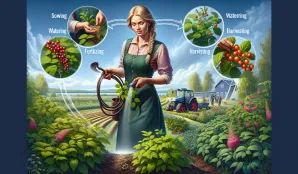
Rather, plant cultivation salary
Latest available salary statistics are for 2025. Compare average pay, salary range and related job listings.
32 408 - 31 752 SEK / month
Naturbruk
Related tools
Salary progression Rather, plant cultivation
What does a farm worker in crop production do? – Tasks and work environment
A farm worker in crop production is responsible for leading and coordinating the cultivation of agricultural crops, fruits, and berries. Tasks include planning planting seasons, monitoring plant protection methods, and ensuring the quality and quantity of the harvest. The worker often collaborates closely with farmers and technical staff to optimize production and adhere to environmental and safety regulations. The work environment can vary between office-based administrative tasks and outdoor field inspections and practical follow-up.
Salary development over time
The salary for a farm worker in crop production has shown a stable but moderate increase over the past three years. In 2022, the average salary was 29,716 SEK per month, rising to 30 083 SEK in 2023, and reaching 31 752 SEK in 2024. The percentage increase during this period is approximately 1.3%, indicating a relatively steady salary development without major fluctuations. This stability can be explained by consistent demand within the profession, influenced by factors such as education level, industry standards, and overall trends in the agricultural sector. Since the profession is part of a broader group of crop growers, fruit, and berry producers, the salary development also reflects market needs for specialized expertise in crop production.
The profession of farm worker in crop production often requires a combination of practical experience and theoretical knowledge, where the ability to solve problems quickly in the field is as important as planning and administration.
Farm worker in crop production salary – complete overview
- Average salary: 31 752 SEK/month
- Lowest/highest salary: No available data
- Hourly wage: 181 SEK (based on 166 working hours/month)
- Gender differences: No available data
- Regional differences: Data not specified
Education and qualifications
The educational path to become a farm worker in crop production often requires a combination of formal education in agriculture or agronomy and practical experience in the agricultural sector. Qualifications may vary depending on the employer and responsibilities.
- Formal degrees: Vocational college education in agriculture, agronomy, or crop production (1–3 years)
- Certifications/courses: Courses in plant protection, environmental and safety topics
- Internship/trainee: Practical experience from agricultural businesses or crop projects is recommended
- Prerequisites: Basic knowledge of biology and agricultural technology
- Tips for choosing: Select programs focusing on sustainable cultivation and modern technology
Common benefits and compensations
Typical benefits for farm workers in crop production include often pension schemes, wellness contributions, and flexible working hours during seasonal variations. Compensation may also include travel allowances for field work and sometimes bonuses linked to production results or efficiency.
Competition and challenges
The profession of farm worker in crop production is characterized by a relatively stable job market, but competition may vary depending on region and season. A challenge is to stay updated with new cultivation techniques and environmental requirements, which requires continuous skills development. Additionally, the work environment can be physically demanding and weather-dependent, requiring flexibility and problem-solving skills.
Tips for aspiring farm workers in crop production
To succeed as a farm worker in crop production, it is beneficial to develop both technical skills and leadership abilities. A careful and structured work style facilitates planning and follow-up of cultivation activities. Effective communication is also important for collaboration with colleagues and suppliers. Flexibility and problem-solving skills are crucial for managing unforeseen challenges in the field. Finally, an interest in sustainability and the environment helps meet future demands within agriculture.
Key facts about farm workers in crop production
- Education level: Vocational college education in agriculture or agronomy
- Salary range: Approximately 29,700–30,100 SEK/month
- Work environment: Combination of office work and fieldwork
- Work form: Full-time with seasonal variations
- Demand: Stable within the group of crop, fruit, and berry growers
Career paths and future prospects
After a few years of experience as a farm worker in crop production, there are opportunities to advance to more specialized or leadership roles within the agricultural sector, such as production manager or crop advisor. The profession is part of a broader occupational group with about 360 jobs available according to the latest data from the Employment Service. Due to limited data, no specific assessment of recruitment or forecast for the profession is made. Generally, demand remains stable, but further skills development in sustainable and technical cultivation can improve career opportunities.
Frequently asked questions about farm workers in crop production
- What does a farm worker in crop production earn?
- The average salary is approximately 31 752 SEK per month, with an hourly wage of around 181 SEK. - What education is required to become a farm worker in crop production?
- Typically, a vocational college education in agriculture or agronomy, combined with practical experience. - Are there regional differences in salary?
- No specific data available about regional differences for this profession. - What tasks are included in the role?
- Planning and supervision of crop cultivation, coordinating work efforts, and quality control. - What are the future prospects for a farm worker in crop production?
- Demand remains stable within the profession, but no specific forecast exists due to limited data. - What personal qualities are important in the profession?
- Accuracy, flexibility, and good communication skills are central qualities. - Can one advance within the profession?
- Yes, with experience, there are opportunities for specialization or leadership positions within the agricultural sector.

Salary distributed by age and sector

About the data
All information displayed on this page is based on data from the Swedish Central Bureau of Statistics (SCB), the Swedish Tax Agency and the Swedish employment agency. Learn more about our data and data sources here.
All figures are gross salaries, meaning salaries before tax. The average salary, or mean salary, is calculated by adding up the total salary for all individuals within the profession and dividing it by the number of individuals. For specific job categories, we have also considered various criteria such as experience and education.
Profession Rather, plant cultivation has the SSYK code 6111, which we use to match against the SCB database to obtain the latest salary statistics.
-

Farm Laborer 2026/27 – Recruitment Skåne & Kronoberg
Growers of agricultural crops, fruit and berries
Wed, 8 Jul 2026 - 00:18 -

Agricultural Relief Hand at Växa – Reserve Position
Growers of agricultural crops, fruit and berries
Wed, 10 Jun 2026 - 23:16 -

Staff Wanted for Berry and Vegetable Farm
Growers of agricultural crops, fruit and berries
Wed, 20 May 2026 - 21:34 -
Head Grower at ECA Operator Frövi AB
Growers of agricultural crops, fruit and berries
Tue, 19 May 2026 - 23:20 -
Supervisor, Greenhouse / Packing Hall – Leadership and Practical Work in Sustainable Food Production
Growers of agricultural crops, fruit and berries
Tue, 19 May 2026 - 22:52
Compare salary, work tasks and job outlook in adjacent occupations to find roles with similar skills or pay levels.
-

Farmer, plant cultivation salary
Average salary: 31 752 SEK/month • Naturbruk
Growers of agricultural crops, fruit and berries
Compare with Rather, plant cultivation
Mon, 13 Jul 2026 - 17:09 -

Agricultural foreman, mixed operation salary
Average salary: 28 900 SEK/month • Naturbruk
Plant growers and animal breeders, mixed operations
Compare with Rather, plant cultivation
Mon, 13 Jul 2026 - 07:18 -
Average salary: 44 800 SEK/month • Naturbruk
Specialists and advisors in forestry
Compare with Rather, plant cultivation
Tue, 14 Jul 2026 - 07:14 -

Average salary: 29 784 SEK/month • Naturbruk
Breeders and caretakers of pets
Compare with Rather, plant cultivation
Tue, 14 Jul 2026 - 05:53 -

Average salary: 32 000 SEK/month • Naturbruk
Gardeners etc.
Compare with Rather, plant cultivation
Tue, 14 Jul 2026 - 04:59 -

Average salary: 28 200 SEK/month • Naturbruk
Berry pickers and planters etc.
Compare with Rather, plant cultivation
Sun, 12 Jul 2026 - 06:51


