- Salary statistics
- Fur model salary
Fur model salary
Latest available salary statistics are for 2025. Compare average pay, salary range and related job listings.
33 000 - 33 100 SEK / month
Hantverksyrken
Related tools
Salary progression Fur model
What does a fur designer do? – Tasks and work environment
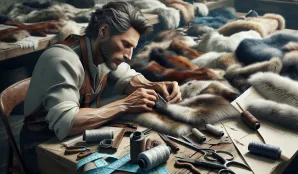
A fur designer works with designing, creating, and customizing clothing and accessories made of fur. The profession involves developing patterns, cutting materials, sewing, and shaping fur products according to customer preferences or current fashion trends. The work is often carried out in an atelier or small workshop environment where craftsmanship and attention to detail are essential. Collaboration with other professionals such as tailors and designers is common, and the working environment is characterized by both creativity and precision.
Salary development over time
The salary for fur designers has shown some variation over the past three years. In 2022, the average salary was 28,800 SEK per month. In 2023, the salary increased slightly to 30 900 SEK, but the following year, 2024, it decreased marginally to 33 100 SEK. The total increase from 2022 to 2024 amounts to approximately 7.3 %, but the trend between the last two years indicates stagnation with a slight decrease of 0.3 %. Salary changes can partly be explained by limited demand for the profession, as well as economic factors and changing consumption patterns in the fashion industry. Since the profession belongs to a small and specialized group, salary levels are also influenced by competition from other textile artisans and the availability of assignments.
Fur designer salary – complete overview
- Average salary: 33 100 SEK/month
- Lowest/Highest salary: Data not available, but women earn 33 500 SEK
- Hourly wage: 186 SEK
- Gender differences: Women 33 500 SEK, data on men is unavailable
- Regional differences: No specific data available
Education and qualifications
To work as a fur designer, a background in textiles and fashion is usually required, often with a focus on sewing, pattern construction, and craftsmanship techniques. Many undertake vocational training as a tailor or textile and design programs at the high school level, followed by further education in fur and specialized techniques. Practical experience and the ability to work with various materials are crucial, as well as an eye for form and details.
- Formal education: Textile and design programs (3 years), supplemented with craftsmanship courses
- Certifications: Specialized courses in fur and leather craftsmanship
- Internship: Apprenticeship or internship in an atelier is recommended
- Prerequisites: Good knowledge of sewing and pattern construction
- Tips: Participating in trade fairs and industry meetings can provide valuable contacts
Fur designers often work with unique garments and custom orders, which require a high level of creativity and problem-solving skills. Many in the profession combine traditional techniques with modern design elements to create products that stand out in the market.
Common benefits and compensations
For fur designers, benefits such as wellness allowances, flexible working hours, and discounts on materials or tools are common. Some employers also offer further training in new techniques and access to modern machinery, contributing to professional development.
Competition and challenges
The competition within the profession of fur designer is significant, mainly due to an oversupply of trained tailors and atelier seamstresses, as well as the limited demand for fur products in today’s fashion climate. Nationally, job opportunities are scarce, and the recruitment situation is characterized by an oversupply of labor. Trends in sustainability and animal welfare also impact the future of the profession, requiring adaptability and diversification of skills. Securing permanent employment can be difficult, and many work as freelancers or on project basis. Success requires ongoing skill development and active networking within the industry.
Tips for aspiring fur designers
To succeed as a fur designer, it’s beneficial to have a genuine interest in craftsmanship and fashion, along with perseverance to work carefully with details over extended periods. Creativity is essential—daring to think innovatively and combining different techniques can open doors to unique projects and collaborations. Flexibility is important, as tasks and materials often vary depending on client wishes and seasonal trends. Good collaboration skills facilitate teamwork with designers and tailors. Finally, being proactive and resourceful, such as seeking internships, participating in industry events, and staying updated on new techniques and materials, is advantageous.
Key facts about Fur Designer
- Education level: High school education with specialization in textiles/design, often supplemented with specialized courses
- Work environment: Atelier or workshop, often project-based work
- Demand: Limited job opportunities, oversupply of labor
- Typical employment form: Self-employed or temporary employment
- Special skills: Pattern construction and material knowledge
Career paths and future prospects
After three to five years in the profession, fur designers can advance to more qualified roles within atelier work, become supervisors, or specialize in design and pattern development. Some choose to start their own business or work as consultants in the fashion and textile industry. According to the Swedish Public Employment Service’s forecast for tailors and atelier seamstresses, demand is expected to remain unchanged over the next five years, with limited job opportunities and an oversupply of labor. The industry is heavily influenced by sustainability trends and technological development, which can open new niches for those willing to further their education and adapt their skills.
Frequently asked questions about Fur Designer
- What does a fur designer earn?
- The average salary for a fur designer is 33 100 SEK per month. - How do gender differences manifest within the profession?
- Women earn an average of 33 500 SEK, while data on men is unavailable. - What education is required to become a fur designer?
- High school education in textiles/design and further specialized courses in fur are recommended. - What does the job market look like for fur designers?
- Opportunities are limited, and there is a surplus of labor across the country. - What are the most common work environments for fur designers?
- Most work in ateliers, workshops, or as self-employed professionals. - Are there regional salary differences?
- No specific data available. - What career opportunities are available after a few years?
- Progression to supervisory roles, specialization, or starting a business is possible.

Salary distributed by age and sector
| Age | Base salary | Monthly salary | |
|---|---|---|---|
| Snitt | 33000 kr | 33100 kr |
| Age | Base salary | Monthly salary | |
|---|---|---|---|
| Snitt | 30100 kr | 30100 kr |
| Age | Base salary | Monthly salary | |
|---|---|---|---|
| Snitt | 30100 kr | 30100 kr |
| Age | Base salary | Monthly salary | |
|---|---|---|---|
| Snitt | 33100 kr | 33100 kr |
| Age | Base salary | Monthly salary | |
|---|---|---|---|
| Snitt | 33100 kr | 33100 kr |
| Age | Base salary | Monthly salary | |
|---|---|---|---|
| Snitt | 33400 kr | 33500 kr |
| Age | Base salary | Monthly salary | |
|---|---|---|---|
| Snitt | 30100 kr | 30100 kr |
| Age | Base salary | Monthly salary | |
|---|---|---|---|
| Snitt | 30100 kr | 30100 kr |
| Age | Base salary | Monthly salary | |
|---|---|---|---|
| Snitt | 33400 kr | 33500 kr |
| Age | Base salary | Monthly salary | |
|---|---|---|---|
| Snitt | 33400 kr | 33500 kr |

About the data
All information displayed on this page is based on data from the Swedish Central Bureau of Statistics (SCB), the Swedish Tax Agency and the Swedish employment agency. Learn more about our data and data sources here.
All figures are gross salaries, meaning salaries before tax. The average salary, or mean salary, is calculated by adding up the total salary for all individuals within the profession and dividing it by the number of individuals. For specific job categories, we have also considered various criteria such as experience and education.
Profession Fur model has the SSYK code 7531, which we use to match against the SCB database to obtain the latest salary statistics.
-

Experienced Men's Tailor for Atelier – 10+ Years Experience Required
Tailors and atelier seamstresses etc.
Sun, 12 Jul 2026 - 23:55 -

Sewing Technician with Customer Focus
Tailors and atelier seamstresses etc.
Sun, 12 Jul 2026 - 20:34 -

Product Developer – H&M Kids Boys 3-8 Years
Tailors and atelier seamstresses etc.
Tue, 7 Jul 2026 - 21:56 -

Product Pattern Maker (Soft Goods) – Thule
Tailors and atelier seamstresses etc.
Fri, 3 Jul 2026 - 00:55 -

Safety Material Technician for Transport Flight Squadron at Såtenäs
Tailors and atelier seamstresses etc.
Tue, 30 Jun 2026 - 22:52
Compare salary, work tasks and job outlook in adjacent occupations to find roles with similar skills or pay levels.
-

Cabin assistant, glass cabin salary
Average salary: 34 000 SEK/month • Hantverksyrken
Musical instrument makers and other artisans
Compare with Fur model
Mon, 13 Jul 2026 - 18:19 -

Average salary: 34 200 SEK/month • Hantverksyrken
Fine, interior and furniture carpenters
Compare with Fur model
Wed, 8 Jul 2026 - 18:06 -

Average salary: 34 000 SEK/month • Hantverksyrken
Musical instrument makers and other artisans
Compare with Fur model
Tue, 14 Jul 2026 - 05:42 -

Average salary: 34 200 SEK/month • Hantverksyrken
Fine, interior and furniture carpenters
Compare with Fur model
Mon, 13 Jul 2026 - 11:47 -

Average salary: 40 900 SEK/month • Hantverksyrken
Precision mechanics
Compare with Fur model
Mon, 13 Jul 2026 - 14:21 -

Average salary: 34 000 SEK/month • Hantverksyrken
Musical instrument makers and other artisans
Compare with Fur model
Tue, 14 Jul 2026 - 05:19


