- Salary statistics
- Dresser salary
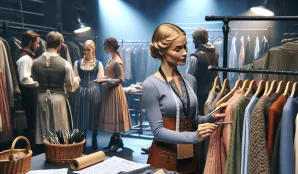
Dresser salary
Latest available salary statistics are for 2025. Compare average pay, salary range and related job listings.
35 400 - 37 200 SEK / month
Women earn 103% of what men do.
Kultur, media, design
Related tools
Salary progression Dresser
What does a wardrobe assistant do? – Job tasks and work environment
A wardrobe assistant primarily works behind the scenes in theater, opera, film, and TV productions. The role involves ensuring that actors and performers quickly and accurately put on the correct costumes, accessories, and sometimes makeup for various scenes or performances. Tasks often include planning costume changes, preparing and maintaining clothing, and assisting with quick changes during ongoing performances. The work environment is characterized by a fast pace, extensive collaboration with other professionals, and often irregular hours, including evenings and weekends. Wardrobe assistants need to be flexible, stress-resistant, and detail-oriented to ensure everything runs smoothly behind the scenes.
Salary development over time
The profession of wardrobe assistant has experienced a clear positive salary growth over the past three years. In 2022, the average salary was 34,200 SEK per month. In 2023, the average salary increased to 39 300 SEK, representing an increase of approximately 5.8%. In 2024, the average salary reached 36 700 SEK per month, a further increase of about 8.6% compared to the previous year. This trend can be linked to increased demand for qualified personnel in performing arts and production, as well as general salary adjustments within the cultural sector. For women, salary increases have followed a similar trend, but their average salary remains slightly below the overall level. Overall, the trend indicates that the profession is increasingly valued, especially for those with experience and specialized skills.
Wardrobe assistant salary – comprehensive overview
- Average salary: 36 700 SEK/month
- Lowest salary: 34,200 SEK/month
- Highest salary: 36 700 SEK/month
- Hourly wage (average): 236 SEK
- Women’s average salary: 37 100 SEK/month
- Gender differences: Women’s salaries are slightly below the average; no specific data available for men
- Regional differences: No specific data available
Education and qualifications
The path to becoming a wardrobe assistant is often practical and typically involves experience in theater, costume, or textiles. Formal education is not always required, but programs in scenography, textiles, sewing, or fashion can be advantageous. Practical experience, as well as the ability to work quickly and accurately, is highly valued by employers. Many wardrobe assistants start as interns or volunteers to gain relevant experience and build networks within the industry.
- Vocational training in textiles, fashion, or performing arts – 1–3 years
- Internship or trainee position in theater or production
- Courses in sewing and costume maintenance
- Prerequisites: Interest in performing arts and textiles, good teamwork skills
- Experience from similar work or volunteer work
A wardrobe assistant often becomes a key person in the production, as quick and discreet costume changes can be crucial for the show to run smoothly without interruptions. Many in the profession develop close collaboration with both performers and costume designers, making the role both creative and social.
Common benefits and compensations
Typical benefits for wardrobe assistants may include evening and weekend work supplements, access to wellness allowances, free or discounted tickets to performances, and sometimes opportunities for further training within the profession. The work is often based on collective agreements, which entitle workers to holiday pay, occupational pension, and insurance coverage.
Competition and challenges
Competition for positions as a wardrobe assistant is often intense, especially within major theaters and production houses where many seek to enter the profession. Challenges include irregular working hours, high work tempo, and the need for flexibility during rapid changes in production. The job market is affected by project-based employment and seasonal variations, which can lead to periods of uncertain employment. The profession also requires managing stress and working efficiently with others, sometimes under pressure. Despite these challenges, many are attracted to the profession due to the creative environment and the opportunity to work closely with the performing arts.
Tips for aspiring wardrobe assistants
To succeed as a wardrobe assistant, it’s important to combine attention to detail with flexibility and a genuine interest in performing arts. Gaining experience through internships or volunteer work is a smart step, especially if you are service-minded and can work quickly under pressure. Social skills are crucial, as the job involves extensive collaboration with performers and technical staff. An eye for detail and a feel for textiles help you spot and fix small problems before they become major issues. Being discreet and professional in all situations opens doors to new assignments. Good organizational skills facilitate managing many costume changes in the same evening. Lastly, curiosity and a desire to continuously develop your skills in the field are beneficial.
Key facts about wardrobe assistants
- Salary range: 34,200–36 700 SEK/month
- Average hourly wage: 236 SEK
- Education level: Vocational training or practical experience
- Work environment: Behind the scenes, often irregular hours
- Available jobs in the profession: 620 advertised positions
Career paths and future prospects
After several years of experience as a wardrobe assistant, there are opportunities to advance to more responsible roles, such as costume supervisor, costume assistant, or production team leader. Some choose to further their education in scenography, textile design, or production to broaden their career options. According to forecasts from the Employment Service, due to limited data, there is no clear assessment of the profession’s future outlook, but the overall group “Inspicienters and scriptwriters” has shown some demand, with 620 available jobs nationwide. The job market may vary between regions and production seasons. For those who are flexible and build networks, there are good opportunities to continue developing within the performing arts.
Frequently asked questions about wardrobe assistants
- What does a wardrobe assistant earn?
- The average salary for a wardrobe assistant is 36 700 SEK per month. - How do you become a wardrobe assistant?
- The most common way is to pursue vocational training in textiles or performing arts, as well as gaining practical experience through internships or volunteer work. - Are there many job openings for wardrobe assistants?
- There are 620 available jobs according to the latest statistics. - What personal qualities are important?
- Attention to detail, flexibility, social skills, and stress tolerance are especially valuable. - Does a wardrobe assistant work mostly day or evening shifts?
- Work often takes place in the evenings and on weekends, especially during performances or recordings. - Are there salary differences between women and men?
- Women have an average salary of 37 100 SEK; specific data for men is not available.

Salary distributed by age and sector
| Age | Base salary | Monthly salary | |
|---|---|---|---|
| 25-34 | 33900 kr | 34400 kr | |
| 55-64 | 38800 kr | 39900 kr | |
| Snitt | 103% | 36000 kr | 36700 kr |
| Age | Base salary | Monthly salary | |
|---|---|---|---|
| 25-34 | 33900 kr | 34400 kr | |
| 55-64 | 38800 kr | 39900 kr | |
| Snitt | 103% | 36000 kr | 36700 kr |
| Age | Base salary | Monthly salary | |
|---|---|---|---|
| 25-34 | 33900 kr | 34400 kr | |
| 55-64 | 38800 kr | 39900 kr | |
| Snitt | 103% | 36000 kr | 36700 kr |
| Age | Base salary | Monthly salary | |
|---|---|---|---|
| Snitt | 103% | 35700 kr | 36100 kr |
| Age | Base salary | Monthly salary | |
|---|---|---|---|
| Snitt | 103% | 35700 kr | 36100 kr |
| Age | Base salary | Monthly salary | |
|---|---|---|---|
| Snitt | 103% | 35700 kr | 36100 kr |
| Age | Base salary | Monthly salary | |
|---|---|---|---|
| Snitt | 103% | 36200 kr | 37100 kr |
| Age | Base salary | Monthly salary | |
|---|---|---|---|
| Snitt | 103% | 36200 kr | 37100 kr |
| Age | Base salary | Monthly salary | |
|---|---|---|---|
| Snitt | 103% | 36200 kr | 37100 kr |

About the data
All information displayed on this page is based on data from the Swedish Central Bureau of Statistics (SCB), the Swedish Tax Agency and the Swedish employment agency. Learn more about our data and data sources here.
All figures are gross salaries, meaning salaries before tax. The average salary, or mean salary, is calculated by adding up the total salary for all individuals within the profession and dividing it by the number of individuals. For specific job categories, we have also considered various criteria such as experience and education.
Profession Dresser has the SSYK code 3433, which we use to match against the SCB database to obtain the latest salary statistics.
-
Production Coordinator for Pool and Outdoor Environment Company
Stage managers and script supervisors etc.
Tue, 14 Jul 2026 - 00:03 -

Office Manager / Project Administrator – Marine Sector (Gothenburg)
Stage managers and script supervisors etc.
Thu, 9 Jul 2026 - 21:14 -

Logistics Coordinator for Testing in Karlskrona
Stage managers and script supervisors etc.
Thu, 9 Jul 2026 - 21:12 -

Production Manager in Köping – Full-time
Stage managers and script supervisors etc.
Thu, 9 Jul 2026 - 00:08 -

Manager, Production Technology – Quintus Technologies, Västerås
Stage managers and script supervisors etc.
Wed, 8 Jul 2026 - 21:43
Compare salary, work tasks and job outlook in adjacent occupations to find roles with similar skills or pay levels.
-

Average salary: 35 600 SEK/month • Kultur, media, design
Other professions in culture and entertainment
Compare with Dresser
Sun, 12 Jul 2026 - 20:43 -

Model designer, textile salary
Average salary: 51 700 SEK/month • Kultur, media, design
Other designers and creators
Compare with Dresser
Tue, 14 Jul 2026 - 04:45 -

Average salary: 40 600 SEK/month • Kultur, media, design
Translators, interpreters and linguists etc.
Compare with Dresser
Tue, 14 Jul 2026 - 04:03 -

Average salary: 35 600 SEK/month • Kultur, media, design
Other professions in culture and entertainment
Compare with Dresser
Mon, 13 Jul 2026 - 01:19 -

Average salary: 39 900 SEK/month • Kultur, media, design
Interior designers, decorators and scenographers etc.
Compare with Dresser
Mon, 13 Jul 2026 - 17:59 -

Average salary: 41 986 SEK/month • Kultur, media, design
Choreographers and dancers
Compare with Dresser
Mon, 13 Jul 2026 - 19:11


