- Salary statistics
- Painter, artist salary
Painter, artist salary
Latest available salary statistics are for 2025. Compare average pay, salary range and related job listings.
43 692 - 41 986 SEK / month
Kultur, media, design
Related tools
Salary progression Painter, artist
What does a painter, artist do? – Tasks and work environment
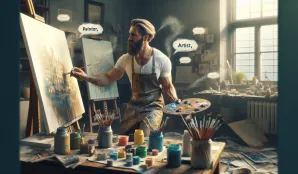
A painter, artist works with creating visual art using various techniques such as painting, drawing, printmaking, or installations. Tasks can include developing their own art projects or accepting commissions from galleries, institutions, or private individuals. Many artists combine exhibitions with educational assignments, public art projects, or collaborations with other creative professions. The work environment varies greatly; some have their own studios, others rent space in collective workshops, or work from home. The work can be both independent and social, depending on projects and partners, and is often characterized by freedom but also financial uncertainty.
Salary development over time
The salary for painters, artists has increased gradually in recent years. In 2022, the average salary was 36,200 SEK per month, which rose to 39 779 SEK in 2023 and continued up to 41 986 SEK in 2024. This development corresponds to a total increase of about 10% over three years, which is slightly higher than the inflation rate during the same period. The salary increase can partly be explained by increased interest in visual arts, more public investments, and a certain professionalization within the profession. Despite this, income disparity is large, and many artists have income from multiple sources, affecting both salary statistics and economic security in the industry.
Painter, artist salary – comprehensive overview
- Average salary: 41 986 SEK/month
- Lowest/Highest salary: Varies greatly depending on assignments and reputation
- Hourly wage: 239 SEK/hour (based on 166 hours/month)
- Gender differences: No available salary data for men and women
- Regional differences: Specific statistics are lacking, but demand and opportunities may vary between large cities and rural areas
Education and qualifications
To work as a painter, artist, often a degree from art college or folk high school is required, but it is also possible to establish oneself through self-study and a strong portfolio. Many choose to supplement their education with shorter courses, internships, and international exchanges to strengthen both technical skills and artistic expression. Formal requirements are few, but competition is high, and a personal style and network are crucial for success.
- Art college degree: 3–5 years (e.g., The Royal Institute of Art or HDK-Valand)
- Folk high school: 1–2 years, often as preparation
- Courses and certificates: Possible within specific techniques or projects
- Internships and studio residencies: Provide experience and networks
- Portfolio and exhibition experience: Important for establishing oneself
Many painters, artists combine their creation with teaching, project management, or collaborations within the cultural sector. Being flexible and open to different assignments increases opportunities for both creative and financial success.
Common benefits and compensations
Common benefits within the profession include opportunities for artist stipends, project grants, and exhibition fees. Some employers or clients may also offer studio support, travel allowances, or insurance related to creative activities. Flexible working hours and remote work options are also common among painters, artists.
Competition and challenges
The competition for commissions and exhibition opportunities is high within the art industry, especially in larger cities where many seek to access the same galleries and institutions. A challenge is that many painters, artists work as sole proprietors or freelancers, which entails financial insecurity and entrepreneurial demands. It can be difficult to reach a broader audience with their art and create a stable income over time. Stipends and public support are important but often hard to obtain, requiring patience and perseverance to establish and develop in the profession.
Tips for those who want to become painters, artists
To succeed as a painter, artist, it is good to be persistent and have a strong drive, as the path to recognition and financial stability can be long. Developing a personal expression and building a portfolio through regular creation is essential. Networking and collaborating with others in the art world open doors to new opportunities, so social skills and curiosity are important qualities. It is also recommended to pursue education and courses continuously to strengthen both technique and artistic thinking. Self-discipline is necessary to manage workflow and marketing, while openness to different work formats and projects increases the chances of success in a changing industry.
Key facts about painters, artists
- Educational level: Usually college or folk high school in art
- Work environment: Own studio, home environment, or collective workshop
- Typical work form: Self-employed or project-employed
- Job openings in the profession: 620 (May 2024)
- Demand: Limited statistics, but the industry is competitive
Career paths and future prospects
After three to five years in the profession, a painter, artist may have established themselves with recurring exhibitions, collaborations with galleries, or public commissions. It is also common to combine personal creation with educational efforts, project management, or assignments within the cultural sector. According to the Swedish Public Employment Service, reliable forecasts for future job opportunities are lacking due to limited statistical data, but within the visual artists' profession, there were 620 job openings in spring 2024. Career opportunities often depend on networks, portfolio building, and the ability to adapt to a changing market.
Frequently asked questions about painters, artists
- What does a painter, artist earn?
- The average salary is 41 986 SEK per month, but income varies depending on assignments and experience. - What education is required to become a painter, artist?
- Art college or folk high school is most common, but it is also possible to establish oneself through self-study and portfolio. - What is the job market like for painters, artists?
- The market is competitive and there are 620 job openings within the profession, but reliable forecasts are lacking. - Are there regional differences in salary?
- Specific statistics are lacking, but opportunities may be greater in larger cities where the art scene is more established. - What benefits can a painter, artist receive?
- Common benefits include stipends, project grants, studio support, and flexible working hours. - How can one increase their chances of success as a painter, artist?
- By networking, developing a strong portfolio, and being open to different work formats and collaborations.

Salary distributed by age and sector

About the data
All information displayed on this page is based on data from the Swedish Central Bureau of Statistics (SCB), the Swedish Tax Agency and the Swedish employment agency. Learn more about our data and data sources here.
All figures are gross salaries, meaning salaries before tax. The average salary, or mean salary, is calculated by adding up the total salary for all individuals within the profession and dividing it by the number of individuals. For specific job categories, we have also considered various criteria such as experience and education.
Profession Painter, artist has the SSYK code 2651, which we use to match against the SCB database to obtain the latest salary statistics.


Compare salary, work tasks and job outlook in adjacent occupations to find roles with similar skills or pay levels.
-

Average salary: 55 500 SEK/month • Kultur, media, design
Industrial designers
Compare with Painter, artist
Tue, 14 Jul 2026 - 13:58 -
Average salary: 42 300 SEK/month • Kultur, media, design
Image and broadcast technicians
Compare with Painter, artist
Tue, 14 Jul 2026 - 15:02 -

Average salary: 41 400 SEK/month • Kultur, media, design
Museum curators etc.
Compare with Painter, artist
Tue, 14 Jul 2026 - 13:59 -

Average salary: 47 400 SEK/month • Kultur, media, design
Musicians, singers and composers
Compare with Painter, artist
Tue, 14 Jul 2026 - 15:23 -

Average salary: 38 500 SEK/month • Kultur, media, design
Photographers
Compare with Painter, artist
Mon, 13 Jul 2026 - 02:11 -

Average salary: 55 500 SEK/month • Kultur, media, design
Industrial designers
Compare with Painter, artist
Tue, 14 Jul 2026 - 15:57


