- Salary statistics
- Motorcycle driver, competition salary
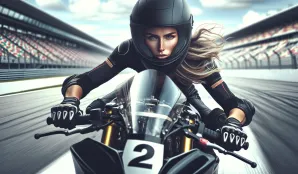
Motorcycle driver, competition salary
Latest available salary statistics are for 2025. Compare average pay, salary range and related job listings.
37 000 - 34 114 SEK / month
Pedagogiskt arbete
Related tools
Salary progression Motorcycle driver, competition
What does a motorcycle racer do in competition? – Tasks and work environment
A motorcycle racer in competition participates in organized races and series where skill, technique, and physical ability are tested. Tasks include training, races, test riding motorcycles, and collaborating with mechanics and teams to optimize vehicle performance. The work environment is diverse and can include everything from race tracks and motocross tracks to temporary racing arenas with high noise levels, challenging weather conditions, and strict safety routines. Travel, often both nationally and internationally, is common to participate in various competitions and events.
Salary development over time
The salary for motorcycle racers in competition has shown a clear upward trend over the past three years. In 2022, the average salary was 31,926 SEK per month. In 2023, it increased to 44 900 SEK, representing an increase of nearly 29.4%. For 2024, the average salary rose further to 34 114 SEK per month, an increase of an additional 8.7% compared to the previous year. This development reflects growing demand for professional athletes, increased sponsorship income, and a greater focus on motorsport’s commercial value. At the same time, increased media visibility and larger prize pools have contributed to raising salary levels for the most successful racers.
Many motorcycle racers develop a deep technical understanding of their vehicles and work closely with engineers to fine-tune settings. The technical dialogue between rider and team can be crucial for success on the track.
Motorcycle Racer, Competition Salary – Complete Overview
- Average salary: 34 114 SEK/month
- Lowest/Highest salary: Data unavailable
- Hourly wage: 270 SEK
- Gender differences: Data unavailable
- Regional differences: Data unavailable
Education and qualifications
The path to becoming a motorcycle racer in competition often begins at a young age with training at local levels and participation in youth and junior classes. Formal education is rarely required, but licensing through sports associations and specialized training programs are standard. Practical experience, technical understanding, and physical training are essential for success and development in the sport.
- License from motorcycle federation: Required for national and international competition
- Specialized training camps and courses: Recommended for technical and physical development
- Participation in competitions: Early start in youth series is common
- Physical training: High endurance and strength are required
- Technical understanding: Basic knowledge of motorcycle function and maintenance
Common benefits and compensations
Besides the base salary, motorcycle racers in competition can receive bonuses for race success, sponsorship deals, travel allowances, and coverage of equipment costs. Some teams also offer health insurance, training support, and opportunities for international race trips.
Competition and challenges
The competition within motorcycle racing is very fierce, with many riders vying for limited spots in professional teams. Challenges include not only physical and technical performance on the track but also attracting sponsors and building a strong personal brand. The risk of injury is significant, and continuous training is required to stay at the top. Financial conditions vary greatly among riders, and access to proper equipment and technical resources can be decisive for success. The career is often short and demands discipline and long-term planning.
Tips for those who want to become motorcycle racers in competition
To succeed as a motorcycle racer in competition, it is good to train early in technique and racing experience through regular participation in local races. Endurance and discipline are crucial to handle tough training and long race days. A strong interest in technology facilitates collaboration with mechanics and engineers, which can improve results on the track. Social skills and communication ability are important for building relationships with sponsors and team members. Finally, a high level of goal orientation is required to manage setbacks and successes on the way to a professional career.
Key facts about Motorcycle Racer, Competition
- Occupational group: Professional athletes
- Average salary: 34 114 SEK/month
- Typical employment form: Self-employed or contract with team
- Number of available jobs (2024): 434 within the occupational group
- Formal education: Licensing and competition experience required
Career paths and future prospects
After 3–5 years in the profession, a motorcycle racer in competition can advance to higher racing classes, become a team captain, or take on roles as a test rider for manufacturers. Many experienced riders move on to coaching, technical advising, or lecturing within motorsport. According to the Swedish Public Employment Service, there is steady demand for professional athletes, with 434 job openings in 2024. The outlook for the future remains positive, especially for riders with strong results, technical skills, and the ability to build a personal brand.
Frequently asked questions about Motorcycle Racer, Competition
- What does a motorcycle racer earn in competition?
- The average salary is 34 114 SEK per month. - How does one become a motorcycle racer in competition?
- Through early racing experience, licensing from associations, and continuous training. - What education is required?
- Formal education is uncommon, but licensing and practical experience are necessary. - What is the work environment like?
- The environment is tough and varied, often outdoors on tracks with high safety standards. - Are there salary differences between regions?
- Reliable data on regional salary differences is lacking. - What benefits are common?
- Bonuses, sponsorships, travel allowances, and sometimes health insurance. - What does the future hold for the profession?
- Demand remains good, especially for skilled and prominent racers.

Salary distributed by age and sector

About the data
All information displayed on this page is based on data from the Swedish Central Bureau of Statistics (SCB), the Swedish Tax Agency and the Swedish employment agency. Learn more about our data and data sources here.
All figures are gross salaries, meaning salaries before tax. The average salary, or mean salary, is calculated by adding up the total salary for all individuals within the profession and dividing it by the number of individuals. For specific job categories, we have also considered various criteria such as experience and education.
Profession Motorcycle driver, competition has the SSYK code 3421, which we use to match against the SCB database to obtain the latest salary statistics.
Compare salary, work tasks and job outlook in adjacent occupations to find roles with similar skills or pay levels.
-

Average salary: 41 600 SEK/month • Pedagogiskt arbete
Primary school teachers
Compare with Motorcycle driver, competition
Tue, 14 Jul 2026 - 11:54 -

Average salary: 36 800 SEK/month • Pedagogiskt arbete
Other educators with theoretical specialist competence
Compare with Motorcycle driver, competition
Sun, 12 Jul 2026 - 10:18 -

Average salary: 41 500 SEK/month • Pedagogiskt arbete
Study and career counselors
Compare with Motorcycle driver, competition
Tue, 14 Jul 2026 - 11:56 -

Teacher, meat and charcuterie salary
Average salary: 43 100 SEK/month • Pedagogiskt arbete
Vocational subject teachers
Compare with Motorcycle driver, competition
Tue, 14 Jul 2026 - 08:18 -

Average salary: 47 600 SEK/month • Pedagogiskt arbete
Special education teachers and special educators etc.
Compare with Motorcycle driver, competition
Tue, 14 Jul 2026 - 13:08 -

Teacher, media, graphic production salary
Average salary: 43 100 SEK/month • Pedagogiskt arbete
Vocational subject teachers
Compare with Motorcycle driver, competition
Tue, 14 Jul 2026 - 11:02


