- Salary statistics
- Metalliser salary
Metalliser salary
Latest available salary statistics are for 2025. Compare average pay, salary range and related job listings.
33 300 - 37 200 SEK / month
Women earn 91% of what men do.
Industriell tillverkning
Related tools
Salary progression Metalliser
What does a metallizer do? – Tasks and work environment
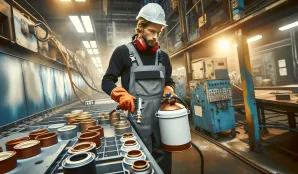
A metallizer primarily works with surface treatment of metals, using various techniques to apply protective or decorative coatings on metal objects. Tasks often include surface preparation, handling metallization equipment, and quality control of the finished result. Processes can include spraying, dipping, or electrochemical metallization, depending on the product and requirements. The work environment is usually industrial, often in workshops or factories where noise, dust, and chemical handling occur. High safety awareness and precision are required, as the work can involve physical strain and the need for protective gear.
Salary development over time
The salary for metallizers has shown a steady increase over the past three years. In 2022, the average salary was 31,100 SEK per month, rising to 35 200 SEK in 2023. During 2024, the salary continued to grow to 35,200 SEK, corresponding to an increase of about 13% over the period. This positive trend reflects, among other things, increased demand for skilled labor in the industry and general wage growth in manufacturing sectors. Technological development and higher demands for quality and documentation may also have contributed to raising salary levels. At the same time, some differences between genders and regions remain, affecting salary levels.
Metallizer salary – a complete overview
- Average salary: 35,200 SEK/month
- Lowest salary: 32,400 SEK/month
- Highest salary: 36,200 SEK/month
- Hourly wage (average): 212 SEK
- Gender differences: Men 36 600 SEK, women 32,400 SEK (women earn 91% of men's salary)
- Regional differences: Highest regional salary: 36,200 SEK/month (men)
Education and qualifications
To work as a metallizer, a high school education in industry, technology, or equivalent is generally required, often with a focus on surface treatment or production. Many employers also seek practical experience from similar industrial jobs, and it is common to start as an apprentice or trainee. Specialized training, certifications, and courses in surface treatment or machine handling can increase employment opportunities and career development.
- High school education: Industrial technology program, 3 years
- Certifications: Courses in surface treatment and work environment
- Internship: Common during education and as an introduction
- Prerequisites: Basic knowledge of technology and mathematics
- Trainee/apprenticeship programs: Common first step into the profession
Metallizers often have the opportunity to work with both traditional and high-tech methods, offering great variation in daily work. Those interested in technological development and combining practical work with problem-solving can thus find long-term satisfaction in the profession.
Common benefits and compensations
Metallizers are often covered by collective agreements that include occupational pension, insurance, and sick pay. Other common benefits may include wellness allowances, work clothing, subsidized lunches, or opportunities for further training at the employer's expense. Shift work may occur and sometimes provides additional pay.
Competition and challenges
Competition for jobs as a metallizer is generally moderate but can vary depending on region and economic conditions. The industry is influenced by technological development, automation, and demand for more environmentally friendly surface treatment methods, which increases the need for skills development. The work environment can be physically demanding and requires careful attention to safety and health risks. Additionally, quick adaptation to new work methods and materials can be challenging for some. Women are underrepresented and earn lower average salaries, reflecting broader challenges related to gender equality in the industry.
Tips for those wanting to become a metallizer
To succeed as a metallizer, it is helpful to have a technical interest and a desire to continuously learn new things, as developments in materials and methods are rapid. Precision is a crucial trait, especially regarding quality control and safety in work tasks. A structured approach makes handling machinery and documenting processes easier. Good teamwork skills are also important, as work often occurs in teams and with other occupational groups. Being flexible and able to adapt to shift work or changing tasks increases employment opportunities. Lastly, a positive attitude towards safety routines and work environment regulations enhances safety for oneself and colleagues.
Key facts about metallizers
- Education level: High school diploma, industrial technology program
- Work environment: Industrial, often with high safety requirements
- Common work form: Shift work is common
- Demand: 1,437 job openings within the occupational group (May 2024)
- Gender distribution: Men dominate the profession and have higher average salaries
Career paths and future prospects
After three to five years of experience as a metallizer, there are opportunities to develop into a supervisor, process operator, or specialist in advanced surface treatment. Some choose to pursue further education as technicians, maintenance managers, or quality inspectors. According to the Employment Service, it is not possible to give an exact forecast for the profession due to limited data, but the number of job openings within the occupational group is relatively large. Technological development and increased demand for sustainable and innovative solutions can provide good future prospects for those continuously developing their skills.
Common questions about metallizers
- What does a metallizer earn?
- A metallizer has an average salary of 35,200 SEK per month according to current statistics. - What are the salary differences between women and men?
- Men earn an average of 36 600 SEK while women earn 32,400 SEK, which means women earn approximately 91% of men's salaries. - What education is required to become a metallizer?
- High school education in industry or technology, often with a focus on surface treatment, is most common. - Are there many job openings for metallizers?
- Yes, there are 1,437 job openings within the occupational group of machine operators, surface treatment. - What are the future prospects for metallizers?
- Due to limited data, no exact forecast exists, but technological development and the number of job openings suggest continued demand. - What occupational health risks exist for metallizers?
- The work environment can involve exposure to chemicals, noise, and physical work, requiring protective equipment and safety routines. - What career opportunities are available after a few years in the profession?
- Career paths can lead to roles such as supervisor, process operator, or specialist in advanced surface treatment.

Salary distributed by age and sector
| Age | Base salary | Monthly salary | |
|---|---|---|---|
| 18-24 | 29900 kr | 33900 kr | |
| 25-34 | 31700 kr | 35400 kr | |
| 35-44 | 32500 kr | 35900 kr | |
| 45-54 | 34100 kr | 37000 kr | |
| 55-64 | 33800 kr | 36500 kr | |
| Snitt | 91% | 32700 kr | 36000 kr |
| Age | Base salary | Monthly salary | |
|---|---|---|---|
| 18-24 | 29900 kr | 33900 kr | |
| 25-34 | 31700 kr | 35400 kr | |
| 35-44 | 32500 kr | 35900 kr | |
| 45-54 | 34100 kr | 37000 kr | |
| 55-64 | 33800 kr | 36500 kr | |
| Snitt | 91% | 32700 kr | 36000 kr |
| Age | Base salary | Monthly salary | |
|---|---|---|---|
| 18-24 | 29900 kr | 33900 kr | |
| 25-34 | 31700 kr | 35400 kr | |
| 35-44 | 32500 kr | 35900 kr | |
| 45-54 | 34100 kr | 37000 kr | |
| 55-64 | 33800 kr | 36500 kr | |
| Snitt | 91% | 32700 kr | 36000 kr |
| Age | Base salary | Monthly salary | |
|---|---|---|---|
| 25-34 | 31900 kr | 35700 kr | |
| 35-44 | 33000 kr | 36500 kr | |
| 45-54 | 34700 kr | 37800 kr | |
| 55-64 | 34500 kr | 37300 kr | |
| Snitt | 91% | 33200 kr | 36600 kr |
| Age | Base salary | Monthly salary | |
|---|---|---|---|
| 25-34 | 31900 kr | 35700 kr | |
| 35-44 | 33000 kr | 36500 kr | |
| 45-54 | 34700 kr | 37800 kr | |
| 55-64 | 34500 kr | 37300 kr | |
| Snitt | 91% | 33200 kr | 36600 kr |
| Age | Base salary | Monthly salary | |
|---|---|---|---|
| 25-34 | 31900 kr | 35700 kr | |
| 35-44 | 33000 kr | 36500 kr | |
| 45-54 | 34700 kr | 37800 kr | |
| 55-64 | 34500 kr | 37300 kr | |
| Snitt | 91% | 33200 kr | 36600 kr |
| Age | Base salary | Monthly salary | |
|---|---|---|---|
| Snitt | 91% | 30700 kr | 33300 kr |
| Age | Base salary | Monthly salary | |
|---|---|---|---|
| Snitt | 91% | 30700 kr | 33300 kr |
| Age | Base salary | Monthly salary | |
|---|---|---|---|
| Snitt | 91% | 30700 kr | 33300 kr |

About the data
All information displayed on this page is based on data from the Swedish Central Bureau of Statistics (SCB), the Swedish Tax Agency and the Swedish employment agency. Learn more about our data and data sources here.
All figures are gross salaries, meaning salaries before tax. The average salary, or mean salary, is calculated by adding up the total salary for all individuals within the profession and dividing it by the number of individuals. For specific job categories, we have also considered various criteria such as experience and education.
Profession Metalliser has the SSYK code 8121, which we use to match against the SCB database to obtain the latest salary statistics.
-

Part-time Job in Industry and Warehousing in Falkenberg
Machine operators, surface treatment
Thu, 9 Jul 2026 - 01:16 -

Machine Operator for Paint Factory in Arlöv
Machine operators, surface treatment
Mon, 6 Jul 2026 - 23:28 -

Operator for Production Operations – Day Shift
Machine operators, surface treatment
Mon, 6 Jul 2026 - 22:02 -

Machine Operator for Precision Industry in Northern Stockholm
Machine operators, surface treatment
Sat, 4 Jul 2026 - 01:43 -

We are hiring new employees at Press Kogyo Sweden – Oskarshamn
Machine operators, surface treatment
Fri, 3 Jul 2026 - 22:37
Compare salary, work tasks and job outlook in adjacent occupations to find roles with similar skills or pay levels.
-

Window fitter, manufacturing salary
Average salary: 34 400 SEK/month • Industriell tillverkning
Assemblers, wood products
Compare with Metalliser
Mon, 13 Jul 2026 - 20:16 -

Average salary: 39 900 SEK/month • Industriell tillverkning
Machine operators, pharmaceutical products
Compare with Metalliser
Mon, 13 Jul 2026 - 13:46 -

Average salary: 40 300 SEK/month • Industriell tillverkning
Machine operators, paper goods industry
Compare with Metalliser
Sat, 11 Jul 2026 - 17:51 -

Machine operator, food industry, tea, coffee, cocoa salary
Average salary: 33 700 SEK/month • Industriell tillverkning
Other machine operators, food industry etc.
Compare with Metalliser
Tue, 14 Jul 2026 - 04:42 -

Average salary: 32 200 SEK/month • Industriell tillverkning
Other machine operators, textile, leather and leather industry
Compare with Metalliser
Mon, 6 Jul 2026 - 15:34 -

Average salary: 34 700 SEK/month • Industriell tillverkning
Machine carpenters and machine operators, wood industry
Compare with Metalliser
Tue, 14 Jul 2026 - 01:43


