- Salary statistics
- Line fitter, telecom salary
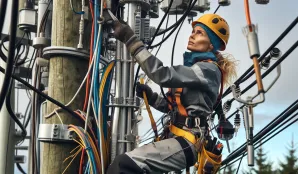
Line fitter, telecom salary
Latest available salary statistics are for 2025. Compare average pay, salary range and related job listings.
34 900 - 47 700 SEK / month
Women earn 87% of what men do.
Installation & drift/underhåll
Related tools
Salary progression Line fitter, telecom
What does a telecommunications line technician do – tasks and work environment
A telecommunications line technician is responsible for the installation, maintenance, and repair of telecommunications networks. Tasks include pulling and connecting telephone cables, both above and below ground, as well as troubleshooting and fixing network disruptions. The work environment varies between outdoor work on poles and masts, and indoor work in stations and technical rooms. Often, work at heights or in confined spaces is required, demanding high safety standards and precision. Irregular working hours and on-call duties may occur, especially during urgent operational issues.
Salary development over time
Over the past three years, salary development for telecommunications line technicians has been clearly positive. In 2022, the average salary was 34,100 SEK per month. In 2023, it increased to 38 100 SEK, which is approximately a 1.8% increase. The most significant rise occurred between 2023 and 2024, when the average salary rose to 40 200 SEK – an increase of nearly 9.8%. This substantial salary growth reflects increasing demand for skills in telecommunications, as well as higher requirements for technical knowledge and flexibility. The market has been influenced by technological advancements and major infrastructure projects, increasing competition for qualified workers and thus salary levels.
Telecommunications line technician salary – full overview
- Average salary: 40 200 SEK/month
- Lowest salary: 34,100 SEK/month (female)
- Highest salary: 47,800 SEK/month (male, public sector, post-secondary education of at least 3 years)
- Hourly wage (average): 229 SEK
- Gender differences: Women earn 34,100 SEK, men earn 40 400 SEK (women 87% of men's salary)
- Regional differences: No specific regional salary data available
Education and qualifications
The path to becoming a telecommunications line technician typically involves completing the vocational program in electricity and energy with specialization in automation or electrical engineering. Post-secondary education, especially in telecommunications, can be advantageous and provide better opportunities for higher salary and responsibilities. Practical experience and certifications are often important for employment and career development. Safety training and work environment courses are required due to the risky nature of the work.
- Vocational education: Electricity and energy program, 3 years
- Post-secondary education: YH courses in telecom/electrical engineering (1–2 years)
- Certifications: Work at heights, ESA, and sometimes B driver's license
- Internship/trainee: Practical experience through apprenticeship or internship is often required
- Prerequisites: Good physical ability and technical interest
Telecommunications line technicians often work outdoors in all weather conditions and need to be comfortable with heights and varying work environments. The profession combines physical work with advanced technology, making it an exciting choice for those who want to see tangible results of their work and stay close to technological developments.
Common benefits and compensations
Typical benefits for telecommunications line technicians include company cars or service vehicles, work clothing and protective equipment, as well as extra compensation for unsocial hours and on-call duties. Often, wellness allowances, insurances, and opportunities for further training through the employer are available. Union agreements also regulate overtime pay and holiday benefits.
Competition and challenges
The competition in the job market for telecommunications line technicians is currently relatively low, providing good employment opportunities. However, recruitment difficulties are reported, as many leave the profession even though demand remains steady. High technical requirements, work environment risks, and sometimes tough working conditions can be challenging for newcomers. Technological development requires continuous training, and a shortage of experienced workers can lead to increased workload for existing staff.
Tips for those aspiring to become telecommunications line technicians
To succeed as a telecommunications line technician, having both technical interest and problem-solving skills is beneficial. Precision is crucial, especially when working with electrical safety and installations at heights, to ensure tasks are performed correctly and safely. Physical endurance and stress resilience are important, as work is often outdoors under varying conditions and may require quick responses to urgent faults. Early internships during training are advisable to gain relevant experience and build industry contacts. Keeping up-to-date with new technologies and regulations increases opportunities for advancement and more qualified tasks. Flexibility and the ability to collaborate with different professional groups facilitate daily work and make you more attractive in the job market.
Key facts about Telecommunications Line Technician
- Education level: Vocational training, often supplemented with YH or certificates
- Work environment: Varied – both outdoor and indoor, sometimes at heights
- Demand: Great opportunities for employment, recruitment difficulties reported
- Number of job openings: 481 within the profession
- Typical employment: Full-time, permanent employment
Career prospects and future outlook
After three to five years in the profession, a telecommunications line technician can advance to roles such as team leader, project manager, or specialist in network planning and troubleshooting. Further education to become a telecommunications engineer or taking responsibility for training new technicians is also possible. According to the Swedish Public Employment Service's forecast, job opportunities in the profession remain strong, with stable demand over the next five years. Despite many leaving the profession, the need for new skilled technicians persists, especially as digitalization and telecommunications infrastructure expansion continue.
Frequently asked questions about Telecommunications Line Technician
- What does a telecommunications line technician earn?
- The average salary is 40 200 SEK per month. Women earn 34,100 SEK and men 40 400 SEK. - What education is required to become a telecommunications line technician?
- Most commonly, the vocational program in electricity and energy, sometimes supplemented with YH training and certificates for safety and working at heights. - What is the job market like for telecommunications line technicians?
- Demand is high and recruitment difficulties are reported. Currently, there are 481 job openings in the profession. - What is the highest salary for a telecommunications line technician?
- The highest reported salary is 47,800 SEK per month, for a male in the public sector with post-secondary education of at least 3 years. - What personal qualities are important in the profession?
- Technical interest, accuracy, physical endurance, and flexibility are central qualities. - Are there differences between men's and women's salaries?
- Yes, 87% of what men earn in the profession. - What career paths are available after a few years in the profession?
- Team leader, project manager, specialist roles, and further education to become a telecommunications engineer are possible career paths.

Salary distributed by age and sector
| Age | Base salary | Monthly salary | |
|---|---|---|---|
| 18-24 | 38300 kr | 39200 kr | |
| 25-34 | 37800 kr | 39600 kr | |
| 35-44 | 37700 kr | 39900 kr | |
| 45-54 | 37900 kr | 40300 kr | |
| 55-64 | 40600 kr | 43100 kr | |
| Snitt | 87% | 38200 kr | 40200 kr |
| Age | Base salary | Monthly salary | |
|---|---|---|---|
| 18-24 | 108% | 31000 kr | 32800 kr |
| 25-34 | 95% | 37000 kr | 39500 kr |
| 35-44 | 97% | 38300 kr | 39400 kr |
| 45-54 | 81% | 40100 kr | 41400 kr |
| 55-64 | 41400 kr | 42100 kr | |
| 65-68 | 36300 kr | 36300 kr | |
| Snitt | 89% | 39100 kr | 40400 kr |
| Age | Base salary | Monthly salary | |
|---|---|---|---|
| 18-24 | 108% | 31000 kr | 32800 kr |
| 25-34 | 95% | 37000 kr | 39500 kr |
| 35-44 | 97% | 38300 kr | 39400 kr |
| 45-54 | 81% | 40100 kr | 41400 kr |
| 55-64 | 41400 kr | 42100 kr | |
| 65-68 | 36300 kr | 36300 kr | |
| Snitt | 89% | 39100 kr | 40400 kr |
| Age | Base salary | Monthly salary | |
|---|---|---|---|
| 18-24 | 38300 kr | 39200 kr | |
| 25-34 | 37800 kr | 39600 kr | |
| 35-44 | 37700 kr | 39900 kr | |
| 45-54 | 37800 kr | 40300 kr | |
| 55-64 | 40600 kr | 43200 kr | |
| Snitt | 87% | 38200 kr | 40200 kr |
| Age | Base salary | Monthly salary | |
|---|---|---|---|
| 18-24 | 38300 kr | 39200 kr | |
| 25-34 | 37800 kr | 39600 kr | |
| 35-44 | 37700 kr | 39900 kr | |
| 45-54 | 37800 kr | 40300 kr | |
| 55-64 | 40600 kr | 43200 kr | |
| Snitt | 87% | 38200 kr | 40200 kr |
| Age | Base salary | Monthly salary | |
|---|---|---|---|
| 18-24 | 38500 kr | 39300 kr | |
| 25-34 | 38000 kr | 39800 kr | |
| 35-44 | 37900 kr | 40200 kr | |
| 45-54 | 37800 kr | 40300 kr | |
| 55-64 | 40700 kr | 43200 kr | |
| Snitt | 87% | 38400 kr | 40400 kr |
| Age | Base salary | Monthly salary | |
|---|---|---|---|
| 18-24 | 108% | 31600 kr | 31600 kr |
| 25-34 | 95% | 36900 kr | 39900 kr |
| 35-44 | 97% | 38300 kr | 39600 kr |
| 45-54 | 81% | 40800 kr | 42100 kr |
| 55-64 | 41700 kr | 42400 kr | |
| 65-68 | 36300 kr | 36300 kr | |
| Snitt | 89% | 39600 kr | 40900 kr |
| Age | Base salary | Monthly salary | |
|---|---|---|---|
| 18-24 | 108% | 31600 kr | 31600 kr |
| 25-34 | 95% | 36900 kr | 39900 kr |
| 35-44 | 97% | 38300 kr | 39600 kr |
| 45-54 | 81% | 40800 kr | 42100 kr |
| 55-64 | 41700 kr | 42400 kr | |
| 65-68 | 36300 kr | 36300 kr | |
| Snitt | 89% | 39600 kr | 40900 kr |
| Age | Base salary | Monthly salary | |
|---|---|---|---|
| 18-24 | 38500 kr | 39400 kr | |
| 25-34 | 38000 kr | 39800 kr | |
| 35-44 | 37900 kr | 40300 kr | |
| 45-54 | 37700 kr | 40200 kr | |
| 55-64 | 40700 kr | 43300 kr | |
| Snitt | 87% | 38400 kr | 40400 kr |
| Age | Base salary | Monthly salary | |
|---|---|---|---|
| 18-24 | 38500 kr | 39400 kr | |
| 25-34 | 38000 kr | 39800 kr | |
| 35-44 | 37900 kr | 40300 kr | |
| 45-54 | 37700 kr | 40200 kr | |
| 55-64 | 40700 kr | 43300 kr | |
| Snitt | 87% | 38400 kr | 40400 kr |
| Age | Base salary | Monthly salary | |
|---|---|---|---|
| Snitt | 87% | 33700 kr | 35200 kr |
| Age | Base salary | Monthly salary | |
|---|---|---|---|
| 18-24 | 108% | 30300 kr | 34300 kr |
| 25-34 | 95% | 37200 kr | 37700 kr |
| 35-44 | 97% | 38300 kr | 38500 kr |
| 45-54 | 81% | 33000 kr | 34000 kr |
| Snitt | 89% | 35300 kr | 36300 kr |
| Age | Base salary | Monthly salary | |
|---|---|---|---|
| 18-24 | 108% | 30300 kr | 34300 kr |
| 25-34 | 95% | 37200 kr | 37700 kr |
| 35-44 | 97% | 38300 kr | 38500 kr |
| 45-54 | 81% | 33000 kr | 34000 kr |
| Snitt | 89% | 35300 kr | 36300 kr |
| Age | Base salary | Monthly salary | |
|---|---|---|---|
| Snitt | 87% | 33600 kr | 35200 kr |
| Age | Base salary | Monthly salary | |
|---|---|---|---|
| Snitt | 87% | 33600 kr | 35200 kr |

About the data
All information displayed on this page is based on data from the Swedish Central Bureau of Statistics (SCB), the Swedish Tax Agency and the Swedish employment agency. Learn more about our data and data sources here.
All figures are gross salaries, meaning salaries before tax. The average salary, or mean salary, is calculated by adding up the total salary for all individuals within the profession and dividing it by the number of individuals. For specific job categories, we have also considered various criteria such as experience and education.
Profession Line fitter, telecom has the SSYK code 7420, which we use to match against the SCB database to obtain the latest salary statistics.
-

Technician specializing in Electronic Warfare Systems at Land Workshop Enköping
Electronics repair and communication electricians etc.
Mon, 13 Jul 2026 - 06:28 -

Installation Technician for Västerås – Telecom, Data, Fiber & Alarms
Electronics repair and communication electricians etc.
Fri, 10 Jul 2026 - 23:54 -

Junior Service Technician at Coromatic – Backup Power, UPS, and Cooling
Electronics repair and communication electricians etc.
Fri, 10 Jul 2026 - 22:55 -
Junior Installation Technician – Telecom, Data, Fiber & Security
Electronics repair and communication electricians etc.
Fri, 10 Jul 2026 - 21:56 -

Technical Control and Regulation Coordinator for South Hospital
Electronics repair and communication electricians etc.
Fri, 10 Jul 2026 - 21:46
Compare salary, work tasks and job outlook in adjacent occupations to find roles with similar skills or pay levels.
-

Average salary: 40 200 SEK/month • Installation & drift/underhåll
Electronics repair and communication electricians etc.
Compare with Line fitter, telecom
Tue, 14 Jul 2026 - 13:55 -

Separator attendant, chemical production salary
Average salary: 41 200 SEK/month • Installation & drift/underhåll
Process supervisors, chemical industry
Compare with Line fitter, telecom
Tue, 14 Jul 2026 - 14:00 -

Average salary: 41 000 SEK/month • Installation & drift/underhåll
Industrial electricians
Compare with Line fitter, telecom
Tue, 14 Jul 2026 - 13:57 -

Average salary: 41 200 SEK/month • Installation & drift/underhåll
Process supervisors, chemical industry
Compare with Line fitter, telecom
Tue, 14 Jul 2026 - 15:01 -

Electrical fitter, line fitter salary
Average salary: 42 900 SEK/month • Installation & drift/underhåll
Distribution electricians
Compare with Line fitter, telecom
Tue, 14 Jul 2026 - 18:11 -

Average salary: 40 500 SEK/month • Installation & drift/underhåll
Maintenance mechanics and machine repairers
Compare with Line fitter, telecom
Tue, 14 Jul 2026 - 18:52


