- Salary statistics
- Laminator, plastic salary
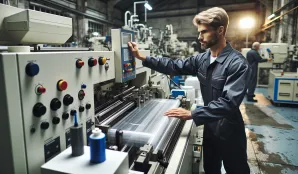
Laminator, plastic salary
Latest available salary statistics are for 2025. Compare average pay, salary range and related job listings.
32 600 - 35 200 SEK / month
Women earn 94% of what men do.
Industriell tillverkning
Related tools
Salary progression Laminator, plastic
What does a laminator in the plastics industry do? – Tasks and work environment
A laminator in the plastics industry works with manufacturing and processing products by bonding plastic materials in multiple layers. Tasks often include preparing materials, monitoring lamination machines, quality control, and post-processing such as sanding or trimming. The work is performed both manually and with the help of automated machines, requiring good technical understanding and precision. The work environment is typically industrial, focusing on safety, ergonomics, and teamwork in production. Protective equipment is regularly used to minimize exposure to chemicals and dust.
Salary development over time
Salaries for laminators in the plastics industry have shown steady growth over the past three years. In 2022, the average salary was 30,900 SEK/month, increasing to 33 200 SEK in 2023 and further to 34 200 SEK in 2024. This development corresponds to an increase of about 7.5% over the three-year period. The trend can be linked to continued demand for labor within the profession, despite long-term expectations that technological development and automation will reduce the need. The salary increase also reflects employers' need to attract and retain skilled staff in a competitive industry where recruitment difficulties are common.
Laminate, plastic salary – complete overview
- Average salary: 34 200 SEK/month
- Lowest salary: 31,500 SEK/month (female, regional sector, high school education max 2 years)
- Highest salary: 35,700 SEK/month (male, private sector, post-secondary education 3+ years)
- Hourly wage: 200 SEK
- Women: 32 700 SEK/month (94% of men's salary)
- Men: 34 800 SEK/month
- Regional differences: Lowest salaries are found in the regional sector, highest in the private sector
Education and qualifications
To work as a laminator in the plastics industry, a high school education with a focus on industry, technology, or production is usually required. Many employers also prefer applicants to have completed specialized courses in plastics technology or machine handling. Practical experience in an industrial environment is often advantageous, and introductory training at the workplace is common. For some roles, certifications or longer post-secondary education can be beneficial.
- High school education: Industrial technology program, 3 years
- Specialized courses: Plastics technology, machine handling
- Internships: Often required or part of trainee programs
- Certifications: Possible in safety or quality control
- Prerequisites: Good technical understanding and precision
Many laminators in the plastics industry quickly acquire broad knowledge of both machinery and materials, making the profession a good foundation for further development in production technology or quality assurance. Some choose to specialize in advanced materials or work with product development alongside engineers.
Common benefits and compensations
Laminators in the plastics industry are often offered benefits such as shift bonuses, wellness allowances, opportunities for further training, and sometimes bonuses linked to production or quality. Other common compensations include collective agreement-based insurances, occupational pensions, and workwear.
Competition and challenges
The competition for jobs as a laminator in the plastics industry is currently relatively low, as demand for labor remains high and many leave the profession. A challenge, however, is that technological development and automation are expected to reduce the need for manual work in the long term. This requires flexibility and the ability to adapt to new working methods. Other challenges include work environment risks related to chemicals and monotonous tasks, as well as the need for continuous skills development to meet new production requirements.
Tips for those who want to become a laminator in the plastics industry
To succeed as a laminator in the plastics industry, it is good to have a technical interest and a willingness to learn new machines and methods. Precision is crucial since the quality of the finished material often depends on small details in the process. Being flexible and adaptable makes it easier when production lines or materials change. Teamwork skills are important because the work is often performed in teams, and coordination between roles is essential for an efficient workflow. It is also advantageous to be resilient, as the work can be physically demanding and sometimes monotonous – but it also offers opportunities to develop both professional skills and problem-solving abilities over time.
Key facts about laminators in the plastics industry
- Education level: High school diploma, industrial technology focus
- Work environment: Industrial production, often shift work
- Demand: Still high but expected to decline over the next five years
- Typical employment: Full-time, collective agreement
- Special skills: Machine handling and material knowledge
Career paths and future outlook
After three to five years as a laminator in the plastics industry, there are good opportunities to advance to roles such as team leader, quality inspector, or production technician. Some choose to further educate themselves in automation or process technology to work with maintenance or development of production lines. According to the Employment Service’s forecast, job opportunities are expected to be strong nationally, but demand is expected to decrease over the next five years due to increased automation and technological development. Despite this, there are currently 1437 job openings in the profession, indicating a continued strong short-term labor market. Those investing in further education and technical skills have good chances to strengthen their position for future changes.
Frequently asked questions about laminators in the plastics industry
- What does a laminator in the plastics industry earn?
- The average salary is 34 200 SEK/month, with an hourly wage of approximately 200 SEK. - What are the educational requirements to become a laminator?
- High school education with a focus on industry, sometimes specialized courses or internships are required. - What is the work environment like for laminators?
- The work environment is industrial and can involve shift work, use of protective equipment, and working with machinery. - Are there salary differences between men and women?
- Yes, women earn on average 94% of what men do in the profession. - What are the future prospects for the profession?
- The job market is strong today, but demand is expected to decline over the next five years according to the Employment Service. - What are the highest and lowest salaries for laminators?
- The highest salary is 35,700 SEK/month (male, private sector, post-secondary education), the lowest 31,500 SEK/month (female, regional sector, high school education max 2 years). - What career paths are available after a few years in the profession?
- Opportunities include becoming a team leader, quality inspector, or further education in technology and automation.

Salary distributed by age and sector
| Age | Base salary | Monthly salary | |
|---|---|---|---|
| 18-24 | 28800 kr | 31400 kr | |
| 25-34 | 94% | 31200 kr | 34300 kr |
| 35-44 | 91% | 32300 kr | 34900 kr |
| 45-54 | 96% | 32300 kr | 34900 kr |
| 55-64 | 94% | 32500 kr | 34600 kr |
| Snitt | 94% | 31600 kr | 34200 kr |
| Age | Base salary | Monthly salary | |
|---|---|---|---|
| 18-24 | 28800 kr | 31400 kr | |
| 25-34 | 94% | 31200 kr | 34300 kr |
| 35-44 | 91% | 32300 kr | 34900 kr |
| 45-54 | 96% | 32300 kr | 34900 kr |
| 55-64 | 94% | 32500 kr | 34600 kr |
| Snitt | 94% | 31600 kr | 34200 kr |
| Age | Base salary | Monthly salary | |
|---|---|---|---|
| 18-24 | 28800 kr | 31400 kr | |
| 25-34 | 94% | 31200 kr | 34300 kr |
| 35-44 | 91% | 32300 kr | 34900 kr |
| 45-54 | 96% | 32300 kr | 34900 kr |
| 55-64 | 94% | 32500 kr | 34600 kr |
| Snitt | 94% | 31600 kr | 34200 kr |
| Age | Base salary | Monthly salary | |
|---|---|---|---|
| 18-24 | 28800 kr | 31900 kr | |
| 25-34 | 94% | 31300 kr | 34800 kr |
| 35-44 | 91% | 32900 kr | 35600 kr |
| 45-54 | 96% | 32400 kr | 35400 kr |
| 55-64 | 94% | 33000 kr | 35500 kr |
| Snitt | 94% | 31900 kr | 34800 kr |
| Age | Base salary | Monthly salary | |
|---|---|---|---|
| 18-24 | 28800 kr | 31900 kr | |
| 25-34 | 94% | 31300 kr | 34800 kr |
| 35-44 | 91% | 32900 kr | 35600 kr |
| 45-54 | 96% | 32400 kr | 35400 kr |
| 55-64 | 94% | 33000 kr | 35500 kr |
| Snitt | 94% | 31900 kr | 34800 kr |
| Age | Base salary | Monthly salary | |
|---|---|---|---|
| 18-24 | 28800 kr | 31900 kr | |
| 25-34 | 94% | 31300 kr | 34800 kr |
| 35-44 | 91% | 32900 kr | 35600 kr |
| 45-54 | 96% | 32400 kr | 35400 kr |
| 55-64 | 94% | 33000 kr | 35500 kr |
| Snitt | 94% | 31900 kr | 34800 kr |
| Age | Base salary | Monthly salary | |
|---|---|---|---|
| 25-34 | 94% | 30800 kr | 32700 kr |
| 35-44 | 91% | 30200 kr | 32400 kr |
| 45-54 | 96% | 32100 kr | 33900 kr |
| 55-64 | 94% | 31700 kr | 33200 kr |
| Snitt | 94% | 31000 kr | 32700 kr |
| Age | Base salary | Monthly salary | |
|---|---|---|---|
| 25-34 | 94% | 30800 kr | 32700 kr |
| 35-44 | 91% | 30200 kr | 32400 kr |
| 45-54 | 96% | 32100 kr | 33900 kr |
| 55-64 | 94% | 31700 kr | 33200 kr |
| Snitt | 94% | 31000 kr | 32700 kr |
| Age | Base salary | Monthly salary | |
|---|---|---|---|
| 25-34 | 94% | 30800 kr | 32700 kr |
| 35-44 | 91% | 30200 kr | 32400 kr |
| 45-54 | 96% | 32100 kr | 33900 kr |
| 55-64 | 94% | 31700 kr | 33200 kr |
| Snitt | 94% | 31000 kr | 32700 kr |

About the data
All information displayed on this page is based on data from the Swedish Central Bureau of Statistics (SCB), the Swedish Tax Agency and the Swedish employment agency. Learn more about our data and data sources here.
All figures are gross salaries, meaning salaries before tax. The average salary, or mean salary, is calculated by adding up the total salary for all individuals within the profession and dividing it by the number of individuals. For specific job categories, we have also considered various criteria such as experience and education.
Profession Laminator, plastic has the SSYK code 8142, which we use to match against the SCB database to obtain the latest salary statistics.
-

Production Operator for UW Elast in Traryd – Day Shift
Machine operators, plastics industry
Fri, 10 Jul 2026 - 21:25 -

Setup Technician for Preformance in Öggestorp
Machine operators, plastics industry
Tue, 7 Jul 2026 - 21:53 -
Setter for Injection Molding at Preformance in Öggestorp
Machine operators, plastics industry
Tue, 7 Jul 2026 - 21:52 -
Hiring Setup Technician at Preformance in Jönköping
Machine operators, plastics industry
Tue, 7 Jul 2026 - 21:51

Compare salary, work tasks and job outlook in adjacent occupations to find roles with similar skills or pay levels.
-

Metal construction fitter salary
Average salary: 39 700 SEK/month • Industriell tillverkning
Steel construction assemblers and heavy plate workers
Compare with Laminator, plastic
Mon, 13 Jul 2026 - 10:41 -

Wood industry worker, wood fiber salary
Average salary: 38 300 SEK/month • Industriell tillverkning
Operators in sawmills, planing mills and plywood etc.
Compare with Laminator, plastic
Tue, 14 Jul 2026 - 07:16 -

Average salary: 36 300 SEK/month • Industriell tillverkning
Machine setters and machine operators, metal work
Compare with Laminator, plastic
Mon, 13 Jul 2026 - 05:38 -

Average salary: 32 200 SEK/month • Industriell tillverkning
Other machine operators, textile, leather and leather industry
Compare with Laminator, plastic
Sun, 12 Jul 2026 - 21:48 -

Average salary: 42 500 SEK/month • Industriell tillverkning
Process operators, paper
Compare with Laminator, plastic
Tue, 14 Jul 2026 - 07:14 -

Machine operator, food industry, fruit and vegetables salary
Average salary: 33 700 SEK/month • Industriell tillverkning
Other machine operators, food industry etc.
Compare with Laminator, plastic
Sun, 12 Jul 2026 - 19:00


