- Salary statistics
- Costume master salary
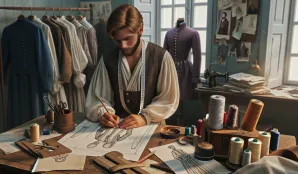
Costume master salary
Latest available salary statistics are for 2025. Compare average pay, salary range and related job listings.
35 400 - 37 200 SEK / month
Women earn 103% of what men do.
Kultur, media, design
Related tools
Salary progression Costume master
What does a costume designer do? – Tasks and work environment
Costume designers are responsible for planning, creating, and maintaining stage costumes for theater, film, TV, and other stage productions. The work encompasses both artistic and practical aspects, such as interpreting the director’s and set designer’s vision, selecting materials, leading the costume workshop, and managing logistics related to costume use and storage. The work environment is often creative and fast-paced, with close collaboration with other professionals within the production. Irregular working hours may occur, especially before premieres, and much of the work takes place in ateliers, on stage, or at filming locations.
Salary development over time
The salary for costume designers has steadily increased over the past three years. In 2022, the average salary was 34,200 SEK per month, rising to 39 300 SEK in 2023 and reaching 36 700 SEK in 2024. This increase corresponds to a total salary change of approximately 15% over three years. The trend indicates a growing demand for specialized skills in performing arts and production, while the professionalization and complexity of the industry have contributed to higher salary levels. The artistic sector has long been characterized by relatively low wages, but over the past decade, there has been a gradual improvement, especially for qualified and responsible roles such as costume designers.
Costume designer salary – full overview
- Average salary: 36 700 SEK/month
- Lowest/Highest salary: Data unavailable (industry variation exists)
- Hourly wage: 236 SEK/hour
- Gender differences: Women earn 37 100 SEK, data for men is unavailable
- Regional differences: Data unavailable (salaries may vary between urban and rural areas)
Education and qualifications
To work as a costume designer, a creative education focused on textiles, fashion, costumes, or performing arts is usually required. Many have degrees from universities or vocational colleges, but entry can also be achieved through extensive experience and work samples. Internships within theater, film, or TV production are often important, and good knowledge of sewing, material science, and leadership is essential.
- Formal education: University or vocational college degree in costume, textiles, fashion, or performing arts (2–4 years)
- Internship: Work experience in theater, film, or TV is highly recommended
- Additional courses: Specialized courses in sewing, textile care, and project management
- Prerequisites: Good sewing skills and material knowledge are often required
- Tips for choosing: Participation in amateur theater or student productions provides valuable experience
It is not uncommon for costume designers to collaborate with international productions or touring ensembles, providing opportunities to work abroad and build global networks within the performing arts world.
Common benefits and compensation
Costume designers are often offered collective agreement benefits such as occupational pension, health insurance, and holiday pay. Other common benefits include wellness allowances, opportunities for further training, and sometimes access to atelier equipment for personal projects. During tours or external recordings, per diems and travel allowances may be provided.
Competition and challenges
The job market for costume designers is limited, and competition for permanent positions is high, especially at larger theaters, opera houses, and production companies. Many work project-based or freelance, requiring flexibility and a strong network. Challenges often involve staying updated on new materials and techniques, while deadlines before premieres can be very stressful. The industry also depends on public and private cultural funding, which can cause fluctuations in workload over time.
Tips for aspiring costume designers
To succeed as a costume designer, it’s important to combine creativity with a structured approach and a keen eye for detail. Building a broad network within the performing arts increases opportunities for projects and employment, while curiosity and a willingness to continually learn new techniques and materials make you more attractive to employers. Precision is crucial for managing the quality and functionality of costumes, and good collaboration skills facilitate communication with directors, set designers, and actors. A proactive attitude, such as seeking internships and experience yourself, often gives you an advantage. Patience and stress resilience are also required, especially before premieres or when unexpected problems arise.
Key facts about Costume Designers
- Education level: Recommended university or vocational college degree
- Work environment: Creative atelier environment as well as stage and filming locations
- Work form: Project-based or permanent employment, often irregular hours
- Demand: 620 available jobs within related professions (2024)
- Special skills: Sewing, textiles, project management, and material science
Career paths and future prospects
After three to five years in the profession, a costume designer can advance to leading roles within larger productions, such as head of the costume workshop or chief responsible for the entire stage costume department. There are also opportunities to specialize in film, opera, or international tours. Future prospects are difficult to predict precisely, as the Swedish Public Employment Service does not provide specific forecasts due to limited data. However, the broader profession shows that there are 620 available jobs, indicating some demand. The industry is strongly influenced by funding for the cultural sector and economic conditions, but specialized skills and experience increase the chances of long-term employment.
Frequently asked questions about Costume Designers
- What does a costume designer earn?
- The average salary is 36 700 SEK per month, with an hourly wage of 236 SEK. - Is higher education required to become a costume designer?
- A university or vocational college degree is recommended, but experience and work samples carry significant weight. - Are there salary differences between genders?
- Women earn an average of 37 100 SEK; data for men is unavailable. - What does the job market look like?
- The job market is competitive, but there are 620 available positions within the profession. - What personal qualities are important for a costume designer?
- Creativity, attention to detail, teamwork skills, and stress tolerance are central qualities. - Do costume designers often work abroad?
- Yes, especially in international productions and tours. - What related professions might be relevant?
- Inspicient, set designer, makeup artist, and textile teacher are related professions.

Salary distributed by age and sector
| Age | Base salary | Monthly salary | |
|---|---|---|---|
| 25-34 | 33900 kr | 34400 kr | |
| 55-64 | 38800 kr | 39900 kr | |
| Snitt | 103% | 36000 kr | 36700 kr |
| Age | Base salary | Monthly salary | |
|---|---|---|---|
| 25-34 | 33900 kr | 34400 kr | |
| 55-64 | 38800 kr | 39900 kr | |
| Snitt | 103% | 36000 kr | 36700 kr |
| Age | Base salary | Monthly salary | |
|---|---|---|---|
| 25-34 | 33900 kr | 34400 kr | |
| 55-64 | 38800 kr | 39900 kr | |
| Snitt | 103% | 36000 kr | 36700 kr |
| Age | Base salary | Monthly salary | |
|---|---|---|---|
| Snitt | 103% | 35700 kr | 36100 kr |
| Age | Base salary | Monthly salary | |
|---|---|---|---|
| Snitt | 103% | 35700 kr | 36100 kr |
| Age | Base salary | Monthly salary | |
|---|---|---|---|
| Snitt | 103% | 35700 kr | 36100 kr |
| Age | Base salary | Monthly salary | |
|---|---|---|---|
| Snitt | 103% | 36200 kr | 37100 kr |
| Age | Base salary | Monthly salary | |
|---|---|---|---|
| Snitt | 103% | 36200 kr | 37100 kr |
| Age | Base salary | Monthly salary | |
|---|---|---|---|
| Snitt | 103% | 36200 kr | 37100 kr |

About the data
All information displayed on this page is based on data from the Swedish Central Bureau of Statistics (SCB), the Swedish Tax Agency and the Swedish employment agency. Learn more about our data and data sources here.
All figures are gross salaries, meaning salaries before tax. The average salary, or mean salary, is calculated by adding up the total salary for all individuals within the profession and dividing it by the number of individuals. For specific job categories, we have also considered various criteria such as experience and education.
Profession Costume master has the SSYK code 3433, which we use to match against the SCB database to obtain the latest salary statistics.
-
Production Coordinator for Pool and Outdoor Environment Company
Stage managers and script supervisors etc.
Tue, 14 Jul 2026 - 00:03 -

Office Manager / Project Administrator – Marine Sector (Gothenburg)
Stage managers and script supervisors etc.
Thu, 9 Jul 2026 - 21:14 -

Logistics Coordinator for Testing in Karlskrona
Stage managers and script supervisors etc.
Thu, 9 Jul 2026 - 21:12 -

Production Manager in Köping – Full-time
Stage managers and script supervisors etc.
Thu, 9 Jul 2026 - 00:08 -

Manager, Production Technology – Quintus Technologies, Västerås
Stage managers and script supervisors etc.
Wed, 8 Jul 2026 - 21:43
Compare salary, work tasks and job outlook in adjacent occupations to find roles with similar skills or pay levels.
-

Average salary: 55 500 SEK/month • Kultur, media, design
Industrial designers
Compare with Costume master
Tue, 14 Jul 2026 - 15:01 -

Average salary: 42 800 SEK/month • Kultur, media, design
Authors etc.
Compare with Costume master
Tue, 14 Jul 2026 - 17:10 -

Average salary: 42 300 SEK/month • Kultur, media, design
Image and broadcast technicians
Compare with Costume master
Tue, 14 Jul 2026 - 15:09 -

Average salary: 38 500 SEK/month • Kultur, media, design
Photographers
Compare with Costume master
Tue, 14 Jul 2026 - 01:37 -

Average salary: 40 600 SEK/month • Kultur, media, design
Translators, interpreters and linguists etc.
Compare with Costume master
Tue, 14 Jul 2026 - 13:11 -

Mixers, sound technicians salary
Average salary: 39 700 SEK/month • Kultur, media, design
Lighting, sound and stage technicians
Compare with Costume master
Tue, 14 Jul 2026 - 17:14


