- Salary statistics
- Conservator, paintings salary
Conservator, paintings salary
Latest available salary statistics are for 2025. Compare average pay, salary range and related job listings.
43 692 - 41 986 SEK / month
Kultur, media, design
Related tools
Salary progression Conservator, paintings
What does a conservator, paintings do? – Tasks and work environment
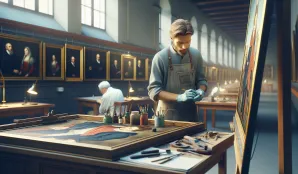
A conservator specializing in paintings works to preserve, restore, and analyze artworks, often of high cultural and historical value. Tasks include cleaning and stabilizing paint layers, extensive reconstruction of damaged artworks, thorough documentation, and investigation of materials and techniques. Providing advice to museums, churches, and private collectors on conservation measures and preventive care is also central. The work takes place both in studios and on-site at clients’ locations, involving varied environments with high demands for precision, patience, and a keen eye for detail.
Salary development over time
The salary for conservators specializing in paintings has shown stable and positive growth over the past three years. In 2022, the average salary was 36,200 SEK per month. In 2023, this increased to 39 779 SEK, corresponding to an increase of approximately 6.1%. For 2024, the average salary has been further adjusted to 41 986 SEK per month, a rise of about 3.6% from the previous year. The total salary increase over the three-year period amounts to just over 9.8%. This trend reflects an increasing demand for specialized conservation skills and a greater focus on preserving cultural heritage. The market's need for qualified conservators and the lengthy education pathway contribute to the positive salary development.
Conservator, paintings salary – comprehensive overview
- Average salary: 41 986 SEK/month
- Lowest/highest salary: Varies depending on experience and employer
- Hourly wage: 239 SEK/hour (based on 166 hours/month)
- Gender differences: No specific data available
- Regional differences: Salary levels may vary depending on region and type of employer
Education and qualifications
To work as a conservator specializing in paintings, a long and specialized education is required. Typically, a university degree in conservation at the bachelor’s level, often followed by a master’s program, is necessary. Practical experience is also central, and many employers require internships or traineeships as an important part of the qualification process.
- Formal degree: Bachelor’s in conservation (3 years), often followed by a 2-year master’s program
- Internships: Longer practical periods during education are common
- Courses/certifications: Additional courses in materials science and conservation methods can be advantageous
- Prerequisites: Basic art history and good color perception are recommended
- Tips for choosing: Attention to detail and interest in cultural heritage are important factors in career choice
Many conservators working with paintings work on a project basis and have the opportunity to work with artworks from different eras and cultures. This makes the profession particularly dynamic and can involve exciting collaborations with international museums and institutions.
Common benefits and compensations
Conservators specializing in paintings are often offered benefits such as professional development, wellness allowances, and flexible working hours. In some cases, allowances for work-related travel, further education, and participation in international projects may also be provided, depending on employment type and employer.
Competition and challenges
The profession of conservator, paintings, is competitive due to the limited number of positions and the high level of specialization required. Many jobs are within museums, cultural institutions, and private companies, where competition for permanent positions can be intense. Challenges also include staying updated on new materials, techniques, and preservation issues, while maintaining high standards of accuracy and responsibility. Financial constraints in the public sector and project-based employment can impact the working situation. Flexibility and ongoing professional development are crucial for success in the job market.
Tips for aspiring conservators, paintings
To succeed as a conservator specializing in paintings, it is beneficial to have strong analytical skills and a genuine interest in art and cultural heritage. Attention to detail is essential, so practice developing your eye for details during your education. Patience and a methodical approach during practical work help develop the finesse needed to handle delicate artworks. Good communication skills are also important, as collaborations with colleagues and clients are common. Engage in networking and seek internships early to build experience and contacts in the field. Maintaining curiosity and staying updated on new conservation methods increases your chances of advancement. Finally, a sense of responsibility is a key trait for caring for and preserving art in a sustainable and long-term manner.
Key facts about Conservator, paintings
- Education level: University degree (bachelor’s or master’s) in conservation
- Work environment: Varied – both in studio and on-site with clients
- Employment type: Project-based and permanent positions are available
- Demand: Limited number of positions, high competition
- Special skills: Materials science, art history, and conservation techniques
Career paths and future prospects
After three to five years in the profession, conservators specializing in paintings can advance to more independent roles, such as project managers for larger conservation projects or specialists in specific techniques. Some choose to start their own business or work as consultants for museums and private collectors. According to the Swedish Public Employment Service’s forecasts, it is difficult to precisely assess future prospects for conservators in paintings, as the profession is part of a broader occupational group with a limited number of positions. However, the overall analysis indicates about 620 available jobs within visual artists and related fields, suggesting some mobility and opportunities for qualified applicants. Flexibility, networking, and specialized expertise are important factors for success in the job market.
Frequently asked questions about Conservator, paintings
- What does a conservator, paintings earn?
- The average salary is 41 986 SEK per month, with variation depending on experience and employer. - What education is required to become a conservator, paintings?
- A university degree in conservation, often at the bachelor’s and sometimes master’s level, is required. - Are there many job opportunities for conservators, paintings?
- The number of positions is limited, but within the visual arts group, there are about 620 available jobs according to the latest data. - What personal qualities are important for the profession?
- Attention to detail, patience, and analytical skills are central qualities. - What is the working environment like for a conservator, paintings?
- The work environment is varied and can involve both studio work and on-site at clients’ locations. - Are there salary differences depending on region?
- Salary levels may vary regionally and depending on the employer, but exact figures are not available. - What types of employers hire conservators, paintings?
- Common employers include museums, cultural institutions, churches, and private collectors.

Salary distributed by age and sector

About the data
All information displayed on this page is based on data from the Swedish Central Bureau of Statistics (SCB), the Swedish Tax Agency and the Swedish employment agency. Learn more about our data and data sources here.
All figures are gross salaries, meaning salaries before tax. The average salary, or mean salary, is calculated by adding up the total salary for all individuals within the profession and dividing it by the number of individuals. For specific job categories, we have also considered various criteria such as experience and education.
Profession Conservator, paintings has the SSYK code 2651, which we use to match against the SCB database to obtain the latest salary statistics.


Compare salary, work tasks and job outlook in adjacent occupations to find roles with similar skills or pay levels.
-

Singer, classical music salary
Average salary: 47 400 SEK/month • Kultur, media, design
Musicians, singers and composers
Compare with Conservator, paintings
Tue, 23 Jun 2026 - 22:35 -

Conductor, classical music salary
Average salary: 47 400 SEK/month • Kultur, media, design
Musicians, singers and composers
Compare with Conservator, paintings
Tue, 23 Jun 2026 - 19:40 -

Average salary: 47 400 SEK/month • Kultur, media, design
Musicians, singers and composers
Compare with Conservator, paintings
Tue, 23 Jun 2026 - 23:12 -

Average salary: 51 000 SEK/month • Kultur, media, design
Directors and producers of film, theater etc.
Compare with Conservator, paintings
Wed, 24 Jun 2026 - 03:07 -

Home staging consultant salary
Average salary: 39 900 SEK/month • Kultur, media, design
Interior designers, decorators and scenographers etc.
Compare with Conservator, paintings
Tue, 23 Jun 2026 - 22:09 -

Average salary: 41 986 SEK/month • Kultur, media, design
Visual artists etc.
Compare with Conservator, paintings
Mon, 22 Jun 2026 - 16:29


