- Salary statistics
- Conservator, animals salary
Conservator, animals salary
Latest available salary statistics are for 2025. Compare average pay, salary range and related job listings.
43 692 - 41 986 SEK / month
Kultur, media, design
Related tools
Salary progression Conservator, animals
What does a conservator in animals do – tasks and work environment
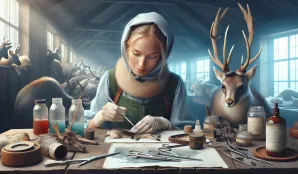
A conservator specializing in animals works with preserving, preparing, and restoring animals for museums, exhibitions, educational purposes, or private commissions. The profession requires great precision and artistic skill, as it involves recreating the animal's natural appearance and expression. The work includes steps such as skin preparation, skeleton assembly, coloring, and sometimes reconstruction of missing parts. The environment can vary from specialized studios and workshops to larger museums, where both individual work and collaboration with other experts occur. Handling chemicals and biological materials is common, which means good knowledge of work environment and safety is essential.
Salary development over time
The profession of Conservator, animals has seen steady salary increases in recent years. In 2022, the average salary was 36,200 SEK per month, followed by 39 779 SEK in 2023 and most recently 41 986 SEK in 2024. This development corresponds to an increase of approximately 10% over the three-year period, indicating a positive trend for the profession. Factors driving this salary growth include increased demand for qualified conservators in the museum sector and specialized collections, as well as growing interest in the preservation of natural history objects. At the same time, the supply of trained conservators is limited, which can further influence salary levels. Overall, the salary development reflects both the profession's specialized skill requirements and its growing importance within the culture and education sectors.
Conservator, animals salary – complete overview
- Average salary: 41 986 SEK/month
- Lowest/Highest salary: Data unavailable
- Hourly rate: 239 SEK/hour
- Gender differences: Data unavailable
- Regional differences: Data unavailable
Education and qualifications
The path to becoming a conservator specializing in animals involves a combination of formal education and practical experience. Usually, a university degree in conservation or natural sciences is required, supplemented with specialized courses in taxidermy and preservation techniques. Internships during studies are common, as the profession demands high craftsmanship and material knowledge. Prior knowledge in biology, art, and chemistry is especially valuable, and many conservators continue to deepen their skills through further training and studying new techniques.
- Formal degree: University education in conservation, 3–5 years
- Specialized courses: Taxidermy, material science, color technology
- Internships: Extended practical periods at museums or workshops
- Prerequisites: Basic biology, art, and chemistry
- Further education: Continuing courses and workshops
Working as a conservator specializing in animals requires not only technical skills but also a genuine interest in animal anatomy and natural behavior. Many conservators work closely with researchers and biologists to ensure that every detail is as natural as possible. The artistic freedom within the profession makes each project unique and constantly presents new challenges.
Common benefits and compensations
Conservators specializing in animals often have access to benefits such as wellness allowances, flexible working hours, and opportunities for professional development. Employment at larger institutions or museums may also include pension schemes and insurance. Access to specialized equipment, work clothing, and compensation for work during unsociable hours may also be available depending on the employer.
Competition and challenges
The competition within the profession of conservator, animals is significant due to the limited number of positions and the relatively low availability of trained candidates. Many employers seek individuals with documented experience and high specialization, which means new graduates may need to supplement their skills with internships or projects to strengthen their position. The profession demands high accuracy and responsibility, especially when working with valuable or unique collections. At the same time, the job market for conservators depends on public funding for museums and cultural activities, which can create uncertainty during economic downturns. For those skilled and dedicated, however, there are opportunities to carve out a niche, particularly in the private sector or through self-employment.
Tips for those who want to become a conservator in animals
To succeed as a conservator in animals, it is important to combine precision with creativity and a strong sense of detail. Early internships and projects provide valuable experience and understanding of the practical challenges of the profession. A genuine interest in biology and art helps develop both technical and artistic skills, while patience and perseverance are key qualities during long and demanding preparation work. Staying updated on new materials and methods through courses and networking can open doors to specialized roles. The ability to communicate and collaborate with other professionals, such as researchers and educators, is also valuable. Finally, building a strong portfolio that demonstrates the breadth and quality of your work pays off.
Key facts about Conservator, animals
- Education level: University degree in conservation (3–5 years)
- Work environment: Workshop, museum, or studio
- Work form: Individual work and project collaboration
- Available jobs in the profession: 620 (May 2024)
- Occupational group: Visual artists and others
Career paths and future prospects
After three to five years in the profession, a conservator specializing in animals can advance to more specialized roles, such as project manager for larger exhibitions or responsible for collection care at a museum. Opportunities also exist to run your own business or work internationally on unique assignments. However, forecasts from the Employment Service indicate that it is difficult to give an exact assessment of future prospects, as the profession is narrow and part of a broader occupational group. The availability of positions largely depends on public investments in culture and nature conservation, but there is steady demand for conservators within the museum sector and among private collectors. For those who are flexible and possess broad skills, the profession can offer both development opportunities and variation.
Common questions about Conservator, animals
- What does a Conservator, animals earn?
- The average salary is 41 986 SEK per month, with an hourly rate of 239 SEK. - What education is required to become a conservator in animals?
- Higher education in conservation, often 3–5 years, plus specialized courses in taxidermy and practical experience. - What is the job market like for conservators in animals?
- The number of jobs is limited, but there are 620 available positions within the occupational group of visual artists and others according to current statistics. - What personal qualities are important in this profession?
- Attention to detail, patience, creativity, and interest in biology and art are central qualities. - Are there regional salary differences?
- There is no available data on regional salary differences for conservators in animals. - Which workplaces hire conservators specializing in animals?
- Museums, natural history collections, educational institutions, as well as private companies and clients. - How can you increase your chances of getting a job as a conservator in animals?
- Build a strong portfolio, seek internships and network within the industry, and stay updated on new techniques.

Salary distributed by age and sector

About the data
All information displayed on this page is based on data from the Swedish Central Bureau of Statistics (SCB), the Swedish Tax Agency and the Swedish employment agency. Learn more about our data and data sources here.
All figures are gross salaries, meaning salaries before tax. The average salary, or mean salary, is calculated by adding up the total salary for all individuals within the profession and dividing it by the number of individuals. For specific job categories, we have also considered various criteria such as experience and education.
Profession Conservator, animals has the SSYK code 2651, which we use to match against the SCB database to obtain the latest salary statistics.


Compare salary, work tasks and job outlook in adjacent occupations to find roles with similar skills or pay levels.
-

Average salary: 45 500 SEK/month • Kultur, media, design
Journalists etc.
Compare with Conservator, animals
Mon, 13 Jul 2026 - 10:06 -

Average salary: 41 400 SEK/month • Kultur, media, design
Museum curators etc.
Compare with Conservator, animals
Sun, 12 Jul 2026 - 12:32 -
Average salary: 45 500 SEK/month • Kultur, media, design
Journalists etc.
Compare with Conservator, animals
Fri, 10 Jul 2026 - 19:49 -
Average salary: 40 600 SEK/month • Kultur, media, design
Translators, interpreters and linguists etc.
Compare with Conservator, animals
Tue, 14 Jul 2026 - 05:42 -

Average salary: 37 300 SEK/month • Kultur, media, design
Actors
Compare with Conservator, animals
Mon, 13 Jul 2026 - 16:57 -

Average salary: 47 400 SEK/month • Kultur, media, design
Musicians, singers and composers
Compare with Conservator, animals
Sun, 12 Jul 2026 - 15:38


