- Salary statistics
- Potter, artist salary
Potter, artist salary
Latest available salary statistics are for 2025. Compare average pay, salary range and related job listings.
43 692 - 41 986 SEK / month
Kultur, media, design
Related tools
Salary progression Potter, artist
What does a ceramicist, artist do? – Tasks and work environment
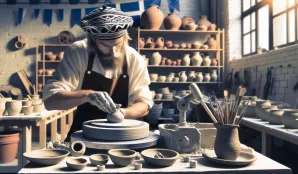
A ceramicist, artist works with creating art objects, functional ceramics, and sculptures using clay and other ceramic materials. Tasks include the entire process from design and shaping to throwing, building, glazing, and firing objects in a kiln. Many ceramicists run their own studio or workshop, where the work environment is often both creative and practical. In addition to artistic work with materials and techniques, administrative tasks, customer contact, marketing, and sales of their own works are included, as well as sometimes teaching or workshops for others. The work is physically varied and requires both concentration and patience, especially when handling heavy materials and kilns.
Salary development over time
The salary for ceramicists, artists has steadily increased over the past three years. In 2022, the average salary was 36,200 SEK per month, which increased to 39 779 SEK in 2023. In 2024, the average salary reached 41 986 SEK per month. This development corresponds to a total increase of approximately 9.9% over the period. The positive trend can partly be explained by increased demand for unique and handmade art objects, but also by a growing interest in craft professions overall. Additionally, higher education levels and a greater focus on sustainability and locally produced items have contributed to strengthening the profession’s position and salary levels. At the same time, salary variation is large and influenced by factors such as self-employment, geographic location, and artistic reputation.
Ceramicist, artist salary – comprehensive overview
- Average salary: 41 986 SEK/month
- Lowest/Highest salary: Data not available
- Hourly wage: 239 SEK/hour (average, hourly-paid)
- Gender differences: Data not available
- Regional differences: Data not available
Education and qualifications
To work as a ceramicist, artist, an artistic education with a focus on ceramics is often required, but there are many pathways into the profession. Many combine education in art, design, or craft with practical experience and work life. It is common to enhance skills through courses, workshops, and self-study, especially as techniques and materials are constantly evolving.
- Artistic higher education: Usually 3–5 years at art or design colleges
- Vocational training: Folk high school or vocational university with a focus on ceramics
- Internships: Internships, apprenticeships, or trainee programs are recommended
- Courses and workshops: Further training in new techniques and materials
- Prerequisites: Often portfolio and artistic samples required for admission
Many ceramicists combine their artistic work with teaching courses and workshops. It is a way to share knowledge, build networks, and generate additional income, while enriching their own artistic process.
Common benefits and compensations
Benefits for ceramicists, artists can vary greatly depending on employment form. Self-employed individuals are responsible for their own pension, health insurance, and vacation, while employed workers at larger art galleries, educational institutions, or cultural projects may be offered collective agreements, wellness contributions, and opportunities for skill development. Many also have access to studio support, exhibition fees, and sometimes stipends or project grants.
Competition and challenges
The competition within the profession of ceramicist, artist is significant, especially since many work as self-employed and the market for art and crafts is cyclical. Artistic skill and entrepreneurial abilities are both required to succeed in establishing oneself and reaching customers with their works. Challenges may also include high material and rental costs, as well as the need for continuous development to meet new trends and customer demands. Digitalization and e-commerce have created new opportunities but also increased competition, as more can reach the market online.
Tips for aspiring ceramicists, artists
To succeed as a ceramicist, artist, it is good to be both creative and persistent, as the process from idea to finished product is often time-consuming and requires great precision. Developing a unique style and being open to learning new techniques enhances the chances of standing out in the market. Self-discipline is important, especially for those working independently and needing to plan both production and marketing. Building networks with other artists and participating in exhibitions or markets provide valuable contacts and inspiration. Finally, curiosity and flexibility are advantageous, as the profession often requires adapting to new trends and customer preferences.
Key facts about Ceramicist, Artist
- Education level: Artistic higher education or vocational training recommended
- Work form: Commonly self-employment or freelance
- Number of job openings (profession group): 620
- Work environment: Studio, workshop, or course activities
- Future prospects: No official forecast, but continued interest in crafts
Career paths and future prospects
After three to five years in the profession, a ceramicist, artist may have built a stronger portfolio and established themselves in the market, enabling participation in larger exhibitions or collaborations with galleries and design stores. Many choose to start their own studio or expand activities with teaching and workshops. According to the Swedish Public Employment Service, there is no detailed forecast for ceramicists, but in the visual arts group, there are 620 available jobs, indicating some demand. The profession is influenced by economic cycles and trends in art and design, but interest in genuine craftsmanship and unique objects is expected to persist in the future.
Frequently asked questions about Ceramicist, Artist
- What does a Ceramicist, Artist earn?
- The average salary for a ceramicist, artist is 41 986 SEK per month. - How to become a ceramicist, artist?
- The most common path is artistic higher education, vocational training, or folk high school with a focus on ceramics. - What work environments are common?
- Most work in their own studio, workshop, or in course activities, sometimes combined with teaching. - What are the future prospects?
- There is no detailed forecast, but demand for crafts and unique art objects remains stable. - What personal qualities are important?
- Creativity, perseverance, accuracy, and entrepreneurial spirit are important qualities for the profession. - Are there many job openings?
- Within the visual arts group, there are approximately 620 available jobs. - What is the typical hourly wage for a ceramicist, artist?
- An average of 239 SEK per hour for hourly-paid workers.

Salary distributed by age and sector

About the data
All information displayed on this page is based on data from the Swedish Central Bureau of Statistics (SCB), the Swedish Tax Agency and the Swedish employment agency. Learn more about our data and data sources here.
All figures are gross salaries, meaning salaries before tax. The average salary, or mean salary, is calculated by adding up the total salary for all individuals within the profession and dividing it by the number of individuals. For specific job categories, we have also considered various criteria such as experience and education.
Profession Potter, artist has the SSYK code 2651, which we use to match against the SCB database to obtain the latest salary statistics.


Compare salary, work tasks and job outlook in adjacent occupations to find roles with similar skills or pay levels.
-

Average salary: 51 000 SEK/month • Kultur, media, design
Directors and producers of film, theater etc.
Compare with Potter, artist
Tue, 14 Jul 2026 - 08:17 -

Average salary: 39 700 SEK/month • Kultur, media, design
Lighting, sound and stage technicians
Compare with Potter, artist
Tue, 14 Jul 2026 - 04:04 -

Average salary: 45 500 SEK/month • Kultur, media, design
Journalists etc.
Compare with Potter, artist
Tue, 14 Jul 2026 - 09:20 -

Average salary: 42 300 SEK/month • Kultur, media, design
Image and broadcast technicians
Compare with Potter, artist
Tue, 14 Jul 2026 - 07:11 -

Average salary: 41 400 SEK/month • Kultur, media, design
Museum curators etc.
Compare with Potter, artist
Mon, 13 Jul 2026 - 22:11 -

Average salary: 35 600 SEK/month • Kultur, media, design
Other professions in culture and entertainment
Compare with Potter, artist
Mon, 13 Jul 2026 - 20:39


