- Salary statistics
- Jewel maker salary
Jewel maker salary
Latest available salary statistics are for 2025. Compare average pay, salary range and related job listings.
36 607 - 36 738 SEK / month
Hantverksyrken
Related tools
Salary progression Jewel maker
What does a juvelfattare do? – Tasks and working environment
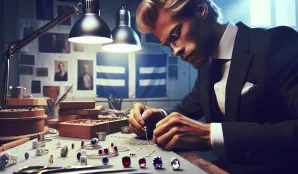
A juvelfattare works with mounting gemstones and other decorative materials in jewelry such as rings, necklaces, bracelets, and earrings. The work requires great precision and accuracy, often involving advanced techniques to securely and aesthetically attach stones. The working environment is typically workshop-based, where a juvelfattare uses specialized tools and microscopes to handle small details. Work often takes place in small studios, but positions at larger jewelry companies or exclusive jewelers also exist. Tasks can range from performing repairs to creating entirely new jewelry pieces based on customer requests.
Salary development over time
Juvelfattare have experienced relatively stable salary growth over the past three years. In 2022, the average salary was 34,382 SEK per month, which increased slightly to 34 807 in 2023 and further to 36 738 in 2024. The total increase during this period is approximately 1.2%, which is slightly below the average for craft professions in Sweden. The slow salary increase can be explained by limited demand and a relatively small number of practitioners within the field. The market is also influenced by the fact that many juvelfattare work in small, specialized companies with limited salary room. Despite this, the profession remains attractive for those valuing craftsmanship and artistic work.
Juvelfattare salary – comprehensive overview
- Average salary: 36 738 SEK/month
- Lowest/Highest salary: Data not available
- Hourly wage: 209 SEK/hour
- Gender differences: Data missing
- Regional differences: Data missing
Education and qualifications
To work as a juvelfattare, a high school education in the craft program with specialization in goldsmithing or silversmithing is usually required, followed by further specialization in juvelfattning. Many combine formal education with practical training to develop the fine motor skills required. Shorter courses or training programs offered by industry organizations or specialized schools are also common.
- Formal education: Craft program, 3 years (high school level)
- Specialization courses: Juvelfattning via vocational schools or folk high schools
- Internships: Apprenticeship or internship with an established jeweler
- Certifications: Possible through industry organizations
- Prerequisites: Good fine motor skills and interest in design
Many juvelfattare develop their own artistic profile and can take on custom orders or create unique jewelry collections. Building a strong personal brand can be key to success in this craft.
Common benefits and compensations
Benefits for juvelfattare can vary depending on the size and focus of the workplace. There are often employee discounts on jewelry, opportunities for flexible working hours, and access to further training in new techniques and materials. Some employers offer wellness allowances, but pension and insurance solutions typically follow collective agreements or industry standards.
Competition and challenges
The competition within the profession is significant, especially since the number of available positions is limited and many juvelfattare choose to work as self-employed. Modern technology, such as 3D printing and automation, has affected parts of the industry but has not yet replaced traditional craftsmanship. Challenges include staying updated with new materials and techniques and building a stable customer base. Since the profession requires great accuracy and patience, it is important to continually develop both technical and creative skills. Establishing oneself can take time, especially for those who want to work independently or build a personal brand.
Tips for those who want to become a juvelfattare
To succeed as a juvelfattare, it is good to combine a strong eye for detail with perseverance and creativity. Early internships provide valuable experience and help develop the precision needed for the profession. Building a network within the jewelry industry is also wise, as personal contacts often lead to new opportunities. Good problem-solving skills help handle unexpected challenges, and keeping up with trends in jewelry design ensures your skills remain relevant. Patience is a key trait, especially when working with exclusive materials where mistakes can be costly. Investing time in learning different techniques and being open to new expressions can also give you a competitive edge in the job market.
Key facts about juvelfattare
- Education level: High school diploma with specialization in crafts
- Work environment: Workshop or studio, often small teams
- Work form: Commonly self-employed or small businesses
- Demand: Limited number of available jobs, high competition
- Special skills: Fine motor skills, technical precision, artistic sense
Career paths and future prospects
After three to five years in the profession, a juvelfattare can advance to supervisory roles within larger jewelry workshops or start their own business. Specializing in certain techniques, such as setting specific gemstones or restoring antique jewelry, is also common. The prognosis from the Swedish Public Employment Service indicates that there is currently no exact assessment for the profession due to limited data, but within the group of goldsmiths and silversmiths, 341 job openings are reported in Sweden. The profession remains niche, and competition for attractive positions can be fierce. Those combining technical skill with entrepreneurial spirit have good opportunities to build a stable career.
Frequently asked questions about juvelfattare
- What does a juvelfattare earn?
- The average salary for a juvelfattare is 36 738 SEK/month. - How does one become a juvelfattare?
- The most common way is the craft program at high school followed by specialization courses and internships. - Are there many jobs available for juvelfattare?
- The profession reports 341 available jobs, but competition can be high. - What does a juvelfattare do?
- A juvelfattare mounts gemstones in jewelry and works with advanced craftsmanship techniques. - What qualities are important for a juvelfattare?
- Fine motor skills, patience, precision, and artistic sense are central qualities. - Does a juvelfattare mostly work as self-employed?
- Many choose to start their own business or work in smaller workshops, but there are also positions in larger companies.

Salary distributed by age and sector

About the data
All information displayed on this page is based on data from the Swedish Central Bureau of Statistics (SCB), the Swedish Tax Agency and the Swedish employment agency. Learn more about our data and data sources here.
All figures are gross salaries, meaning salaries before tax. The average salary, or mean salary, is calculated by adding up the total salary for all individuals within the profession and dividing it by the number of individuals. For specific job categories, we have also considered various criteria such as experience and education.
Profession Jewel maker has the SSYK code 7312, which we use to match against the SCB database to obtain the latest salary statistics.
-

Goldsmith at Haileys Jewelry House – Restoration & Repair
Gold and silversmiths
Wed, 13 May 2026 - 00:47


Compare salary, work tasks and job outlook in adjacent occupations to find roles with similar skills or pay levels.
-

Average salary: 34 100 SEK/month • Hantverksyrken
Leather craftsmen and shoemakers
Compare with Jewel maker
Tue, 14 Jul 2026 - 18:53 -

Inspectors, gold and silver products salary
Average salary: 36 738 SEK/month • Hantverksyrken
Gold and silversmiths
Compare with Jewel maker
Tue, 14 Jul 2026 - 21:20 -

Average salary: 34 000 SEK/month • Hantverksyrken
Musical instrument makers and other artisans
Compare with Jewel maker
Tue, 14 Jul 2026 - 16:17 -

Average salary: 40 900 SEK/month • Hantverksyrken
Precision mechanics
Compare with Jewel maker
Tue, 14 Jul 2026 - 10:03 -

Average salary: 34 000 SEK/month • Hantverksyrken
Musical instrument makers and other artisans
Compare with Jewel maker
Tue, 14 Jul 2026 - 22:14 -

Average salary: 32 802 SEK/month • Hantverksyrken
Seamstresses
Compare with Jewel maker
Wed, 15 Jul 2026 - 00:12


