- Salary statistics
- Industrial cleaners salary
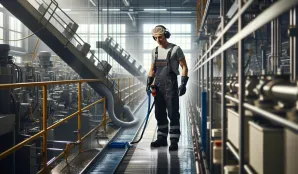
Industrial cleaners salary
Latest available salary statistics are for 2025. Compare average pay, salary range and related job listings.
32 200 - 35 900 SEK / month
Women earn 94% of what men do.
Sanering och renhållning
Related tools
Salary progression Industrial cleaners
What does an industrial cleaner do? – Tasks and work environment
An industrial cleaner works with cleaning, maintaining, and sanitizing industrial premises, machinery, and technical equipment. Tasks often include handling chemicals, high-pressure washing, waste management, and sometimes working at heights or in confined spaces. Industrial cleaners play a crucial role in preventing operational stoppages, safety risks, and environmental problems within the industry. The work environment can be noisy and challenging, requiring protective gear and strict safety routines.
Salary development over time
The salary for industrial cleaners has steadily increased over the past three years. In 2022, the average salary was 29,700 SEK per month, rising the following year to 35 000, which corresponds to an increase of about 7%. In 2024, the average salary has continued upward to 34 700, representing a further increase of nearly 10% compared to the previous year. This salary growth reflects a greater focus on work environment and safety, as well as increased demand for qualified personnel in the sanitation industry. More industries are investing in regular and professional cleaning, boosting wages. Both collective agreements and market demand have contributed to this positive trend for industrial cleaners.
Industrial cleaner salary – comprehensive overview
- Average salary: 34 700 SEK/month
- Lowest salary: 30,900 SEK/month (female, high school education, 3 years)
- Highest salary: 35,600 SEK/month (male, regional sector, high school education up to 2 years)
- Hourly wage: 210 SEK/hour
- Women: 32,000 SEK/month (94% of men's salary)
- Men: 35 000 SEK/month
- Regional differences: Highest salaries are found in the regional sector
Education and qualifications
To work as an industrial cleaner, a high school education is generally required, often in technology, industry, or similar fields. Many employers prefer candidates who have completed occupational safety or sanitation training and have practical experience in similar environments. The industry also values training in safety and chemical handling, as tasks can involve risk factors. Practical on-the-job training is common, and some employers offer internal courses.
- High school education: Industry, technology, or similar, 2–3 years
- Certifications: Occupational safety training, chemical handling, hot work
- Internship: Often conducted as internships or trainee periods with employers
- Prerequisites: Good physical condition, thoroughness, and sense of responsibility
- Additional courses: Safety, machinery handling, environmental knowledge
Industrial cleaners often work at various industries and facilities, providing a diverse daily routine. The job frequently involves travel between sites and sometimes working irregular hours, which can suit those seeking variety and challenges.
Common benefits and compensations
Common benefits for industrial cleaners include wellness allowances, overtime pay for unsociable hours, work clothing and protective gear, and sometimes access to company health services. Some employers also offer further training and certifications in industry-specific areas.
Competition and challenges
The competition within industrial cleaning is relatively limited, but safety and accuracy demands are high. Challenges often include handling heavy lifts, chemical exposure, and working in environments with high noise levels or confined spaces. Time pressure can also occur, especially during cleaning operations that must be performed during downtime or production breaks. Success in the profession requires good physical fitness and the ability to work systematically according to strict routines. The shortage of formal training can also make it difficult to find qualified personnel, which may increase workload for existing industrial cleaners.
Tips for those wanting to become an industrial cleaner
To succeed as an industrial cleaner, it’s important to be thorough and detail-oriented, as tasks often require precision and adherence to safety routines. Good physical condition is a significant asset, as the work can be physically demanding and involve heavy lifting or working in challenging environments. Flexibility and the ability to quickly adapt to new workplaces are helpful, as assignments often vary. Being able to collaborate with colleagues and communicate clearly is also important, especially during larger cleaning projects. Engagement in the work environment and interest in technology and machinery can be advantageous, as well as a willingness to continuously further one's safety training. Finally, employers value responsibility and reliability highly in this field.
Key facts about industrial cleaners
- Education level: High school education in industry/technology (2–3 years)
- Work environment: Industrial settings, often with protective gear
- Typical work arrangement: Full-time, sometimes shifts or on-call
- Demand: 123 job openings within the profession
- Special skills: Chemical handling and safety routines
Career paths and future prospects
After three to five years as an industrial cleaner, there are opportunities to advance to supervisor, coordinator, or specialized roles within environmental and occupational safety. Some choose to further their education as technicians in industrial sanitation, safety coordinators, or start their own sanitation business. The future outlook depends on industry cycles and increasing safety and environmental requirements, but according to the Swedish Employment Service’s forecast for the sanitation workforce, no specific assessment is made due to limited data. However, the number of job openings indicates ongoing demand, even though the availability of formally trained personnel may vary regionally.
Frequently asked questions about industrial cleaners
- What is the average salary of an industrial cleaner?
- The average salary is 34 700 SEK per month. - What education is required to become an industrial cleaner?
- Usually, high school education in industry or technology, along with certifications in occupational safety and chemical handling. - Are there salary differences between men and women?
- Yes, women earn on average 32,000 SEK while men earn 35 000. - What is the work environment like for industrial cleaners?
- The environment is often industrial, noisy, and requires protective equipment. - What career opportunities are there after some years in the profession?
- Opportunities include advancing to supervisor, coordinator, or specializing in environmental and safety work. - How many job openings are there for industrial cleaners?
- Currently, there are 123 vacancies. - What is the hourly wage for an industrial cleaner?
- The hourly wage is 210 SEK.

Salary distributed by age and sector
| Age | Base salary | Monthly salary | |
|---|---|---|---|
| 18-24 | 29500 kr | 31800 kr | |
| 25-34 | 33300 kr | 35700 kr | |
| 35-44 | 31900 kr | 33500 kr | |
| 45-54 | 33900 kr | 36000 kr | |
| 55-64 | 35400 kr | 36200 kr | |
| Snitt | 94% | 32900 kr | 34700 kr |
| Age | Base salary | Monthly salary | |
|---|---|---|---|
| 18-24 | 29500 kr | 31800 kr | |
| 25-34 | 33300 kr | 35700 kr | |
| 35-44 | 31900 kr | 33500 kr | |
| 45-54 | 33900 kr | 36000 kr | |
| 55-64 | 35400 kr | 36200 kr | |
| Snitt | 94% | 32900 kr | 34700 kr |
| Age | Base salary | Monthly salary | |
|---|---|---|---|
| 18-24 | 29500 kr | 31800 kr | |
| 25-34 | 33300 kr | 35700 kr | |
| 35-44 | 31900 kr | 33500 kr | |
| 45-54 | 33900 kr | 36000 kr | |
| 55-64 | 35400 kr | 36200 kr | |
| Snitt | 94% | 32900 kr | 34700 kr |
| Age | Base salary | Monthly salary | |
|---|---|---|---|
| 18-24 | 29500 kr | 31800 kr | |
| 25-34 | 33800 kr | 36300 kr | |
| 35-44 | 31900 kr | 33600 kr | |
| 45-54 | 34700 kr | 36800 kr | |
| 55-64 | 35900 kr | 36600 kr | |
| Snitt | 94% | 33200 kr | 35000 kr |
| Age | Base salary | Monthly salary | |
|---|---|---|---|
| 18-24 | 29500 kr | 31800 kr | |
| 25-34 | 33800 kr | 36300 kr | |
| 35-44 | 31900 kr | 33600 kr | |
| 45-54 | 34700 kr | 36800 kr | |
| 55-64 | 35900 kr | 36600 kr | |
| Snitt | 94% | 33200 kr | 35000 kr |
| Age | Base salary | Monthly salary | |
|---|---|---|---|
| 18-24 | 29500 kr | 31800 kr | |
| 25-34 | 33800 kr | 36300 kr | |
| 35-44 | 31900 kr | 33600 kr | |
| 45-54 | 34700 kr | 36800 kr | |
| 55-64 | 35900 kr | 36600 kr | |
| Snitt | 94% | 33200 kr | 35000 kr |
| Age | Base salary | Monthly salary | |
|---|---|---|---|
| Snitt | 94% | 31300 kr | 33000 kr |
| Age | Base salary | Monthly salary | |
|---|---|---|---|
| Snitt | 94% | 31300 kr | 33000 kr |
| Age | Base salary | Monthly salary | |
|---|---|---|---|
| Snitt | 94% | 31300 kr | 33000 kr |

About the data
All information displayed on this page is based on data from the Swedish Central Bureau of Statistics (SCB), the Swedish Tax Agency and the Swedish employment agency. Learn more about our data and data sources here.
All figures are gross salaries, meaning salaries before tax. The average salary, or mean salary, is calculated by adding up the total salary for all individuals within the profession and dividing it by the number of individuals. For specific job categories, we have also considered various criteria such as experience and education.
Profession Industrial cleaners has the SSYK code 7134, which we use to match against the SCB database to obtain the latest salary statistics.
-

Flexible Remediation Worker Needed for Assignments Across Sweden
Sanitation workers etc.
Tue, 14 Jul 2026 - 06:23 -
Sanitation workers etc.
Fri, 10 Jul 2026 - 06:53 -

Water and Sewage Technician for Jokkmokk Municipality
Sanitation workers etc.
Thu, 9 Jul 2026 - 09:05


Compare salary, work tasks and job outlook in adjacent occupations to find roles with similar skills or pay levels.
-

Average salary: 34 300 SEK/month • Sanering och renhållning
Cleaning supervisors and housekeepers
Compare with Industrial cleaners
Mon, 13 Jul 2026 - 18:43 -

Environmental worker, waste management, station salary
Average salary: 33 800 SEK/month • Sanering och renhållning
Sanitation and recycling workers
Compare with Industrial cleaners
Tue, 14 Jul 2026 - 15:04 -

Average salary: 33 800 SEK/month • Sanering och renhållning
Sanitation and recycling workers
Compare with Industrial cleaners
Tue, 14 Jul 2026 - 14:30 -

Average salary: 34 700 SEK/month • Sanering och renhållning
Sanitation workers etc.
Compare with Industrial cleaners
Tue, 14 Jul 2026 - 14:16 -

Average salary: 33 800 SEK/month • Sanering och renhållning
Sanitation and recycling workers
Compare with Industrial cleaners
Tue, 14 Jul 2026 - 12:20 -

Average salary: 31 200 SEK/month • Sanering och renhållning
Car detailers, window cleaners etc.
Compare with Industrial cleaners
Tue, 14 Jul 2026 - 14:03


