- Salary statistics
- Gas filler salary
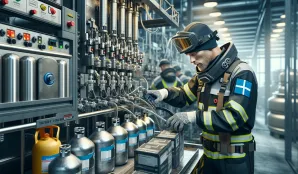
Gas filler salary
Latest available salary statistics are for 2025. Compare average pay, salary range and related job listings.
33 300 - 36 100 SEK / month
Women earn 97% of what men do.
Industriell tillverkning
Related tools
Salary progression Gas filler
What does a Gas Filler do? – Tasks and work environment
A Gas Filler works with refilling gases into various types of containers, such as industrial gas cylinders, medical gas bottles, or smaller packages for households and businesses. Tasks include manual handling and operation of automated filling stations, where safety and accuracy are critical. A typical workday may also include inspecting equipment, monitoring filling processes, and labeling and documenting filled containers. The work environment is often industrial, with a focus on safety routines and protective gear to minimize risks when handling pressurized and sometimes hazardous substances.
Salary development over time
The salary for Gas Fillers has shown a steady and slightly positive trend over the past three years. In 2022, the average salary was 31,600 SEK per month, increasing to 33,000 SEK in 2023 and further to 34 800 SEK in 2024. This represents a total increase of approximately 5.7% over the period. This development reflects a general wage increase within industrial manufacturing, where demand for experienced operators and enhanced safety requirements have influenced salary levels. Although the profession has not undergone major structural changes, a shortage of qualified personnel and the need for technical skills have helped keep wage growth stable and slightly above inflation.
Gas Filler salary – comprehensive overview
- Average salary: 34 800 SEK/month
- Lowest salary: 32,400 SEK/month (female)
- Highest salary: 34,500 SEK/month (male, private sector, post-secondary education shorter than 3 years)
- Hourly wage: 201 SEK
- Gender differences: Women earn 32,400 SEK, men 35 100 SEK (women: 97% of men's salary)
- Regional differences: No specific regional statistics available
Education and qualifications
To work as a Gas Filler, a high school education in industry, engineering, or science is usually required, often supplemented with internal training and safety certifications. Employers value practical experience, precision, and understanding of safety regulations. Specialized training in handling gases, pressurized containers, and machine operation can be advantageous.
- High school education: Industry, engineering, or science (3 years)
- Certifications: Courses in safe handling of gases and pressurized containers
- Practical training: Often internships or trainee positions within the industry
- Prerequisites: Good physical health and safety awareness
- Tips: Vocational college courses in process technology can increase employability
The work of a Gas Filler often involves close collaboration between different departments, where communication and team spirit are essential to maintaining safety and efficiency at filling stations.
Common benefits and compensations
Typical benefits for Gas Fillers include access to work clothing and protective gear, wellness allowances, and insurance covering work-related accidents. In some cases, shift allowances, extra vacation days, or opportunities for skills development through internal training and certifications are offered.
Competition and challenges
The job market for Gas Fillers is characterized by relatively low competition, but challenges mainly involve high safety standards and technological development within the industry. Since the profession falls under a broader category of machine operators, demand varies by region and economic conditions. Despite many available positions, requirements include accuracy, responsibility, and the ability to handle unexpected situations quickly. Lack of experience or neglecting safety routines can hinder new employees. At the same time, automation means some tasks may change or become more efficient, requiring continuous skills development.
Tips for aspiring Gas Fillers
To succeed as a Gas Filler, it is beneficial to combine technical understanding with a strong safety mindset. Precision is crucial when handling gas containers and filling equipment to prevent mistakes. A high sense of responsibility helps in following safety regulations and routines without exception. The ability to collaborate and communicate clearly with colleagues facilitates work, especially during shifts and when multiple departments are involved. Flexibility and problem-solving skills are important when unexpected situations arise or machinery needs adjustment. Being proactive and eager to learn new routines or techniques allows quick adaptation to changes in the work environment. Finally, showing engagement and interest in further training, as certifications and specialized skills can lead to better conditions and more career opportunities.
Key facts about Gas Fillers
- Education level: High school, often supplemented with internal courses
- Work environment: Industrial, with high safety requirements and protective gear
- Demand: 1,437 job openings in the profession at the latest measurement
- Gender distribution: Men earn an average of 35 100 SEK, women 32,400 SEK
Career paths and future outlook
After three to five years as a Gas Filler, opportunities open to take on greater responsibility, such as supervisor, safety coordinator, or technical specialist in gas and pressure management. Some choose to further train as process technicians or machine operators with broader tasks. According to the Swedish Public Employment Service's forecasts for machine operators in filling, packing, and labeling, it is difficult to give an exact assessment for Gas Fillers due to limited data, but the profession has a stable number of job openings and ongoing demand for skills. Automation and increased safety requirements will characterize the profession's development, potentially leading to new roles and specializations for those wishing to advance within the industry.
Frequently asked questions about Gas Fillers
- What does a Gas Filler earn?
- A Gas Filler has an average salary of 34 800 SEK per month, with variations depending on experience, gender, and education level. - How does one become a Gas Filler?
- Most commonly, a high school education within industry or engineering, complemented by safety courses and practical training within the industry. - What are the occupational health and safety risks for Gas Fillers?
- The work environment involves handling pressurized and sometimes hazardous gases, requiring strict adherence to safety routines and use of protective gear. - Are there salary differences between men and women?
- Yes, men earn an average of 35 100 SEK and women 32,400 SEK, which means women earn 97% of men's salaries within the profession. - What are the future prospects for Gas Fillers?
- There is a stable number of job openings within the profession, but no specific forecast for Gas Fillers due to limited data. - What is the highest and lowest salary for Gas Fillers?
- The highest salary is 34,500 SEK per month (male, private sector, post-secondary education), and the lowest is 32,400 SEK (female). - What development opportunities are available?
- Gas Fillers can advance to supervisory roles, safety coordinators, or further train as process technicians and machine operators.

Salary distributed by age and sector
| Age | Base salary | Monthly salary | |
|---|---|---|---|
| 18-24 | 94% | 29200 kr | 33700 kr |
| 25-34 | 96% | 30500 kr | 35100 kr |
| 35-44 | 97% | 31200 kr | 34900 kr |
| 45-54 | 98% | 31700 kr | 34500 kr |
| 55-64 | 99% | 32200 kr | 35700 kr |
| Snitt | 97% | 31000 kr | 34800 kr |
| Age | Base salary | Monthly salary | |
|---|---|---|---|
| 18-24 | 94% | 29200 kr | 33700 kr |
| 25-34 | 96% | 30500 kr | 35100 kr |
| 35-44 | 97% | 31200 kr | 34900 kr |
| 45-54 | 98% | 31700 kr | 34500 kr |
| 55-64 | 99% | 32200 kr | 35700 kr |
| Snitt | 97% | 31000 kr | 34800 kr |
| Age | Base salary | Monthly salary | |
|---|---|---|---|
| 18-24 | 94% | 29200 kr | 33700 kr |
| 25-34 | 96% | 30500 kr | 35100 kr |
| 35-44 | 97% | 31200 kr | 34900 kr |
| 45-54 | 98% | 31700 kr | 34500 kr |
| 55-64 | 99% | 32200 kr | 35700 kr |
| Snitt | 97% | 31000 kr | 34800 kr |
| Age | Base salary | Monthly salary | |
|---|---|---|---|
| 18-24 | 94% | 29500 kr | 34400 kr |
| 25-34 | 96% | 30500 kr | 35400 kr |
| 35-44 | 97% | 31500 kr | 35200 kr |
| 45-54 | 98% | 32000 kr | 34800 kr |
| 55-64 | 99% | 32300 kr | 35800 kr |
| Snitt | 97% | 31100 kr | 35100 kr |
| Age | Base salary | Monthly salary | |
|---|---|---|---|
| 18-24 | 94% | 29500 kr | 34400 kr |
| 25-34 | 96% | 30500 kr | 35400 kr |
| 35-44 | 97% | 31500 kr | 35200 kr |
| 45-54 | 98% | 32000 kr | 34800 kr |
| 55-64 | 99% | 32300 kr | 35800 kr |
| Snitt | 97% | 31100 kr | 35100 kr |
| Age | Base salary | Monthly salary | |
|---|---|---|---|
| 18-24 | 94% | 29500 kr | 34400 kr |
| 25-34 | 96% | 30500 kr | 35400 kr |
| 35-44 | 97% | 31500 kr | 35200 kr |
| 45-54 | 98% | 32000 kr | 34800 kr |
| 55-64 | 99% | 32300 kr | 35800 kr |
| Snitt | 97% | 31100 kr | 35100 kr |
| Age | Base salary | Monthly salary | |
|---|---|---|---|
| 18-24 | 94% | 28500 kr | 32500 kr |
| 25-34 | 96% | 30500 kr | 34100 kr |
| 35-44 | 97% | 30700 kr | 34200 kr |
| 45-54 | 98% | 31200 kr | 34100 kr |
| 55-64 | 99% | 32000 kr | 35500 kr |
| Snitt | 97% | 30600 kr | 34000 kr |
| Age | Base salary | Monthly salary | |
|---|---|---|---|
| 18-24 | 94% | 28500 kr | 32500 kr |
| 25-34 | 96% | 30500 kr | 34100 kr |
| 35-44 | 97% | 30700 kr | 34200 kr |
| 45-54 | 98% | 31200 kr | 34100 kr |
| 55-64 | 99% | 32000 kr | 35500 kr |
| Snitt | 97% | 30600 kr | 34000 kr |
| Age | Base salary | Monthly salary | |
|---|---|---|---|
| 18-24 | 94% | 28500 kr | 32500 kr |
| 25-34 | 96% | 30500 kr | 34100 kr |
| 35-44 | 97% | 30700 kr | 34200 kr |
| 45-54 | 98% | 31200 kr | 34100 kr |
| 55-64 | 99% | 32000 kr | 35500 kr |
| Snitt | 97% | 30600 kr | 34000 kr |

About the data
All information displayed on this page is based on data from the Swedish Central Bureau of Statistics (SCB), the Swedish Tax Agency and the Swedish employment agency. Learn more about our data and data sources here.
All figures are gross salaries, meaning salaries before tax. The average salary, or mean salary, is calculated by adding up the total salary for all individuals within the profession and dividing it by the number of individuals. For specific job categories, we have also considered various criteria such as experience and education.
Profession Gas filler has the SSYK code 8181, which we use to match against the SCB database to obtain the latest salary statistics.
-
Production Team Member at Ankarsrum Kitchen in Västervik
Machine operators, filling, packing and labeling
Fri, 10 Jul 2026 - 20:39 -
Machine Operator for Modern Production Environment
Machine operators, filling, packing and labeling
Thu, 9 Jul 2026 - 00:07 -

Packager Wanted for Packaging Department
Machine operators, filling, packing and labeling
Wed, 1 Jul 2026 - 09:20 -
Machine Operator for Modern Production
Machine operators, filling, packing and labeling
Mon, 29 Jun 2026 - 20:48 -
Machine Operator for Modern Production Environment
Machine operators, filling, packing and labeling
Mon, 22 Jun 2026 - 21:43
Compare salary, work tasks and job outlook in adjacent occupations to find roles with similar skills or pay levels.
-

Average salary: 40 100 SEK/month • Industriell tillverkning
Other machine and process operators, steel and metal
Compare with Gas filler
Tue, 14 Jul 2026 - 17:11 -

Average salary: 40 000 SEK/month • Industriell tillverkning
Rolling mill operators
Compare with Gas filler
Sat, 11 Jul 2026 - 23:24 -

Bookbinder, handicrafts salary
Average salary: 33 800 SEK/month • Industriell tillverkning
Bookbinders etc.
Compare with Gas filler
Tue, 14 Jul 2026 - 17:13 -

Average salary: 35 700 SEK/month • Industriell tillverkning
Vehicle assemblers
Compare with Gas filler
Tue, 14 Jul 2026 - 07:14 -

Average salary: 48 700 SEK/month • Industriell tillverkning
Process operators, stone crushing and ore processing
Compare with Gas filler
Tue, 14 Jul 2026 - 17:57 -

Average salary: 36 300 SEK/month • Industriell tillverkning
Machine setters and machine operators, metal work
Compare with Gas filler
Tue, 14 Jul 2026 - 10:54


