- Salary statistics
- Parish musician salary
Parish musician salary
Latest available salary statistics are for 2025. Compare average pay, salary range and related job listings.
44 400 - 46 400 SEK / month
Kultur, media, design
Related tools
Salary progression Parish musician
What does a parish musician do? – Tasks and work environment
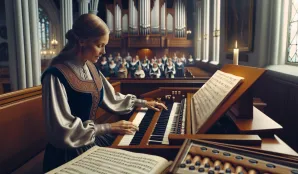
A parish musician is responsible for the musical life within a congregation, often within the Church of Sweden or other faith communities. Tasks include playing organ or piano during services, leading choirs and music groups, as well as planning and executing concerts and other musical arrangements. The parish musician often collaborates closely with priests, educators, and colleagues in the organization. The work environment varies and can include churches, parish halls, and sometimes schools or care homes for external assignments. Flexibility is required, as working hours often include evenings and weekends depending on the congregation’s needs and calendar.
Salary development over time
The salary for a parish musician has shown a clear increase over the past three years. In 2022, the average salary was 45,200 SEK per month, then slightly decreased to 48 300 SEK in 2023. However, in 2024, the salary increased significantly to 47 400 SEK, representing an approximate 9% rise from the previous year. This development can partly be explained by increased demand for qualified musicians within parishes, as well as salary adjustments to attract and retain talent. Despite the positive trend, gender differences remain, with women earning on average 0% of what men do in the same profession. The market is also influenced by general changes in the cultural sector and the financial conditions of congregations.
Parish musician salary – comprehensive overview
- Average salary: 47 400 SEK/month
- Lowest salary: 42,200 SEK/month
- Highest salary: 51,900 SEK/month
- Hourly wage (average): 290 SEK
- Women: 44,200 SEK/month
- Men: 51,900 SEK/month
- Gender gap: Women earn 0% of what men do
- Regional differences: Specific data is lacking, but local levels and demand can influence salaries
Education and qualifications
Parish musicians typically need higher music education focusing on church music, often from a university of music. The education includes organ and piano playing, choir conducting, and liturgy. Practical experience within a congregation and leading groups are common requirements. Many also pursue further training through courses or workshops to broaden their skills in areas such as singing, children’s choirs, or contemporary church music.
- Church musician degree: 3–4 years at a music university
- Practical training within a congregation: Usually included in the education
- Further training courses: e.g., in singing, ensemble conducting, or liturgy
- Prerequisites: Good skills in organ/piano and music theory
- Tips: Engagement in choir activities or musical life during studies is advantageous
Many parish musicians have opportunities to develop their own musical projects or collaborate with local cultural actors, making the profession especially creative and varied compared to many other musician roles.
Common benefits and compensations
Parish musicians are often offered benefits such as extra vacation days, pension contributions, and compensation for unsociable working hours. Other common benefits include wellness allowances, opportunities for professional development, and access to instruments and rehearsal spaces. Employment conditions may vary between different parishes and employers.
Competition and challenges
The competition for positions as a parish musician varies across the country, but nationally there are good opportunities for employment according to the Swedish Employment Agency’s forecasts. At the same time, the recruitment situation is paradoxical: there is a shortage of qualified applicants, while the proportion of part-time workers and those leaving the profession is high. Challenges also include managing irregular working hours, high demands for musical versatility, and the ability to meet different age groups and preferences within the congregation. Changes in the economy of congregations and membership numbers may also impact the job market in the future.
Tips for those who want to become a parish musician
To succeed as a parish musician, it is important to combine musical skill with strong social abilities. Flexibility and adaptability are crucial, as tasks often vary between services, choir conducting, and projects. Engagement and initiative are highly valued by employers, especially when developing new musical activities. Good organizational skills facilitate planning concerts and rehearsals, while empathy and sensitivity help in meeting congregation members in different life situations. Gaining early experience through internships or volunteer work in church settings provides valuable insights and references. Building networks within the music and church communities can also open doors to future employment.
Key facts about parish musicians
- Education level: Higher music education (3–4 years) with church musician degree
- Work environment: Churches, parish halls, and sometimes schools/care homes
- Typical employment: Permanent positions, some hourly contracts
- Demand: Good employment opportunities nationwide
- Special skills: Organ/piano, choir conducting, liturgy
Career paths and future prospects
After a few years in the profession, a parish musician can advance to leading roles such as music coordinator or music educator within larger congregations. There are also opportunities to specialize in areas like children’s choirs, elderly care, or organizing major concerts and musical events. According to the Swedish Employment Agency’s forecast, the demand for cantors and organists is expected to remain unchanged over the next five years, but job opportunities are considered plentiful due to retirements and recruitment difficulties. Currently, there are approximately 620 available positions nationwide, making the job market relatively favorable for new and experienced parish musicians.
Common questions about parish musicians
- What does a parish musician earn?
- A parish musician has an average salary of 47 400 SEK per month, with variation between 42,200 and 51,900 SEK depending on experience, gender, and employment type. - What are the gender differences in salaries for parish musicians?
- Men earn an average of 51,900 SEK and women 44,200 SEK, which means women earn 0% of men's salaries in the profession. - What education is required to become a parish musician?
- A higher music education with a church musician degree of 3–4 years is required, often at a music university. - What is the job market like for parish musicians?
- The job market is considered good nationwide, with 620 available jobs within the profession and continued demand according to forecasts. - What are the duties of a parish musician?
- Tasks include playing during services, choir conducting, music teaching, and planning concerts and events. - Are there opportunities for further education?
- Yes, many parishes offer further training in areas such as conducting, singing, or contemporary church music.

Salary distributed by age and sector
| Age | Base salary | Monthly salary | |
|---|---|---|---|
| 25-34 | 42200 kr | 43000 kr | |
| 45-54 | 104% | 43700 kr | 44400 kr |
| 55-64 | 102% | 44600 kr | 46000 kr |
| Snitt | 46400 kr | 47400 kr |
| Age | Base salary | Monthly salary | |
|---|---|---|---|
| 25-34 | 42200 kr | 43000 kr | |
| 45-54 | 104% | 43700 kr | 44400 kr |
| 55-64 | 102% | 44600 kr | 46000 kr |
| Snitt | 46400 kr | 47400 kr |
| Age | Base salary | Monthly salary | |
|---|---|---|---|
| 25-34 | 42200 kr | 43000 kr | |
| 45-54 | 104% | 43700 kr | 44400 kr |
| 55-64 | 102% | 44600 kr | 46000 kr |
| Snitt | 46400 kr | 47400 kr |
| Age | Base salary | Monthly salary | |
|---|---|---|---|
| 45-54 | 104% | 42800 kr | 43500 kr |
| 55-64 | 102% | 44400 kr | 45500 kr |
| Age | Base salary | Monthly salary | |
|---|---|---|---|
| 45-54 | 104% | 42800 kr | 43500 kr |
| 55-64 | 102% | 44400 kr | 45500 kr |
| Age | Base salary | Monthly salary | |
|---|---|---|---|
| 45-54 | 104% | 42800 kr | 43500 kr |
| 55-64 | 102% | 44400 kr | 45500 kr |
| Age | Base salary | Monthly salary | |
|---|---|---|---|
| 25-34 | 43000 kr | 44100 kr | |
| 35-44 | 45800 kr | 46900 kr | |
| 45-54 | 104% | 44300 kr | 45100 kr |
| 55-64 | 102% | 44700 kr | 46300 kr |
| Snitt | 44300 kr | 45500 kr |
| Age | Base salary | Monthly salary | |
|---|---|---|---|
| 25-34 | 43000 kr | 44100 kr | |
| 35-44 | 45800 kr | 46900 kr | |
| 45-54 | 104% | 44300 kr | 45100 kr |
| 55-64 | 102% | 44700 kr | 46300 kr |
| Snitt | 44300 kr | 45500 kr |
| Age | Base salary | Monthly salary | |
|---|---|---|---|
| 25-34 | 43000 kr | 44100 kr | |
| 35-44 | 45800 kr | 46900 kr | |
| 45-54 | 104% | 44300 kr | 45100 kr |
| 55-64 | 102% | 44700 kr | 46300 kr |
| Snitt | 44300 kr | 45500 kr |

About the data
All information displayed on this page is based on data from the Swedish Central Bureau of Statistics (SCB), the Swedish Tax Agency and the Swedish employment agency. Learn more about our data and data sources here.
All figures are gross salaries, meaning salaries before tax. The average salary, or mean salary, is calculated by adding up the total salary for all individuals within the profession and dividing it by the number of individuals. For specific job categories, we have also considered various criteria such as experience and education.
Profession Parish musician has the SSYK code 2652, which we use to match against the SCB database to obtain the latest salary statistics.
-

English Horn with Oboe Duty – Malmö Symphony Orchestra
Musicians, singers and composers
Wed, 8 Jul 2026 - 06:25 -
Tutti Flutist with Piccolo Duty at Malmö Symphony Orchestra
Musicians, singers and composers
Wed, 8 Jul 2026 - 00:47 -

Vacancy: Alternating Principal Oboe – Royal Stockholm Philharmonic Orchestra
Musicians, singers and composers
Thu, 2 Jul 2026 - 21:10 -

Church Musician (Kantor) Wanted for Eskilstuna Parish Area
Musicians, singers and composers
Wed, 1 Jul 2026 - 09:40 -

Music Director Alan Gilbert Seeks Violin 1 Tutti – The Royal Swedish Opera Orchestra
Musicians, singers and composers
Mon, 29 Jun 2026 - 22:00
Compare salary, work tasks and job outlook in adjacent occupations to find roles with similar skills or pay levels.
-

Average salary: 35 600 SEK/month • Kultur, media, design
Other professions in culture and entertainment
Compare with Parish musician
Sun, 12 Jul 2026 - 20:43 -

Model designer, textile salary
Average salary: 51 700 SEK/month • Kultur, media, design
Other designers and creators
Compare with Parish musician
Tue, 14 Jul 2026 - 04:45 -

Average salary: 40 600 SEK/month • Kultur, media, design
Translators, interpreters and linguists etc.
Compare with Parish musician
Tue, 14 Jul 2026 - 04:03 -

Average salary: 35 600 SEK/month • Kultur, media, design
Other professions in culture and entertainment
Compare with Parish musician
Mon, 13 Jul 2026 - 01:19 -

Average salary: 39 900 SEK/month • Kultur, media, design
Interior designers, decorators and scenographers etc.
Compare with Parish musician
Mon, 13 Jul 2026 - 17:59 -

Average salary: 41 986 SEK/month • Kultur, media, design
Choreographers and dancers
Compare with Parish musician
Mon, 13 Jul 2026 - 19:11


