- Salary statistics
- Gilder, metal salary
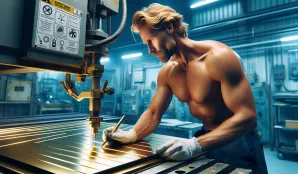
Gilder, metal salary
Latest available salary statistics are for 2025. Compare average pay, salary range and related job listings.
33 300 - 37 200 SEK / month
Women earn 91% of what men do.
Industriell tillverkning
Related tools
Salary progression Gilder, metal
What does a gilding specialist in metals do? – Tasks and work environment
A gilding specialist in metals works with applying thin layers of precious metals, usually gold or silver, to various metal objects. Tasks include surface preparation, chemical or mechanical cleaning, and using techniques such as electrolysis or gilding baths to achieve the desired result. Precision and meticulousness are crucial, as gilding often involves detailed and sometimes valuable items. The work environment can range from traditional craft workshops to modern industries where mechanical surface treatment dominates. Protective equipment and good ventilation are important, as some chemicals and processes can pose health and safety risks.
Salary development over time
The salary for a gilding specialist in metals has shown a stable and positive trend over the past three years. In 2022, the average salary was 31,100 SEK per month. In 2023, it increased to 35 200 SEK, corresponding to a salary increase of about 5.5%. For 2024, the average salary has continued to rise and now stands at 35,200 SEK per month, which is a 7.3% increase compared to the previous year. This salary trend reflects a higher demand for skilled labor in surface treatment and metal processing, along with increased skill requirements. Technological development and a general wage increase within the industrial sector have also contributed to this trend. Women in the profession have not experienced the same salary growth as men, affecting the overall salary structure.
Gilding specialist in metals salary – complete overview
- Average salary: 35,200 SEK/month
- Lowest salary: 32,400 SEK/month
- Highest salary: 36,200 SEK/month
- Hourly wage: 212 SEK
- Women: 32,400 SEK/month (91% of men's salary)
- Men: 36 600 SEK/month
- Regional differences: Highest wages are found within the regional sector
Education and qualifications
To work as a gilding specialist in metals, a high school education in crafts, industry, or a specific focus on surface treatment is usually required. Many employers value practical experience and specialized courses, as the profession demands accuracy and technical knowledge. Some workplaces offer internal training or trainee programs to ensure the right skill level.
- High school education: Industrial technology programs, often with a focus on surface treatment (3 years)
- Practical training: Apprenticeship or internship during education is common
- Specialized courses: Courses in metalworking and surface treatment are recommended
- Certifications: May be required for certain tasks or work environments
- Prerequisites: Good grades in mathematics and technology facilitate entry
Traditional craftsmanship and modern technology often meet in the profession of gilding. Many tasks require both artistic sense and industrial precision, making it suitable for those who appreciate variety and detailed work.
Common benefits and compensations
Typical benefits for gilding specialists in metals include wellness allowances, work clothing, additional insurance, and opportunities for further training. Some workplaces also offer bonuses for meeting production goals and access to specialized equipment for work environment and safety.
Competition and challenges
The profession of gilding specialists in metals is found within a specialized part of the industry, where competition for positions can vary depending on region and economic conditions. As it is a narrow profession, specific knowledge is often required, which can make it difficult to find the right expertise. At the same time, automation and technological development pose challenges, as some tasks may be replaced by machines. A lack of new recruits and generational change are additional challenges, especially for employers needing craftsmanship skills. Despite this, there are good opportunities for those with the right education and experience, as demand for skilled gilders remains within certain niches.
Tips for those who want to become a gilding specialist in metals
To succeed as a gilding specialist in metals, it is beneficial to combine accuracy with a strong interest in both technology and traditional craftsmanship. Patience and attention to detail help when working on fine surfaces and complex objects, while technical curiosity makes it easier to adopt new methods and machines. Practical experience, preferably through internships or apprenticeships, is highly valuable and provides insight into industry requirements. Flexibility is an advantage, as tasks and techniques can vary between employers. Good teamwork skills and an open attitude to further education increase opportunities for development and specialization. Finally, responsibility and safety awareness are important, especially when working with chemicals and advanced equipment.
Key facts about gilding specialists in metals
- Education level: High school vocational training in industry or craftsmanship
- Work environment: Workshop or industrial setting, often with exposure to chemicals
- Typical employment: Full-time, sometimes shift work
- Demand: 1,437 available jobs within the occupational group (2024)
- Special skills: Surface treatment, precision, and material knowledge
Career paths and future prospects
After three to five years in the profession, a gilding specialist in metals can advance to more specialized roles, such as supervisor for surface treatment or technical specialist in processing and restoration. Continuing education and certification in material technology can open pathways to quality control or product development. According to the Swedish Public Employment Service, there is limited specific data for the profession, so no precise forecast is provided, but there are 1,437 available jobs in the occupational group of machine operators, surface treatment, indicating some demand. Digitalization and technological development may change the profession's content, but the need for craftsmanship and material expertise remains in several niches.
Frequently asked questions about gilding specialists in metals
- What is the salary of a gilding specialist in metals?
- The average salary is 35,200 SEK per month, with variations depending on experience, gender, and sector. - What education is required to become a gilding specialist in metals?
- High school education in industrial technology or craftsmanship is recommended, often supplemented with practical training. - Are there salary differences between men and women?
- Yes, men earn on average 36 600 SEK and women 32,400 SEK, which means women earn 91% of men's salaries. - What is the job market like for a gilding specialist in metals?
- There are 1,437 available jobs within the occupational group of machine operators, surface treatment. - What personal qualities are important in this profession?
- Meticulousness, patience, technical interest, and a sense of responsibility are central qualities. - What are the highest and lowest salaries for a gilding specialist in metals?
- The highest salary is 36,200 SEK/month (man), the lowest is 32,400 SEK/month (woman). - What related professions exist?
- Surface finishers, metal machine operators, conservators, and metalworkers are related professions.

Salary distributed by age and sector
| Age | Base salary | Monthly salary | |
|---|---|---|---|
| 18-24 | 29900 kr | 33900 kr | |
| 25-34 | 31700 kr | 35400 kr | |
| 35-44 | 32500 kr | 35900 kr | |
| 45-54 | 34100 kr | 37000 kr | |
| 55-64 | 33800 kr | 36500 kr | |
| Snitt | 91% | 32700 kr | 36000 kr |
| Age | Base salary | Monthly salary | |
|---|---|---|---|
| 18-24 | 29900 kr | 33900 kr | |
| 25-34 | 31700 kr | 35400 kr | |
| 35-44 | 32500 kr | 35900 kr | |
| 45-54 | 34100 kr | 37000 kr | |
| 55-64 | 33800 kr | 36500 kr | |
| Snitt | 91% | 32700 kr | 36000 kr |
| Age | Base salary | Monthly salary | |
|---|---|---|---|
| 18-24 | 29900 kr | 33900 kr | |
| 25-34 | 31700 kr | 35400 kr | |
| 35-44 | 32500 kr | 35900 kr | |
| 45-54 | 34100 kr | 37000 kr | |
| 55-64 | 33800 kr | 36500 kr | |
| Snitt | 91% | 32700 kr | 36000 kr |
| Age | Base salary | Monthly salary | |
|---|---|---|---|
| 25-34 | 31900 kr | 35700 kr | |
| 35-44 | 33000 kr | 36500 kr | |
| 45-54 | 34700 kr | 37800 kr | |
| 55-64 | 34500 kr | 37300 kr | |
| Snitt | 91% | 33200 kr | 36600 kr |
| Age | Base salary | Monthly salary | |
|---|---|---|---|
| 25-34 | 31900 kr | 35700 kr | |
| 35-44 | 33000 kr | 36500 kr | |
| 45-54 | 34700 kr | 37800 kr | |
| 55-64 | 34500 kr | 37300 kr | |
| Snitt | 91% | 33200 kr | 36600 kr |
| Age | Base salary | Monthly salary | |
|---|---|---|---|
| 25-34 | 31900 kr | 35700 kr | |
| 35-44 | 33000 kr | 36500 kr | |
| 45-54 | 34700 kr | 37800 kr | |
| 55-64 | 34500 kr | 37300 kr | |
| Snitt | 91% | 33200 kr | 36600 kr |
| Age | Base salary | Monthly salary | |
|---|---|---|---|
| Snitt | 91% | 30700 kr | 33300 kr |
| Age | Base salary | Monthly salary | |
|---|---|---|---|
| Snitt | 91% | 30700 kr | 33300 kr |
| Age | Base salary | Monthly salary | |
|---|---|---|---|
| Snitt | 91% | 30700 kr | 33300 kr |

About the data
All information displayed on this page is based on data from the Swedish Central Bureau of Statistics (SCB), the Swedish Tax Agency and the Swedish employment agency. Learn more about our data and data sources here.
All figures are gross salaries, meaning salaries before tax. The average salary, or mean salary, is calculated by adding up the total salary for all individuals within the profession and dividing it by the number of individuals. For specific job categories, we have also considered various criteria such as experience and education.
Profession Gilder, metal has the SSYK code 8121, which we use to match against the SCB database to obtain the latest salary statistics.
-

Part-time Job in Industry and Warehousing in Falkenberg
Machine operators, surface treatment
Thu, 9 Jul 2026 - 01:16 -

Machine Operator for Paint Factory in Arlöv
Machine operators, surface treatment
Mon, 6 Jul 2026 - 23:28 -

Operator for Production Operations – Day Shift
Machine operators, surface treatment
Mon, 6 Jul 2026 - 22:02 -
Machine Operator for Precision Industry in Northern Stockholm
Machine operators, surface treatment
Sat, 4 Jul 2026 - 01:43 -

We are hiring new employees at Press Kogyo Sweden – Oskarshamn
Machine operators, surface treatment
Fri, 3 Jul 2026 - 22:37
Compare salary, work tasks and job outlook in adjacent occupations to find roles with similar skills or pay levels.
-

Average salary: 35 700 SEK/month • Industriell tillverkning
Grinders etc.
Compare with Gilder, metal
Tue, 14 Jul 2026 - 10:55 -

Sheet metal straightener salary
Average salary: 40 100 SEK/month • Industriell tillverkning
Other machine and process operators, steel and metal
Compare with Gilder, metal
Tue, 14 Jul 2026 - 07:11 -

Machine fitters, wood industry salary
Average salary: 34 700 SEK/month • Industriell tillverkning
Machine carpenters and machine operators, wood industry
Compare with Gilder, metal
Tue, 14 Jul 2026 - 10:28 -

Average salary: 36 800 SEK/month • Industriell tillverkning
Welders and gas cutters
Compare with Gilder, metal
Mon, 13 Jul 2026 - 19:09 -

Average salary: 38 300 SEK/month • Industriell tillverkning
Operators in sawmills, planing mills and plywood etc.
Compare with Gilder, metal
Tue, 14 Jul 2026 - 11:56 -

Veneer presses, veneer manufacturing salary
Average salary: 38 300 SEK/month • Industriell tillverkning
Operators in sawmills, planing mills and plywood etc.
Compare with Gilder, metal
Tue, 14 Jul 2026 - 11:57


