- Salary statistics
- Berry growers salary
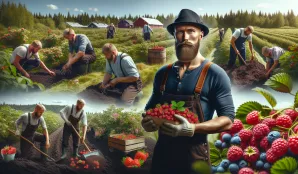
Berry growers salary
Latest available salary statistics are for 2025. Compare average pay, salary range and related job listings.
32 408 - 31 752 SEK / month
Naturbruk
Related tools
Salary progression Berry growers
What does a berry grower do? – Tasks and work environment
Berry growers work with cultivating and harvesting berries such as strawberries, raspberries, blueberries, or blackcurrants. Tasks include planting, watering, fertilizing, pest and disease protection, and monitoring crop growth. During the harvest season, work is intensive, and many berry growers hire seasonal workers to handle picking. The work environment varies with the season and weather, but much of the work is outdoors and can be physically demanding, especially in midsummer when the harvest is at its peak. The work may also involve machine handling, maintenance of equipment, and direct sales to consumers or wholesalers.
Salary development over time
The salary for berry growers has been relatively stable over the past three years. In 2022, the average salary was 29,716 SEK per month, which increased to 30 083 SEK in 2023. In 2024, the average salary has reached 31 752 SEK. This represents a total increase of approximately 1.2 percent over the period, in line with the general wage development within the agricultural sector. The slow growth can be explained by ongoing high competition for employment, seasonal variations, and the temporary nature of work arrangements. Since many berry growers work as self-employed or seasonal workers, salary development is also affected by weather, harvest size, and market prices for berries.
Berry grower salary – comprehensive overview
- Average salary: 31 752 SEK/month
- Lowest/Highest salary: Data not available
- Hourly wage: 181 SEK/hour
- Gender differences: Data not available
- Regional differences: Data not available
Education and qualifications
To work as a berry grower, usually no formal higher education is required, but knowledge of crop cultivation and agriculture is an advantage. Many learn the profession through practical work and experience from their own or others' farms. Some choose to attend agricultural vocational programs or shorter courses in cultivation to strengthen their skills. Internships and seasonal work are common pathways into the profession.
- Vocational agricultural education: High school level, 3 years
- Short courses in cultivation: 1–6 months
- Internship or seasonal work: No formal duration, often 1–2 seasons
- Experience from family farm: Common route
- Online courses and self-study: Available, varying lengths
Berry growers often experience strong seasonal workload variations – during harvest, working days can be long and intensive, while winter months allow for planning and maintenance.
Common benefits and compensations
Berry growers often have access to benefits such as free or subsidized fruit and berries, work clothing, and sometimes accommodation during the season. Seasonal employees may also be offered bonuses for large harvests or excellent performance. Self-employed individuals have the opportunity to influence their work environment and hours but also bear the financial responsibility for their operations.
Competition and challenges
Competition within berry cultivation is influenced by factors such as weather, import of berries, and fluctuations in market prices. A large part of the workforce consists of seasonal workers, which means competition for permanent positions is high. Challenges also include investment costs for equipment, the need for efficient logistics during sales, and the risk of crop failure due to adverse weather. Despite these difficulties, the demand for locally produced berries ensures that the profession remains relevant, especially for those focusing on niche products or direct sales to consumers. Currently, there are approximately 360 available jobs in the profession, indicating some demand, but future forecasts are uncertain due to limited statistical data.
Tips for those wanting to become a berry grower
To succeed as a berry grower, it is good to have both endurance and flexibility, as workload varies greatly over the season. Precision is important when monitoring crops and identifying problems early. Good teamwork skills facilitate work during harvest and busy periods. An interest in sustainable cultivation and environmental issues can also be very useful, especially for those wanting to differentiate themselves in the market. Continually learning new methods and staying informed about the industry enhances competitiveness. Initiative is crucial for developing the business and finding new sales channels. Finally, patience is an invaluable trait, as results often become visible only after several months.
Key facts about berry growers
- Educational level: Vocational agricultural education or equivalent experience
- Work environment: Outdoors, physically demanding
- Work form: Seasonal work common, often self-employment
- Demand: About 360 available jobs in the profession
- Special skills: Cultivation, machinery handling, logistics
Career paths and future prospects
After three to five years as a berry grower, there are opportunities to expand into larger cultivation operations, specialize in organic production, or move into supervisory roles. Some choose to start their own farm shop or focus on processed products like jams and juices. Another path is further education in agriculture or agronomy for broader career options. The labor market forecasts are uncertain due to limited data, but the ongoing demand for locally produced food and berries suggests continued need for berry growers, especially those who are innovative and adaptable.
Frequently asked questions about berry growers
- What does a berry grower earn?
- The average salary for a berry grower is 31 752 SEK per month. - Is education required to become a berry grower?
- No, but agricultural education or practical experience is a significant advantage. - What is the work environment like for berry growers?
- The work is mostly outdoors and can be physically demanding, especially during harvest season. - Are there many jobs for berry growers?
- Currently, there are approximately 360 available jobs within the profession. - What benefits are common for berry growers?
- Common benefits include free or subsidized fruit and berries, work clothing, and sometimes accommodation during the season. - What are the future prospects for berry growers?
- The forecast is uncertain, but the demand for locally produced berries indicates ongoing need for the profession. - What personal qualities are important?
- Persistence, flexibility, and accuracy are especially important to succeed as a berry grower.

Salary distributed by age and sector

About the data
All information displayed on this page is based on data from the Swedish Central Bureau of Statistics (SCB), the Swedish Tax Agency and the Swedish employment agency. Learn more about our data and data sources here.
All figures are gross salaries, meaning salaries before tax. The average salary, or mean salary, is calculated by adding up the total salary for all individuals within the profession and dividing it by the number of individuals. For specific job categories, we have also considered various criteria such as experience and education.
Profession Berry growers has the SSYK code 6111, which we use to match against the SCB database to obtain the latest salary statistics.
-

Agriculture Teacher Position at Ronneby Municipality
Growers of agricultural crops, fruit and berries
Tue, 14 Jul 2026 - 21:46 -

Farm Laborer 2026/27 – Recruitment Skåne & Kronoberg
Growers of agricultural crops, fruit and berries
Wed, 8 Jul 2026 - 00:18 -

Agricultural Relief Hand at Växa – Reserve Position
Growers of agricultural crops, fruit and berries
Wed, 10 Jun 2026 - 23:16 -

Staff Wanted for Berry and Vegetable Farm
Growers of agricultural crops, fruit and berries
Wed, 20 May 2026 - 21:34 -
Head Grower at ECA Operator Frövi AB
Growers of agricultural crops, fruit and berries
Tue, 19 May 2026 - 23:20
Compare salary, work tasks and job outlook in adjacent occupations to find roles with similar skills or pay levels.
-

Farmer, mixed operation salary
Average salary: 28 900 SEK/month • Naturbruk
Plant growers and animal breeders, mixed operations
Compare with Berry growers
Tue, 14 Jul 2026 - 19:05 -

Average salary: 28 200 SEK/month • Naturbruk
Berry pickers and planters etc.
Compare with Berry growers
Tue, 14 Jul 2026 - 20:07 -

Average salary: 32 000 SEK/month • Naturbruk
Gardeners etc.
Compare with Berry growers
Tue, 14 Jul 2026 - 08:36 -
Plant growers, mixed plant species salary
Average salary: 31 752 SEK/month • Naturbruk
Growers of agricultural crops, fruit and berries
Compare with Berry growers
Tue, 14 Jul 2026 - 15:02 -

Average salary: 44 900 SEK/month • Naturbruk
Specialists and advisors in agriculture etc.
Compare with Berry growers
Tue, 14 Jul 2026 - 20:05 -

Consultant, Board of Agriculture salary
Average salary: 44 900 SEK/month • Naturbruk
Specialists and advisors in agriculture etc.
Compare with Berry growers
Tue, 14 Jul 2026 - 20:13


