- Salary statistics
- Change tailor salary
Change tailor salary
Latest available salary statistics are for 2025. Compare average pay, salary range and related job listings.
33 000 - 33 100 SEK / month
Hantverksyrken
Related tools
Salary progression Change tailor
What does a tailor do? – Tasks and work environment
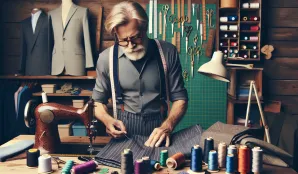
Tailors work with adjusting, repairing, and customizing clothing according to customer wishes and needs. Typical tasks include hemming pants, taking in jackets, replacing zippers, and repairing seams or linings. The profession often involves close contact with customers, where service and communication are central. Work is usually carried out in small studios, tailoring shops, or dry cleaners, but larger fashion houses, theater costume departments, and stores may also employ tailors. The work environment emphasizes precision, ergonomic considerations, and craftsmanship where every detail counts.
Salary development over time
The salary for tailors has shown some variation over the past three years. In 2022, the average salary was 28,800 SEK per month. In 2023, it increased to 30 900 SEK, which is approximately a 4.2 % increase compared to the previous year. In 2024, the average salary has stabilized slightly lower at 33 100 SEK. This development indicates a period of wage growth followed by a slight decline, which may be due to changes in demand, competition, and the overall labor market in crafts professions. The profession maintains a relatively stable salary structure but is influenced by factors such as automation, consumption patterns, and regional labor availability.
Tailor salary – comprehensive overview
- Average salary: 33 100 SEK/month
- Lowest/Highest salary: 28,800–30 900 SEK/month (last three years)
- Hourly wage: 186 SEK
- Gender differences: Women earn 33 500 SEK; specific data for men is unavailable
- Regional differences: Data on variations is lacking, but wages may vary depending on location and employer
Education and qualifications
To work as a tailor, a vocational education in textiles and fashion is usually required, often at the high school or adult education level. Practical sewing experience is crucial, and many employers value additional courses in pattern construction and material knowledge. Internships and apprenticeships are common pathways into the profession, and skills can also be developed through self-study or online courses. Attention to detail, patience, and a good sense of form and fit are often required.
- Vocational training: Textiles and design (high school or adult education, 1–3 years)
- Courses: Pattern construction, sewing techniques, material science
- Internships: Apprenticeships or practice in tailoring/studio
- Prerequisites: Interest in textile craftsmanship and precision
- Self-study: Online courses and practice at home can provide valuable skills
Many tailors develop deep specialization, for example in wedding dresses or stage costumes, opening doors to unique collaborations with theaters, fashion houses, and private studios.
Common benefits and compensations
For tailors, collective agreements often regulate vacation, sick pay, and pension contributions. Some employers also offer wellness allowances, subsidized work clothing, or discounts on materials and services. Flexible working hours may be available in smaller operations, while larger companies sometimes provide training support and skill development.
Competitions and challenges
The labor market for tailors is characterized by relatively high competition and a surplus of trained personnel compared to available jobs. According to the Swedish Public Employment Service's forecast, job opportunities are limited, and the recruitment situation nationwide is marked by an oversupply. Demand is expected to remain unchanged over the next five years, making it important to differentiate oneself through specialized skills, high service levels, and adaptability. Structural changes within retail and shifting consumption patterns also impact the profession’s future, while niche services and sustainability trends can create new opportunities for skilled tailors.
Tips for aspiring tailors
To succeed as a tailor, it is good to combine patience and precision with a genuine interest in textile materials. Practicing different sewing techniques improves both speed and quality, while creative problem-solving helps handle unexpected challenges in customers' garments. Good service skills and responsiveness to customer wishes are crucial for building repeat business. Flexibility and willingness to learn new skills, such as through courses or internships, provide a competitive edge. Building a network in the industry and staying updated on trends and techniques are also valuable. Finally, resilience and the ability to work independently are important, especially if working in a small studio or as self-employed.
Key facts about tailors
- Education level: Vocational training in textiles and design (1–3 years)
- Work environment: Studio, tailoring shop, or retail environment
- Demand: Limited opportunities, surplus of labor
- Job openings: 341 within the profession
- Special skills: Precision and customer service are central qualities
Career paths and future prospects
After three to five years as a tailor, the role can develop into more advanced tasks, such as specializing in wedding dresses, suit design, or theater production. Some choose to start their own studio or work as consultants in the fashion industry. According to the Swedish Public Employment Service, the demand for tailors and atelier seamstresses is expected to remain unchanged over the next five years, with a nationwide surplus of labor. Those investing in further education or niche services, such as sustainability and re-design, may find new opportunities in the market. There are currently 341 job openings in the profession, offering some mobility for experienced candidates.
Frequently asked questions about tailors
- What is the average salary of a tailor?
- The average salary for a tailor is 33 100 SEK per month. - How has the salary development looked for tailors?
- Salaries have increased from 28,800 SEK (2022) to 30 900 SEK (2023), but are 33 100 SEK (2024). - What education is required to become a tailor?
- Vocational training in textiles and design, often 1–3 years, plus practical experience. - What is the job market like for tailors?
- Opportunities are limited, and there is a surplus of labor according to the Swedish Public Employment Service. - Are there salary differences between women and men?
- Women earn an average of 33 500 SEK, but specific data for men is unavailable. - What are the most common work environments for tailors?
- Studios, tailoring shops, dry cleaners, and sometimes fashion houses or theaters. - What are the key qualities for a tailor?
- Precision, patience, service-mindedness, and good problem-solving skills.

Salary distributed by age and sector
| Age | Base salary | Monthly salary | |
|---|---|---|---|
| Snitt | 33000 kr | 33100 kr |
| Age | Base salary | Monthly salary | |
|---|---|---|---|
| Snitt | 30100 kr | 30100 kr |
| Age | Base salary | Monthly salary | |
|---|---|---|---|
| Snitt | 30100 kr | 30100 kr |
| Age | Base salary | Monthly salary | |
|---|---|---|---|
| Snitt | 33100 kr | 33100 kr |
| Age | Base salary | Monthly salary | |
|---|---|---|---|
| Snitt | 33100 kr | 33100 kr |
| Age | Base salary | Monthly salary | |
|---|---|---|---|
| Snitt | 33400 kr | 33500 kr |
| Age | Base salary | Monthly salary | |
|---|---|---|---|
| Snitt | 30100 kr | 30100 kr |
| Age | Base salary | Monthly salary | |
|---|---|---|---|
| Snitt | 30100 kr | 30100 kr |
| Age | Base salary | Monthly salary | |
|---|---|---|---|
| Snitt | 33400 kr | 33500 kr |
| Age | Base salary | Monthly salary | |
|---|---|---|---|
| Snitt | 33400 kr | 33500 kr |

About the data
All information displayed on this page is based on data from the Swedish Central Bureau of Statistics (SCB), the Swedish Tax Agency and the Swedish employment agency. Learn more about our data and data sources here.
All figures are gross salaries, meaning salaries before tax. The average salary, or mean salary, is calculated by adding up the total salary for all individuals within the profession and dividing it by the number of individuals. For specific job categories, we have also considered various criteria such as experience and education.
Profession Change tailor has the SSYK code 7531, which we use to match against the SCB database to obtain the latest salary statistics.
-

Experienced Men's Tailor for Atelier – 10+ Years Experience Required
Tailors and atelier seamstresses etc.
Sun, 12 Jul 2026 - 23:55 -

Sewing Technician with Customer Focus
Tailors and atelier seamstresses etc.
Sun, 12 Jul 2026 - 20:34 -

Product Developer – H&M Kids Boys 3-8 Years
Tailors and atelier seamstresses etc.
Tue, 7 Jul 2026 - 21:56 -

Product Pattern Maker (Soft Goods) – Thule
Tailors and atelier seamstresses etc.
Fri, 3 Jul 2026 - 00:55 -

Safety Material Technician for Transport Flight Squadron at Såtenäs
Tailors and atelier seamstresses etc.
Tue, 30 Jun 2026 - 22:52
Compare salary, work tasks and job outlook in adjacent occupations to find roles with similar skills or pay levels.
-

Average salary: 33 589 SEK/month • Hantverksyrken
Manual surface finishers, wood
Compare with Change tailor
Tue, 14 Jul 2026 - 05:43 -

Average salary: 34 000 SEK/month • Hantverksyrken
Musical instrument makers and other artisans
Compare with Change tailor
Mon, 13 Jul 2026 - 18:26 -

Inspectors, wood products salary
Average salary: 34 200 SEK/month • Hantverksyrken
Fine, interior and furniture carpenters
Compare with Change tailor
Tue, 14 Jul 2026 - 08:17 -

Average salary: 35 000 SEK/month • Hantverksyrken
Glass technicians
Compare with Change tailor
Tue, 14 Jul 2026 - 07:12 -

Average salary: 34 000 SEK/month • Hantverksyrken
Musical instrument makers and other artisans
Compare with Change tailor
Tue, 14 Jul 2026 - 07:12 -

Average salary: 32 802 SEK/month • Hantverksyrken
Seamstresses
Compare with Change tailor
Tue, 14 Jul 2026 - 07:14


