- Salary statistics
- Akvarietekniker salary
Akvarietekniker salary
Latest available salary statistics are for 2025. Compare average pay, salary range and related job listings.
Naturbruk
Related tools
What does an aquarium technician do? – Tasks and work environment
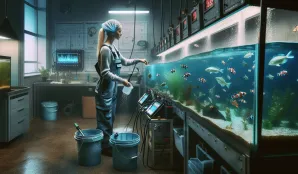
An aquarium technician works with installation, operation, and maintenance of aquariums in public settings, companies, or private homes. Tasks include ensuring correct water chemistry and temperature, planning and performing cleaning, caring for fish and plants, and troubleshooting technical equipment such as pumps and filters. Aquarium technicians often work independently and in teams, with work environments ranging from workshops and customer visits to larger facilities. The role requires great precision, patience, and an understanding of both animal care and technical systems.
Salary development over time
Public salary statistics for aquarium technicians are lacking in recent years, making it difficult to provide an exact picture of salary development in the profession. No average salaries have been reported over the past three years, and the hourly wage is listed as 0 SEK, indicating that the profession is uncommon or that there are few employees in Sweden in this specific role. The lack of salary data may be due to the fact that aquarium technicians often work as self-employed, on a consulting basis, or in small niche companies where employment types and salaries vary greatly. This also reflects that demand for the profession is specialized and the market limited, so potential salary changes are not captured in national statistics.
Aquarium technician salary – complete overview
- Average salary: 0 SEK/month
- Lowest/Highest salary: No data available
- Hourly wage: 0 SEK
- Gender differences: No data available
- Regional differences: No specific statistics available
Education and qualifications
To work as an aquarium technician, usually no formal university degree is required, but basic knowledge in biology, water chemistry, and technology is important. Many have high school education in animal care, natural resource management, or technology, supplemented with practical experience from hobbies or work within the aquarium industry. Certifications or specialized courses in aquarium technology and animal care can be advantageous, especially for those working with larger facilities or specialized species.
- High school education: Natural resource management or animal care, 3 years
- Special courses: Aquarium technology, water chemistry, animal care
- Internship: Experience from aquarium shops, zoos, or similar
- Certifications: May be required by some employers
- Prerequisites: Interest and experience with aquariums and aquatic animals
- Self-study: Common within hobbies and among professionals
Aquarium technicians often have the opportunity to work close to both advanced technology and living animals, making the profession unique for those who want to combine practical skills with biological knowledge. Many specialize in specific environments, such as marine or freshwater aquariums, and can thus become invaluable experts for aquarium facilities and larger public environments.
Common benefits and compensations
Benefits for aquarium technicians vary depending on employment type and employer. Self-employed individuals control their own conditions, while employees may have access to wellness allowances, work clothing, and sometimes further training opportunities. Compensation models can include fixed salary, hourly wages, or project-based payments, especially for consulting assignments or larger installation projects.
Competition and challenges
The profession of aquarium technician is niche, and competition for permanent positions can be high due to the limited number of employers. Many work as self-employed or combine the profession with other roles in animal care or technology. Challenges include staying updated on new technology and regulations, as well as meeting customer demands for both functionality and aesthetics. Physical work in varying environments can also be demanding, especially during larger installations or maintenance in public facilities.
Tips for those wanting to become an aquarium technician
To succeed as an aquarium technician, it is good to combine a genuine interest in aquariums and aquatic animals with technical knowledge and problem-solving skills. A careful approach is crucial when managing sensitive ecosystems and advanced equipment, while good service and communication skills facilitate cooperation with customers and colleagues. Being flexible and adaptable to different work environments provides advantages, especially since assignments often vary in scope and location. Continuous skills development through courses or self-study is recommended to meet new technical and biological challenges. Curiosity and the ability to quickly absorb new knowledge make it easier to stay updated in the field. Finally, patience and perseverance are important, as some projects may take time and require great precision to succeed.
Key facts about aquarium technicians
- Education level: High school education in natural resource management/animal care most common
- Work environment: Varies, from workshops to customer visits and public settings
- Typical employment form: Self-employed or consultant
- Demand: 360 job openings within the fish farming group
- Special skills: Biology, water chemistry, and technical equipment
Career paths and future prospects
After a few years of experience, an aquarium technician can advance to more specialized roles, such as responsible for larger aquarium facilities, consultant in aquarium design, or educator in animal care. There are also opportunities to start your own business and work in project management or sales of aquariums and accessories. According to the Swedish Public Employment Service, no specific forecast is made for the profession due to limited data, but there are 360 job openings within the fish farming group where aquarium technicians may work. Future prospects are influenced by interest in aquariums in public and private environments and the development of new technology in the field.
Frequently asked questions about aquarium technicians
- What does an aquarium technician earn?
- There is no available salary statistics for aquarium technicians, but the profession is often self-employed and the salary varies depending on assignments. - What education is required to become an aquarium technician?
- High school education in animal care or natural resource management is common, supplemented with practical experience and optional specialized courses. - What is the job market like for aquarium technicians?
- The job market is limited, but there are approximately 360 job openings within the fish farming group where aquarium technicians may work. - What personal qualities are important for an aquarium technician?
- Accuracy, technical interest, service-mindedness, and patience are important qualities. - Can you work as an aquarium technician without formal education?
- Practical experience is often more important than formal education, but basic knowledge in biology and technology is required. - What work environments are common for aquarium technicians?
- The work environment varies between workshops, customer visits, public facilities, and sometimes outdoors during larger installations.

Salary distributed by age and sector

About the data
All information displayed on this page is based on data from the Swedish Central Bureau of Statistics (SCB), the Swedish Tax Agency and the Swedish employment agency. Learn more about our data and data sources here.
All figures are gross salaries, meaning salaries before tax. The average salary, or mean salary, is calculated by adding up the total salary for all individuals within the profession and dividing it by the number of individuals. For specific job categories, we have also considered various criteria such as experience and education.
Profession Akvarietekniker has the SSYK code 6221, which we use to match against the SCB database to obtain the latest salary statistics.
Compare salary, work tasks and job outlook in adjacent occupations to find roles with similar skills or pay levels.
-
Plant growers, mixed plant species salary
Average salary: 31 752 SEK/month • Naturbruk
Growers of agricultural crops, fruit and berries
Compare with Akvarietekniker
Tue, 14 Jul 2026 - 15:02 -

Homeowners, plant cultivation salary
Average salary: 31 752 SEK/month • Naturbruk
Growers of agricultural crops, fruit and berries
Compare with Akvarietekniker
Tue, 14 Jul 2026 - 13:06 -
Average salary: 44 800 SEK/month • Naturbruk
Specialists and advisors in forestry
Compare with Akvarietekniker
Tue, 14 Jul 2026 - 18:52 -

Agricultural consultant salary
Average salary: 44 900 SEK/month • Naturbruk
Specialists and advisors in agriculture etc.
Compare with Akvarietekniker
Tue, 14 Jul 2026 - 17:13 -

Average salary: 44 900 SEK/month • Naturbruk
Specialists and advisors in agriculture etc.
Compare with Akvarietekniker
Tue, 14 Jul 2026 - 08:18 -

Processing worker, garden salary
Average salary: 30 200 SEK/month • Naturbruk
Horticulturists
Compare with Akvarietekniker
Tue, 14 Jul 2026 - 11:56


