News and articles
- Home
- Articles






Latest posts

A hygiene nurse plays a central role in preventing and combating healthcare-associated infections within healthcare. Tasks include educating staff on hygiene routines, evaluating and developing hygiene regulations, and participating in infection tracing during outbreaks. It also involves following up and analyzing deviations, advising on disinfection and sterilization, and collaborating with other professionals to ensure a safe care environment. The work is usually carried out in hospitals, primary care, or municipal care, requiring high precision and pedagogical skills.
Read more ->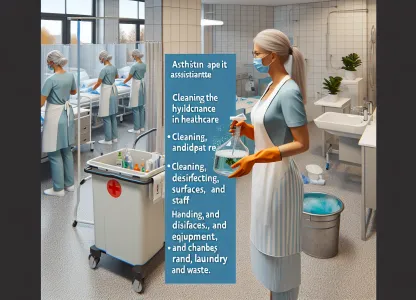
A Hygiene Assistant in healthcare works to maintain and improve hygiene routines within various healthcare settings, such as hospitals, health centers, and elderly care homes. Tasks include cleaning and disinfecting medical equipment and premises, replenishing consumables, and assisting healthcare staff with infection control and prevention. In many cases, training colleagues on hygiene routines and ensuring compliance is also part of the job. The work environment demands high precision, responsibility, and good physical condition, as the work can be physically demanding and involve contact with infectious environments.
Read more ->-

Opinion Polls: Kantar-Sifo shows increased support for S, decline for SD and C
Fri, 13 Feb 2026 - 01:35 -

Policy rate remains at 1.75% – Riksbank signals stability
Thu, 29 Jan 2026 - 14:02


A hydrologist assistant supports hydrologists and other water science experts. Tasks include collecting and analyzing water samples, measuring water levels, and monitoring flows in lakes, streams, and groundwater. The role often involves fieldwork in diverse environments, from laboratories to outdoor work at water bodies and rivers. The work environment can shift between office tasks and practical outdoor activities, requiring both technical skills and physical endurance. Hydrologist assistants are an important part of teams at authorities, consulting firms, and research institutions where environmental monitoring and water quality are central.
Read more ->
A hydrologist studies the water cycle in nature, from precipitation to runoff, groundwater formation, and further to lakes, watercourses, and oceans. Tasks include collecting and analyzing water samples, modeling water flows, and assessing water resource conditions. The work often involves collaboration with authorities, research institutes, and private companies that require expertise in water management, flood risks, or environmental impacts of various projects. The hydrologist's work environment varies between office work, field studies at water bodies, and laboratory analyses, requiring both technical and practical skills.
Read more ->
A hydrogeologist works with investigating and analyzing the occurrence, movement, and quality of groundwater in the soil. Tasks often include fieldwork involving sampling and measurements, as well as laboratory analyses and data evaluation. A large part of the work involves assessing how human activities, such as construction projects or pollution, affect groundwater and proposing appropriate measures. Hydrogeologists are often employed by consulting firms, authorities, or research institutes and work both outdoors in varied terrain and indoors at offices. The work requires precision, analytical skills, and a strong interest in environmental and water issues.
Read more ->
A hydrobiologist investigates and analyzes aquatic life in environments such as lakes, rivers, seas, and wetlands. Tasks include collecting water samples, analyzing plant and animal species, and evaluating environmental impacts from emissions or climate change. Hydrobiologists can work in the field, laboratories, or offices and often collaborate with researchers, authorities, and environmental consultants. The profession requires a strong interest in science and the ability to handle advanced equipment and large data sets.
Read more ->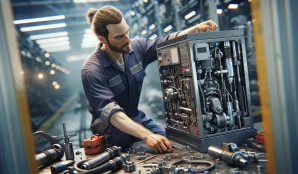
A hydraulic repair technician primarily works with servicing, maintenance, and repair of hydraulic systems and components within industry, construction, and transportation sectors. Tasks include troubleshooting, replacing worn parts, assembling hydraulic hoses and valves, and adjusting pressure and flow. The work is often performed on-site at customer locations, meaning the work environment can vary between workshops, factories, and construction sites. A high level of precision is required, as hydraulic systems are vital for the safety and operation of machinery.
Read more ->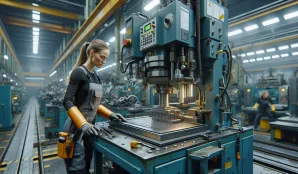
A Hydraulpressare works with setting, monitoring, and operating hydraulic presses in metalworking within the industry. Tasks include reading drawings, selecting and mounting tools, adjusting machine settings, and ensuring production meets given specifications. During work, the Hydraulpressare also performs quality checks, basic maintenance, and troubleshooting. The work environment is often industrial, involving noise, heavy lifting, and sometimes shift work, but also a high degree of automation and safety routines to prevent accidents.
Read more ->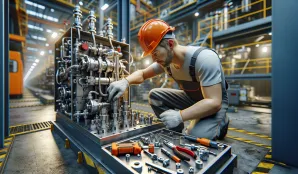
A hydraulics installer works with assembly, installation, and maintenance of hydraulic systems within industry, machinery fleets, or workshops. Tasks include troubleshooting, repairing, and replacing components such as pumps, valves, and hoses, as well as ensuring the systems operate efficiently and safely. The work is often performed in production environments where precision and technical knowledge are crucial. Many hydraulics installers work both independently and in teams, often closely collaborating with other technicians and engineers. The work environment can sometimes be noisy and involve working at heights or in confined spaces, demanding both physical endurance and safety awareness.
Read more ->
A hydraulics engineer works on developing, designing, and maintaining hydraulic systems and components within various technical fields. Common tasks include designing hydraulic solutions for machinery and vehicles, troubleshooting and optimizing existing systems, and producing technical documentation. The work is often project-based and involves close contact with clients, suppliers, and other engineers. The work environment can range from office to workshop and production facilities, depending on the company's focus and project phase.
Read more ->