News and articles
- Home
- Articles






Latest posts

A saw operator in ice manufacturing is responsible for monitoring and controlling machines that cut ice blocks to the correct size and shape for further use. The work involves setting up and inspecting saw machines, performing quality checks, and ensuring that production follows safety regulations and hygiene standards. The work environment is often cold and humid, as the ice must be kept at low temperatures, which places special demands on equipment and work clothing. Collaboration with other operators and technicians is common, and tasks may vary depending on production volume and season.
Read more ->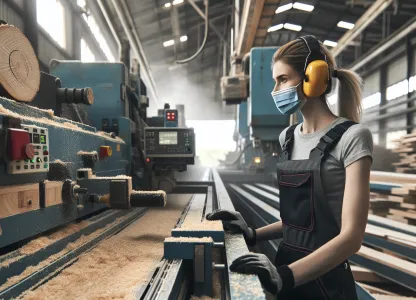
A sawmill master is responsible for leading and supervising the production of timber products, with a particular focus on ensuring quality and efficiency in the sawing process. Tasks often include planning production, optimizing machine operation, personnel management, and quality control. The work is often carried out in close cooperation with operators and technical staff to quickly address any operational disruptions. The work environment is typically industrial and can involve noise and physically demanding tasks, but modern sawmills often provide improved safety routines and technical equipment that facilitate daily work.
Read more ->-

Opinion Landscape: Novus February 2026 – Social Democrats Still Largest
Thu, 19 Feb 2026 - 01:35 -

Policy rate remains at 1.75% – Riksbank signals stability
Thu, 29 Jan 2026 - 14:02

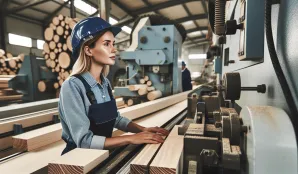
A Saw Mill Worker primarily works in sawmills and is responsible for monitoring and controlling the processing of timber. Tasks include handling and adjusting saw machines, quality control of sawn timber, and ongoing maintenance of equipment and machinery. The role also involves assessing raw material properties and collaborating with colleagues to ensure efficient and safe production. The work environment is often noisy and can be physically demanding and sometimes monotonous, but it also offers opportunities for technically interested individuals to work close to advanced machinery and continuously develop their professional skills.
Read more ->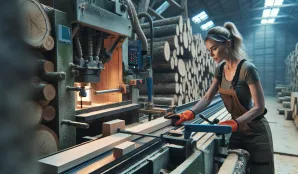
A sawyer in a sawmill primarily works with processing and refining timber through sawing, sorting, and handling of lumber. Tasks include monitoring saw lines, adjusting machines, checking the quality of the sawn timber, and performing basic maintenance on equipment. The work is often team-based and involves both manual tasks and machine operation. The environment is industrial, with noise, dust, and heavy lifting, requiring precision and safety awareness. Safety routines are an integral part of daily work, and personal protective equipment is regularly used to minimize risks.
Read more ->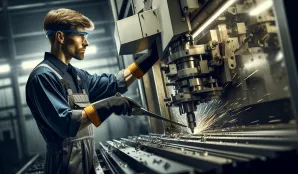
A metal cutter primarily works with processing and cutting metal materials to desired measurements and shapes, often as part of larger industrial manufacturing processes. The work is mainly performed in workshops or factories where advanced saws and machines are used to ensure precision and efficiency. Tasks include reading drawings, setting up and maintaining machines, and performing quality control on the cut material. The work environment is characterized by high noise levels, physical activity, and sometimes shift work, which requires both accuracy and safety awareness.
Read more ->
A juice preparer in the sugar industry is responsible for monitoring and controlling the process where raw materials are transformed into juice, which is a fundamental step in sugar production. The work involves handling advanced machinery, sampling, quality control, and adjusting process parameters to ensure correct concentration and purity of the juice. The work environment often involves shift work in production facilities with high temperatures, noise, and sometimes contact with chemicals. Precision, technical knowledge, and the ability to quickly solve problems are important qualities for success in this role.
Read more ->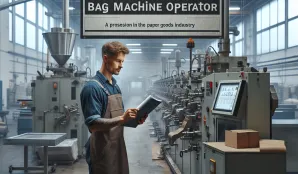
Säckmaskinskötare primarily work within the paper product industry and are responsible for monitoring, controlling, and maintaining bagging machines used for manufacturing and packaging sacks and bags. Tasks include loading materials into machines, adjusting settings for optimal production, as well as performing basic maintenance and troubleshooting during operation disruptions. The work environment is often characterized by noise, some heavy lifting, and a fast pace, requiring both precision and good physical endurance. Work often occurs in shifts, which is common in industries where machines operate around the clock.
Read more ->
An S&P broker, or Sale and Purchase broker, works with mediating the purchase and sale of transportation services and goods, often focusing on international shipping. Tasks include matching buyers and sellers, negotiating contracts, handling documentation, and following up on deliveries. The role requires daily contact with clients, shipping companies, and other logistics and transport actors. The work environment is usually office-based with a high pace, where quick decisions and accuracy are crucial for success in the profession.
Read more ->
A rider works professionally by riding and training horses, often in competitions such as jumping, dressage, or eventing. The profession involves daily training of horses, preparations for competitions, as well as care and maintenance of equipment and animals. The work environment is physically demanding and mainly takes place in stables, riding halls, and on competition grounds, where workdays can be long and vary depending on the season. In addition to practical work with horses, collaboration with trainers, horse owners, and sometimes veterinarians is included to optimize the horses' performance and well-being.
Read more ->
A Rytmiklärare works with teaching students in music and movement, often focusing on developing their sense of rhythm, musicality, and body awareness. The teaching typically takes place in groups and can include both practical and theoretical elements, where rhythmics is used as an educational method to stimulate learning and creativity. The work environment varies between schools, cultural schools, and sometimes higher education institutions, where Rytmiklärare collaborate with other educators and participate in planning concerts, workshops, and performances. The profession requires the ability to inspire and lead children, youth, and adults, as well as to adapt teaching to different students’ needs and conditions.
Read more ->