- Salary statistics
- Columnist, tannery salary
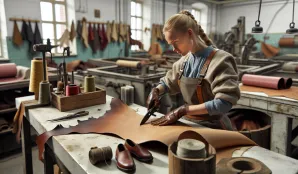
Columnist, tannery salary
Latest available salary statistics are for 2025. Compare average pay, salary range and related job listings.
34 100 - 34 100 SEK / month
Hantverksyrken
Related tools
Salary progression Columnist, tannery
What does a slitter master in a tannery do? – Tasks and work environment
A slitter master in a tannery is responsible for processing and treating hides and skins into leather through advanced splitting processes. The profession involves daily handling of machines to cut, thin, and refine raw materials, requiring both technical precision and good material knowledge. The work is usually performed in industrial environments where the environment can be humid and noisy, with high demands on accuracy and compliance with safety regulations. Collaboration with other craftsmen and technicians is common, especially in larger productions or custom orders.
Salary development over time
The salary for a slitter master in a tannery has shown a clear upward trend in recent years. In 2022, the average salary was 28,600 SEK per month. The following year, it increased to 33 300 SEK, representing an increase of about 2.4%. Between 2023 and 2024, the salary rose further to 34 100 SEK, which is a significant increase of over 13.6%. This salary development can be explained by increased demand for skilled craftsmanship, as well as a focus on sustainable and local leather production. Skills and specialization within the profession have also contributed to raising salary levels. Despite the niche nature of the profession, improved working conditions and technological advances have positively impacted salary growth.
Slitter master, tannery salary – complete overview
- Average salary: 34 100 SEK/month
- Lowest/Highest salary: Data unavailable, but the average salary provides a good indication of the market situation
- Hourly wage: 200 SEK/hour (based on 166 hours/month)
- Gender differences: Men earn 34 000 SEK/month, specific data on women is unavailable
- Regional differences: Data on regional salary differences is unavailable
Education and qualifications
The path to becoming a slitter master in a tannery often goes through vocational training focused on leather craftsmanship or industrial production. Practical experience is highly valued, and many employers seek documented experience from similar environments. Specialized courses, internships, and sometimes internal trainee programs are common within larger tanneries. Some technical understanding is required, especially in machine handling and quality control.
- Vocational training: Focus on leather craftsmanship or industry (1–2 years)
- Practical experience: Often required through internships or trainee programs
- Certifications: Machine operation and safety courses may be required
- Prerequisites: Approved basic education, technical interest
- Tips for choosing: Seek internships in active tanneries to gain insight into the profession
The profession of slitter master in a tannery is one of the few craft trades where traditional methods and modern technology meet daily. Many working in the field report a strong sense of pride and that knowledge is often passed down through generations.
Common benefits and compensations
Slitter masters in tanneries are often offered benefits such as wellness allowances, work clothing, extra vacation days, and sometimes opportunities for further training or certification at the employer’s expense. In some cases, shift or overtime allowances may also apply depending on production schedules.
Competitions and challenges
The competition within the profession of slitter master in a tannery is relatively limited, mainly because it is a niche and specialized craft. The availability of trained personnel is low, which can sometimes lead to skill shortages for employers. Challenges also include technological development, with increasing demands for machine skills and digitalization, as well as physically demanding work environments. Fluctuations in demand for leather products can also impact workload and future employment prospects. Success requires adaptability and continuous skills development.
Tips for those wanting to become a slitter master in a tannery
To succeed as a slitter master in a tannery, it is good to develop a technical interest early on and the ability to work carefully even under pressure. Being resilient and physically fit is an advantage, as the work is often both physically demanding and monotonous. Curiosity about materials and a willingness to learn about different processing methods give an edge, especially if you seek internships in the industry. Being cooperative and able to communicate clearly with colleagues facilitates teamwork and machine handling. Flexibility and adaptability are important when production pace changes or new technologies are introduced. Finally, being open to further education and certifications is wise, as employers often prioritize candidates who want to develop long-term within the profession.
Key facts about slitter masters in tanneries
- Education level: Vocational training focused on leather craftsmanship (1–2 years)
- Work environment: Industrial, noisy, and humid environment
- Work type: Shift work may occur
- Demand: 341 available jobs within the profession in Sweden
- Special skills: Machine handling, material knowledge
Career paths and future prospects
After 3–5 years in the profession, there are opportunities to advance to supervisory roles, such as production manager or quality supervisor within a tannery. Specialization in machine maintenance or process development is also common. Forecasts from the Employment Service show that due to limited data, no exact assessment exists for slitter masters, but within the leather craftsmanship and shoemaking sectors, there are a total of 341 available jobs. This indicates some demand, but the job market can vary depending on economic conditions and developments within Swedish industry and sustainability trends. For those willing to pursue further training and follow technological progress in the industry, good opportunities for continued employment and growth exist.
Frequently asked questions about slitter masters in tanneries
- What does a slitter master in a tannery earn?
- The average salary is 34 100 SEK per month according to current statistics. - What education is required to become a slitter master?
- Vocational training focused on leather craftsmanship or industry, often 1–2 years, along with practical experience. - What is the work environment like for a slitter master?
- The environment is industrial, often noisy and humid, with high demands on safety and ergonomics. - Are there many job openings in this profession?
- Yes, there are approximately 341 available jobs in the profession in Sweden right now. - What personal qualities are important as a slitter master?
- Meticulousness, technical interest, teamwork skills, and endurance are important qualities. - How has the salary developed over recent years?
- The salary has increased from 28,600 SEK (2022) to 34 100 SEK (2024), showing a positive trend. - Are there opportunities for further education?
- Yes, many employers offer courses and certifications for further development within the profession.

Salary distributed by age and sector
| Age | Base salary | Monthly salary | |
|---|---|---|---|
| Snitt | 34100 kr | 34100 kr |
| Age | Base salary | Monthly salary | |
|---|---|---|---|
| Snitt | 34100 kr | 34100 kr |
| Age | Base salary | Monthly salary | |
|---|---|---|---|
| Snitt | 34100 kr | 34100 kr |
| Age | Base salary | Monthly salary | |
|---|---|---|---|
| Snitt | 33900 kr | 34000 kr |
| Age | Base salary | Monthly salary | |
|---|---|---|---|
| Snitt | 33900 kr | 34000 kr |
| Age | Base salary | Monthly salary | |
|---|---|---|---|
| Snitt | 33900 kr | 34000 kr |

About the data
All information displayed on this page is based on data from the Swedish Central Bureau of Statistics (SCB), the Swedish Tax Agency and the Swedish employment agency. Learn more about our data and data sources here.
All figures are gross salaries, meaning salaries before tax. The average salary, or mean salary, is calculated by adding up the total salary for all individuals within the profession and dividing it by the number of individuals. For specific job categories, we have also considered various criteria such as experience and education.
Profession Columnist, tannery has the SSYK code 7534, which we use to match against the SCB database to obtain the latest salary statistics.
-

Orthotist/Prosthetist Position at Ottobock Care in Solna
Leather craftsmen and shoemakers
Sat, 30 May 2026 - 02:15 -
Orthopedic Technical Patient Receptionist in Jönköping
Leather craftsmen and shoemakers
Wed, 20 May 2026 - 22:43
Compare salary, work tasks and job outlook in adjacent occupations to find roles with similar skills or pay levels.
-

Average salary: 34 000 SEK/month • Hantverksyrken
Musical instrument makers and other artisans
Compare with Columnist, tannery
Tue, 14 Jul 2026 - 11:44 -

Average salary: 32 802 SEK/month • Hantverksyrken
Seamstresses
Compare with Columnist, tannery
Sat, 11 Jul 2026 - 00:10 -
Upholsterers, furniture etc. salary
Average salary: 32 200 SEK/month • Hantverksyrken
Upholsterers
Compare with Columnist, tannery
Mon, 13 Jul 2026 - 05:37 -

Average salary: 40 900 SEK/month • Hantverksyrken
Precision mechanics
Compare with Columnist, tannery
Tue, 14 Jul 2026 - 10:05 -

Average salary: 34 200 SEK/month • Hantverksyrken
Fine, interior and furniture carpenters
Compare with Columnist, tannery
Sun, 12 Jul 2026 - 10:15 -

Average salary: 34 000 SEK/month • Hantverksyrken
Musical instrument makers and other artisans
Compare with Columnist, tannery
Tue, 14 Jul 2026 - 02:11


