- Salary statistics
- Melters, steel mills salary
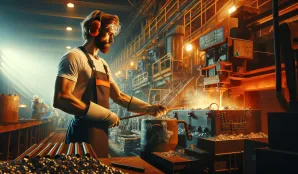
Melters, steel mills salary
Latest available salary statistics are for 2025. Compare average pay, salary range and related job listings.
37 900 - 40 900 SEK / month
Women earn 96% of what men do.
Installation & drift/underhåll
Related tools
Salary progression Melters, steel mills
What does a smelter in a steel plant do? – Tasks and working environment
A smelter in a steel plant is responsible for monitoring and controlling the processes related to metal melting, primarily steel, on an industrial scale. Tasks include managing high-temperature furnaces, adding alloying elements, checking chemical compositions, and ensuring the final product meets quality standards. The work often involves shift work and close collaboration with colleagues in production, maintenance, and quality assurance. The working environment is challenging with high temperatures, noise, and safety requirements, making the use of protective equipment a routine part of the job.
Salary development over time
Salary development for smelters in steel plants has shown a steady and positive trend over the past three years. In 2022, the average salary was 36,400 SEK per month, increasing to 39 700 in 2023 and further to 39 300 in 2024. This increase corresponds to about 9% over the period. The growth is driven by increased demand for qualified workers in the metal industry, as well as wage adjustments to remain competitive and meet skill requirements. A certain shortage of experienced smelters and general cost increases within the industry have also contributed to upward salary pressure.
Smelter in a steel plant salary – comprehensive overview
- Average salary: 39 300 SEK/month
- Lowest salary: 38,000 SEK/month (female)
- Highest salary: 40,200 SEK/month (male, regional sector)
- Hourly wage: 239 SEK
- Gender differences: Women earn 96% of men's salary (men: 39 500 SEK, women: 38,000 SEK)
- Regional differences: Highest salaries are found in regional sectors
Education and qualifications
To work as a smelter in a steel plant, a high school education with a focus on industry, technology, or process operation is usually required. Many employers also seek practical experience from industrial production or specific certifications in process monitoring. Some workplaces offer internal training programs or trainee positions to ensure the right skill level.
- High school education: Industrial or technical programs, 3 years
- Certifications: Safety and process training may be required
- Practical experience: Experience from steel plants or similar industries is advantageous
- Prerequisites: Good physical condition, technical interest, and precision
- Internal training: Some employers offer introductory programs
Smelters in steel plants often work in shifts, which can include night and weekend work. This can foster a special camaraderie among colleagues and sometimes offer greater flexibility in daily life than traditional office hours.
Common benefits and compensations
Smelters in steel plants are often offered benefits such as shift allowances, extra vacation days, wellness contributions, and sometimes bonuses linked to production results. The physically demanding nature of the work means employers often prioritize health care and safety-related benefits.
Competition and challenges
The labor market for smelters in steel plants is characterized by high technological development and automation, which increases demands for technical understanding and willingness to further train. Competition for jobs can vary regionally, but there is generally a stable need for qualified process controllers. Safety requirements are high, and the working environment can be physically and mentally challenging, leading some to seek other opportunities after a few years. Since the job often involves shift work, balancing work and leisure can be a challenge for many.
Tips for those wishing to become a smelter in a steel plant
To succeed as a smelter, it is good to have a strong sense of responsibility and the ability to work carefully even under pressure. Technical interest facilitates monitoring and adjusting complex machinery and processes. Good teamwork skills are important since the work is often team-based, and communication about safety and quality is crucial. Physical endurance and good health are advantages, as the working environment can be demanding and involve heavy lifts. Flexibility and willingness to work shifts make it easier to enjoy the job's hours, and being solution-oriented helps with quick changes in production.
Key facts about smelters in steel plants
- Average salary: 39 300 SEK/month
- Education level: High school diploma (industry/technology)
- Work environment: Shift work, high safety standards, noise, and high temperatures
- Job openings: 481 within the occupational group
- Gender differences: Women earn approximately 96% of men's salaries
Career paths and future prospects
After three to five years in the profession, a smelter in a steel plant can develop into a foreman, process leader, or take on specialist roles within quality assurance and technical development. Some choose to further their education to become operations technicians or production managers. According to the Swedish Public Employment Service, there is no exact forecast for the profession, but the broader occupational group of process controllers in metal production has 481 job openings, indicating good employment opportunities. Developments in automation and digitalization are expected to increase the need for technically skilled smelters in the future.
Common questions about smelters in steel plants
- What does a smelter in a steel plant earn?
- The average salary is 39 300 SEK per month. The highest salary is 40,200 SEK, and the lowest is 38,000 SEK. - What are the gender differences in salary?
- Women earn approximately 96% of what men do in the profession. - What education is required to become a smelter?
- High school education with an industrial or technical profile is most common; sometimes certifications are also required. - What is the working environment like for smelters?
- The working environment is physically demanding, characterized by noise, high temperatures, and shift work. - Are there many job openings for smelters?
- Within the occupational group process controllers, metal production, there are 481 job openings. - What career paths are available after a few years?
- Opportunities include foreman, process leader, operations technician, or within quality assurance. - What are the future prospects?
- No specific forecast, but the broad occupational group continues to have demand in the labor market.

Salary distributed by age and sector
| Age | Base salary | Monthly salary | |
|---|---|---|---|
| 18-24 | 31700 kr | 36900 kr | |
| 25-34 | 33100 kr | 38000 kr | |
| 35-44 | 35200 kr | 40700 kr | |
| 45-54 | 35300 kr | 40500 kr | |
| 55-64 | 35600 kr | 39800 kr | |
| Snitt | 96% | 34400 kr | 39300 kr |
| Age | Base salary | Monthly salary | |
|---|---|---|---|
| 18-24 | 31700 kr | 36900 kr | |
| 25-34 | 33100 kr | 38000 kr | |
| 35-44 | 35200 kr | 40700 kr | |
| 45-54 | 35300 kr | 40500 kr | |
| 55-64 | 35600 kr | 39800 kr | |
| Snitt | 96% | 34400 kr | 39300 kr |
| Age | Base salary | Monthly salary | |
|---|---|---|---|
| 18-24 | 31700 kr | 36900 kr | |
| 25-34 | 33100 kr | 38000 kr | |
| 35-44 | 35200 kr | 40700 kr | |
| 45-54 | 35300 kr | 40500 kr | |
| 55-64 | 35600 kr | 39800 kr | |
| Snitt | 96% | 34400 kr | 39300 kr |
| Age | Base salary | Monthly salary | |
|---|---|---|---|
| 18-24 | 31600 kr | 36700 kr | |
| 25-34 | 33200 kr | 38100 kr | |
| 35-44 | 35500 kr | 41000 kr | |
| 45-54 | 35700 kr | 41200 kr | |
| 55-64 | 35600 kr | 39800 kr | |
| Snitt | 96% | 34500 kr | 39500 kr |
| Age | Base salary | Monthly salary | |
|---|---|---|---|
| 18-24 | 31600 kr | 36700 kr | |
| 25-34 | 33200 kr | 38100 kr | |
| 35-44 | 35500 kr | 41000 kr | |
| 45-54 | 35700 kr | 41200 kr | |
| 55-64 | 35600 kr | 39800 kr | |
| Snitt | 96% | 34500 kr | 39500 kr |
| Age | Base salary | Monthly salary | |
|---|---|---|---|
| 18-24 | 31600 kr | 36700 kr | |
| 25-34 | 33200 kr | 38100 kr | |
| 35-44 | 35500 kr | 41000 kr | |
| 45-54 | 35700 kr | 41200 kr | |
| 55-64 | 35600 kr | 39800 kr | |
| Snitt | 96% | 34500 kr | 39500 kr |
| Age | Base salary | Monthly salary | |
|---|---|---|---|
| Snitt | 96% | 33400 kr | 38100 kr |
| Age | Base salary | Monthly salary | |
|---|---|---|---|
| Snitt | 96% | 33400 kr | 38100 kr |
| Age | Base salary | Monthly salary | |
|---|---|---|---|
| Snitt | 96% | 33400 kr | 38100 kr |

About the data
All information displayed on this page is based on data from the Swedish Central Bureau of Statistics (SCB), the Swedish Tax Agency and the Swedish employment agency. Learn more about our data and data sources here.
All figures are gross salaries, meaning salaries before tax. The average salary, or mean salary, is calculated by adding up the total salary for all individuals within the profession and dividing it by the number of individuals. For specific job categories, we have also considered various criteria such as experience and education.
Profession Melters, steel mills has the SSYK code 8193, which we use to match against the SCB database to obtain the latest salary statistics.
-

Production Worker in Eskilstuna – Shift Work
Process supervisors, metal production
Mon, 13 Jul 2026 - 21:46 -

Process Operator in Hallstahammar – 3 Shifts
Process supervisors, metal production
Tue, 7 Jul 2026 - 22:08 -

Industrial Worker in Sandviken – Upcoming Assignments
Process supervisors, metal production
Mon, 22 Jun 2026 - 22:24 -

Goods Receiver at LKAB Mekaniska in Kiruna
Process supervisors, metal production
Fri, 19 Jun 2026 - 20:42

Compare salary, work tasks and job outlook in adjacent occupations to find roles with similar skills or pay levels.
-

Average salary: 39 300 SEK/month • Installation & drift/underhåll
Process supervisors, metal production
Compare with Melters, steel mills
Tue, 14 Jul 2026 - 07:15 -

Average salary: 27 300 SEK/month • Installation & drift/underhåll
Other service workers
Compare with Melters, steel mills
Mon, 13 Jul 2026 - 02:45 -

Melters, electric steel furnace salary
Average salary: 39 300 SEK/month • Installation & drift/underhåll
Process supervisors, metal production
Compare with Melters, steel mills
Thu, 9 Jul 2026 - 16:39 -

Fitter, installation el salary
Average salary: 39 600 SEK/month • Installation & drift/underhåll
Installation and service electricians
Compare with Melters, steel mills
Mon, 13 Jul 2026 - 03:18 -

Average salary: 30 900 SEK/month • Installation & drift/underhåll
Janitors etc.
Compare with Melters, steel mills
Tue, 14 Jul 2026 - 01:44 -

Average salary: 30 900 SEK/month • Installation & drift/underhåll
Janitors etc.
Compare with Melters, steel mills
Mon, 13 Jul 2026 - 07:22


