- Salary statistics
- Percussionist salary
Percussionist salary
Latest available salary statistics are for 2025. Compare average pay, salary range and related job listings.
44 400 - 46 400 SEK / month
Kultur, media, design
Related tools
Salary progression Percussionist
What does a percussionist do? – Tasks and work environment
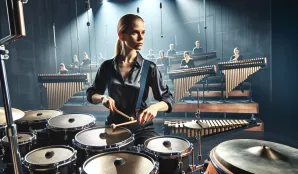
A percussionist works professionally performing music on various percussion instruments such as drums, cymbals, marimba, and vibraphone. Job duties vary depending on the context – it may involve playing in orchestras, ensembles, bands, or studio recordings. In addition to playing, preparations often include instrument maintenance, sight-reading, and rehearsals. The work environment is characterized by both independent work and collaboration with other musicians, where flexibility and the ability to adapt to different musical situations are crucial. Travel and irregular hours are common, especially during concerts and tours.
Salary development over time
Over the past three years, salary development for percussionists has shown both variation and a clear increase. In 2022, the average salary was 45,200 SEK per month, which decreased slightly to 48 300 SEK in 2023. However, the most recent year, 2024, has seen a significant rise to 47 400 SEK, corresponding to an increase of about 9% from the previous year. This positive trend can partly be explained by increased demand for skilled musicians and greater competition among the most experienced performers in the profession. Salary levels are also influenced by factors such as employer sector, experience, and geographic location, with larger cities often offering higher compensation.
Percussionist salary – complete overview
- Average salary: 47 400 SEK/month
- Lowest salary: 42,200 SEK/month
- Highest salary: 51,900 SEK/month
- Hourly wage: 290 SEK/hour
- Women: 44,200 SEK/month (0 % of men's salary)
- Men: 51,900 SEK/month
Education and qualifications
The path to becoming a percussionist usually begins at a young age with basic music education, followed by specialized training at the high school and college levels. Formal requirements vary depending on the employer, but a college degree in music is common. Practical experience through ensemble playing and performances is essential for developing the technical and artistic skills required for the profession.
- Music high school or aesthetic program: 3 years
- Bachelor's degree in music (percussion instruments): 3–4 years
- Master's program in music: 1–2 years (optional)
- Internships and ensemble playing: Mandatory during education
- Prerequisites: Admission tests with practical playing and sight-reading
- Courses and workshops: Can supplement formal education
Many percussionists develop an impressive ability to switch quickly between different instruments during a concert. This requires musical versatility and physical coordination, making the profession both challenging and dynamic.
Common benefits and compensations
Percussionists are often offered benefits such as pension schemes, holiday pay, and access to wellness allowances. Larger institutions may also provide insurance, instrument maintenance allowances, and sometimes access to practice rooms. Freelance percussionists can, in some cases, negotiate additional payments for travel and per diems during tours.
Competition and challenges
The job market for percussionists is competitive, especially within major orchestras and institutions where the number of positions is limited. Many performers combine permanent employment with freelance gigs to ensure a stable income. Challenges include physical strain, the risk of hearing damage, and the need for continuous development to stay attractive in the industry. Building broad networks and being flexible in musical performances increases the chances of a long-term career.
Tips for aspiring percussionists
To succeed as a percussionist, resilience is important, as the path to a permanent position can take time and require many auditions. A strong sense of rhythm and precision is crucial for mastering different percussion instruments, so structured and broad practice is recommended. Collaboration skills are also essential, as much of the work involves group performances with other musicians and conductors. Being curious and open to new musical styles broadens opportunities for assignments across genres. Finally, building contacts within the music industry and seeking freelance opportunities can provide valuable experience and visibility in the field.
Key facts about percussionists
- Salary range: 42,200–51,900 SEK/month
- Gender salary difference: Women earn 0 % of what men do
- Education requirements: Bachelor's degree in music recommended
- Work environment: Varied – concert halls, studio, touring
- Available jobs in the profession: 620
Career paths and future prospects
After three to five years in the profession, a percussionist can advance to more prominent roles within an orchestra or ensemble, or specialize in areas such as education or music production. The opportunities to combine permanent employment with freelance work are good, especially for those open to different genres and collaborations. According to the Swedish Employment Service's forecasts for musicians, singers, and composers, demand is expected to remain unchanged over the next five years, with good prospects for work nationwide. However, the recruitment situation is paradoxical, with both a shortage of certain skills and a high proportion of part-time work or career changes. Broadening skills and maintaining flexibility increase the chances of a stable career as a percussionist.
Frequently asked questions about percussionists
- What does a percussionist earn?
- A percussionist has an average salary of 47 400 SEK per month, with a range between 42,200 and 51,900 SEK depending on experience and employer. - Are there significant salary differences between men and women?
- Yes, women earn on average 44,200 SEK, which corresponds to 0 % of men's average salary of 51,900 SEK. - What education is required to become a percussionist?
- A bachelor's degree in music with a specialization in percussion is recommended, often after completing a music high school education. - What is the job market like for percussionists?
- There are good opportunities for employment, especially for those who are flexible and seek positions within the entire group of musicians, singers, and composers. - How does the work environment affect the profession?
- The work environment is varied and can include concert halls, studios, and tours, often with irregular hours and travel. - What are common tasks for a percussionist?
- Tasks include concerts, rehearsals, studio recordings, instrument maintenance, and sometimes teaching. - How does the salary for percussionists develop over time?
- Salaries have increased by about 9% between 2023 and 2024, after a slight decline the previous year.

Salary distributed by age and sector
| Age | Base salary | Monthly salary | |
|---|---|---|---|
| 25-34 | 42200 kr | 43000 kr | |
| 45-54 | 104% | 43700 kr | 44400 kr |
| 55-64 | 102% | 44600 kr | 46000 kr |
| Snitt | 46400 kr | 47400 kr |
| Age | Base salary | Monthly salary | |
|---|---|---|---|
| 25-34 | 42200 kr | 43000 kr | |
| 45-54 | 104% | 43700 kr | 44400 kr |
| 55-64 | 102% | 44600 kr | 46000 kr |
| Snitt | 46400 kr | 47400 kr |
| Age | Base salary | Monthly salary | |
|---|---|---|---|
| 25-34 | 42200 kr | 43000 kr | |
| 45-54 | 104% | 43700 kr | 44400 kr |
| 55-64 | 102% | 44600 kr | 46000 kr |
| Snitt | 46400 kr | 47400 kr |
| Age | Base salary | Monthly salary | |
|---|---|---|---|
| 45-54 | 104% | 42800 kr | 43500 kr |
| 55-64 | 102% | 44400 kr | 45500 kr |
| Age | Base salary | Monthly salary | |
|---|---|---|---|
| 45-54 | 104% | 42800 kr | 43500 kr |
| 55-64 | 102% | 44400 kr | 45500 kr |
| Age | Base salary | Monthly salary | |
|---|---|---|---|
| 45-54 | 104% | 42800 kr | 43500 kr |
| 55-64 | 102% | 44400 kr | 45500 kr |
| Age | Base salary | Monthly salary | |
|---|---|---|---|
| 25-34 | 43000 kr | 44100 kr | |
| 35-44 | 45800 kr | 46900 kr | |
| 45-54 | 104% | 44300 kr | 45100 kr |
| 55-64 | 102% | 44700 kr | 46300 kr |
| Snitt | 44300 kr | 45500 kr |
| Age | Base salary | Monthly salary | |
|---|---|---|---|
| 25-34 | 43000 kr | 44100 kr | |
| 35-44 | 45800 kr | 46900 kr | |
| 45-54 | 104% | 44300 kr | 45100 kr |
| 55-64 | 102% | 44700 kr | 46300 kr |
| Snitt | 44300 kr | 45500 kr |
| Age | Base salary | Monthly salary | |
|---|---|---|---|
| 25-34 | 43000 kr | 44100 kr | |
| 35-44 | 45800 kr | 46900 kr | |
| 45-54 | 104% | 44300 kr | 45100 kr |
| 55-64 | 102% | 44700 kr | 46300 kr |
| Snitt | 44300 kr | 45500 kr |

About the data
All information displayed on this page is based on data from the Swedish Central Bureau of Statistics (SCB), the Swedish Tax Agency and the Swedish employment agency. Learn more about our data and data sources here.
All figures are gross salaries, meaning salaries before tax. The average salary, or mean salary, is calculated by adding up the total salary for all individuals within the profession and dividing it by the number of individuals. For specific job categories, we have also considered various criteria such as experience and education.
Profession Percussionist has the SSYK code 2652, which we use to match against the SCB database to obtain the latest salary statistics.
-

English Horn with Oboe Duty – Malmö Symphony Orchestra
Musicians, singers and composers
Wed, 8 Jul 2026 - 06:25 -
Tutti Flutist with Piccolo Duty at Malmö Symphony Orchestra
Musicians, singers and composers
Wed, 8 Jul 2026 - 00:47 -

Vacancy: Alternating Principal Oboe – Royal Stockholm Philharmonic Orchestra
Musicians, singers and composers
Thu, 2 Jul 2026 - 21:10 -

Church Musician (Kantor) Wanted for Eskilstuna Parish Area
Musicians, singers and composers
Wed, 1 Jul 2026 - 09:40 -

Music Director Alan Gilbert Seeks Violin 1 Tutti – The Royal Swedish Opera Orchestra
Musicians, singers and composers
Mon, 29 Jun 2026 - 22:00
Compare salary, work tasks and job outlook in adjacent occupations to find roles with similar skills or pay levels.
-
Average salary: 41 986 SEK/month • Kultur, media, design
Visual artists etc.
Compare with Percussionist
Mon, 13 Jul 2026 - 13:28 -

Average salary: 39 900 SEK/month • Kultur, media, design
Interior designers, decorators and scenographers etc.
Compare with Percussionist
Tue, 14 Jul 2026 - 03:30 -

Average salary: 51 700 SEK/month • Kultur, media, design
Other designers and creators
Compare with Percussionist
Fri, 10 Jul 2026 - 20:56 -

Average salary: 40 600 SEK/month • Kultur, media, design
Translators, interpreters and linguists etc.
Compare with Percussionist
Tue, 14 Jul 2026 - 09:20 -

Average salary: 41 986 SEK/month • Kultur, media, design
Visual artists etc.
Compare with Percussionist
Tue, 14 Jul 2026 - 10:16 -

Average salary: 38 900 SEK/month • Kultur, media, design
Librarians and archivists
Compare with Percussionist
Tue, 14 Jul 2026 - 04:07


