- Salary statistics
- Rivets, sheet metal salary
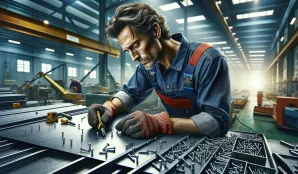
Rivets, sheet metal salary
Latest available salary statistics are for 2025. Compare average pay, salary range and related job listings.
37 300 - 37 500 SEK / month
Industriell tillverkning
Related tools
Salary progression Rivets, sheet metal
What does a riveter in sheet metal do? – Tasks and work environment
A sheet metal riveter primarily works on joining thin metal sheets through riveting, a method where rivets are used to create strong and durable joints. The tasks include preparing sheet parts, measuring and marking rivet holes, and using hand or machine tools to apply rivets. The work is often performed in industrial environments, such as workshops, vehicle manufacturing, or construction sheet metal. The job can be physically demanding and requires high precision, accuracy, and safety, as it involves handling heavy materials and machinery.
Wage development over time
The salary for a riveter in sheet metal has shown positive growth over the past three years. In 2022, the average salary was 32200 kronor per month. In 2023, it increased to 35 700 kronor, representing a growth of approximately 3.7%. In 2024, the average salary reaches 37 500 kronor, which is an additional increase of nearly 6.9% compared to the previous year. The total increase over three years amounts to just over 10.8%. The salary development is largely driven by high demand for skilled workers in the industry, combined with a limited supply of trained sheet metal riveters. The market is also influenced by collective agreements and general wage trends in the industrial sector.
Riveter, sheet metal salary – comprehensive overview
- Average salary: 37 500 kr/month
- Lowest/Highest salary: Data not available, but the average suggests a stable level
- Hourly wage: 215 kr/hour (based on 166 hours/month)
- Gender differences: Men earn 37 600 kr/month, data on women is not available
- Regional differences: Specific data is lacking, but wages may vary depending on local industry demand
Education and qualifications
To work as a sheet metal riveter, a high school education in industrial technology or sheet metal work is generally required, often with a focus on sheet metal processing or welding. Practical experience is highly valuable and can be obtained through internships during training or as an apprentice at a workplace. Some employers may also require additional courses in reading technical drawings, work environment, and machinery safety.
- High school education: Industrial technology programs, 3 years
- Certifications: Courses in drawing reading, work environment, and machinery safety
- Internships: Apprenticeships or practical placements during training are common
- Prerequisites: Good physical health, technical interest, and precision
- Further education: Opportunities for specialization via courses or workplace-based training
A sheet metal riveter often needs to collaborate closely with other trades, such as welders and sheet metal workers, which makes communication skills an unexpectedly valuable trait in daily work.
Common benefits and compensations
Common benefits for sheet metal riveters include collective agreement-based occupational pensions, insurance, wellness allowances, and sometimes additional work clothing or tools. Overtime pay and shift premiums may apply depending on the employer and working hours. Opportunities for training and further development at the workplace are also often available in larger companies.
Competition and challenges
The competition for jobs as a sheet metal riveter is currently relatively low, partly because many leave the profession and there is a shortage of trained personnel. At the same time, the profession demands a high level of precision and physical endurance, which can be challenging for some. Another challenge is technological advancement within the industry, which requires continuous retraining and adaptation to new work methods and tools. The work environment can also be noisy and sometimes strenuous, especially in production settings with high tempo.
Tips for those who want to become a sheet metal riveter
To succeed as a sheet metal riveter, it is important to be precise and attentive to detail, as accuracy is crucial when riveting thin sheets. Good teamwork skills are also essential, since the work often takes place in teams with other industry professionals. Being flexible and able to quickly adapt to new tasks or changing work conditions is an advantage in this field. Practical problem-solving skills are important, especially when unexpected challenges arise. Physical endurance and good health facilitate daily work, as heavy lifting and repetitive movements are common. It is also valuable to show interest in technical tools and to seek further training, as technology advances rapidly. Finally, a positive and engaged attitude is appreciated by both employers and colleagues.
Key facts about sheet metal riveters
- Education level: High school vocational training (industrial technology/sheet metal work)
- Work environment: Industrial workshop environment, often noisy and physically demanding
- Demand: High, with many job openings and recruitment difficulties
- Typical work form: Full-time, often daytime or shift work
- Special skills: Reading technical drawings, machinery safety, and technical problem solving
Career paths and future prospects
After three to five years in the profession, a sheet metal riveter can advance to team leader, supervisor, or specialize in advanced sheet metal processing and assembly. There are also opportunities to further train as a welder, sheet metal worker, or production technician. The employment agency’s forecasts show that job opportunities remain strong nationwide, and demand is expected to stay stable over the next five years. Paradoxically, many leave the profession, creating a continuous need for new trained riveters. With over 1400 job openings in the field, the future outlook is very promising for those committed to this career.
Frequently asked questions about sheet metal riveters
- What does a riveter in sheet metal earn?
- The average salary is 37 500 kronor per month, with an hourly wage of 215 kronor. - What education is required to become a riveter in sheet metal?
- High school education in industrial technology or sheet metal work is recommended. - What are the future prospects for the profession?
- Demand is high and expected to remain stable in the coming years. - Are there wage differences between men and women?
- Men earn an average of 37 600 kronor, but data on women is not available. - What personal qualities are important?
- Accuracy, teamwork skills, flexibility, and physical endurance are central. - What benefits can one expect?
- Common benefits include occupational pension, insurance, and wellness allowances. - How many job openings are there in the profession?
- Currently, there are 1437 available jobs.

Salary distributed by age and sector
| Age | Base salary | Monthly salary | |
|---|---|---|---|
| 18-24 | 30300 kr | 30400 kr | |
| 25-34 | 37100 kr | 37300 kr | |
| 35-44 | 39500 kr | 39600 kr | |
| 45-54 | 40600 kr | 41100 kr | |
| 55-64 | 36000 kr | 36300 kr | |
| Snitt | 37300 kr | 37500 kr |
| Age | Base salary | Monthly salary | |
|---|---|---|---|
| 18-24 | 30300 kr | 30400 kr | |
| 25-34 | 37100 kr | 37300 kr | |
| 35-44 | 39500 kr | 39600 kr | |
| 45-54 | 40600 kr | 41100 kr | |
| 55-64 | 36000 kr | 36300 kr | |
| Snitt | 37300 kr | 37500 kr |
| Age | Base salary | Monthly salary | |
|---|---|---|---|
| 18-24 | 30300 kr | 30400 kr | |
| 25-34 | 37100 kr | 37300 kr | |
| 35-44 | 39500 kr | 39600 kr | |
| 45-54 | 40600 kr | 41100 kr | |
| 55-64 | 36000 kr | 36300 kr | |
| Snitt | 37300 kr | 37500 kr |
| Age | Base salary | Monthly salary | |
|---|---|---|---|
| 18-24 | 30400 kr | 30500 kr | |
| 25-34 | 37400 kr | 37600 kr | |
| 35-44 | 39700 kr | 39700 kr | |
| 45-54 | 40600 kr | 41100 kr | |
| 55-64 | 36000 kr | 36300 kr | |
| Snitt | 37400 kr | 37600 kr |
| Age | Base salary | Monthly salary | |
|---|---|---|---|
| 18-24 | 30400 kr | 30500 kr | |
| 25-34 | 37400 kr | 37600 kr | |
| 35-44 | 39700 kr | 39700 kr | |
| 45-54 | 40600 kr | 41100 kr | |
| 55-64 | 36000 kr | 36300 kr | |
| Snitt | 37400 kr | 37600 kr |
| Age | Base salary | Monthly salary | |
|---|---|---|---|
| 18-24 | 30400 kr | 30500 kr | |
| 25-34 | 37400 kr | 37600 kr | |
| 35-44 | 39700 kr | 39700 kr | |
| 45-54 | 40600 kr | 41100 kr | |
| 55-64 | 36000 kr | 36300 kr | |
| Snitt | 37400 kr | 37600 kr |

About the data
All information displayed on this page is based on data from the Swedish Central Bureau of Statistics (SCB), the Swedish Tax Agency and the Swedish employment agency. Learn more about our data and data sources here.
All figures are gross salaries, meaning salaries before tax. The average salary, or mean salary, is calculated by adding up the total salary for all individuals within the profession and dividing it by the number of individuals. For specific job categories, we have also considered various criteria such as experience and education.
Profession Rivets, sheet metal has the SSYK code 7214, which we use to match against the SCB database to obtain the latest salary statistics.




Compare salary, work tasks and job outlook in adjacent occupations to find roles with similar skills or pay levels.
-
Tool technician, tool maker salary
Average salary: 37 900 SEK/month • Industriell tillverkning
Toolmakers
Compare with Rivets, sheet metal
Tue, 14 Jul 2026 - 10:09 -

Machine operator, glass wool salary
Average salary: 36 900 SEK/month • Industriell tillverkning
Other process and machine operators
Compare with Rivets, sheet metal
Tue, 14 Jul 2026 - 10:05 -

Average salary: 34 200 SEK/month • Industriell tillverkning
Machine operators, plastics industry
Compare with Rivets, sheet metal
Tue, 14 Jul 2026 - 07:11 -

Average salary: 36 900 SEK/month • Industriell tillverkning
Other process and machine operators
Compare with Rivets, sheet metal
Tue, 14 Jul 2026 - 07:12 -

Average salary: 36 300 SEK/month • Industriell tillverkning
Machine setters and machine operators, metal work
Compare with Rivets, sheet metal
Tue, 14 Jul 2026 - 03:57 -

Stencil manufacturer, screen printing salary
Average salary: 34 600 SEK/month • Industriell tillverkning
Printers
Compare with Rivets, sheet metal
Tue, 14 Jul 2026 - 08:18


