- Salary statistics
- Metal cloth weaver salary
Metal cloth weaver salary
Latest available salary statistics are for 2025. Compare average pay, salary range and related job listings.
33 600 - 37 300 SEK / month
Women earn 97% of what men do.
Industriell tillverkning
Related tools
Salary progression Metal cloth weaver
What does a metal fabric weaver do? – Tasks and work environment
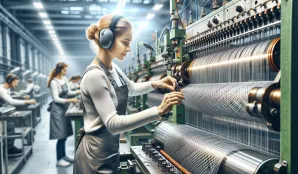
A metal fabric weaver works with manufacturing and processing metal wire into nets, fabrics, or grilles, often for use in industry, construction, and technical applications. Tasks include setting up and monitoring specialized weaving machines, checking wire quality, and performing routine maintenance on equipment. Precision and technical understanding are essential, as production requires exact measurements and tolerances. The work environment is typically workshop- or industry-based, where working with machines and protective gear is a natural part of daily life.
Salary development over time
Salaries for metal fabric weavers have shown a stable and positive trend over the past three years. In 2022, the average salary was 33,000 SEK per month and increased to 35 200 SEK in 2023. During 2024, the salary has risen further to 36 300 SEK, representing a total increase of approximately 6.7% over the period. This growth reflects both a general wage increase within the industry and a certain shortage of skilled machine operators, where demand for expertise remains high. The percentage increase between 2023 and 2024 was about 3.5%, slightly above the industry average. Causes of salary changes include increased technical complexity in tasks and the need for specialized knowledge, as well as collective agreement adjustments and market development.
Metal fabric weaver salary – full overview
- Average salary: 36 300 SEK/month
- Lowest salary: 31,400 SEK/month (female, private sector, low education)
- Highest salary: 36,100 SEK/month (male, post-secondary education)
- Hourly wage (average): 212 SEK/hour
- Gender differences: Women earn on average 35 300 SEK, men 36 500 SEK (97%)
- Regional differences: Salaries may vary depending on region and industry, but the industry's average applies nationally.
Education and qualifications
The path to becoming a metal fabric weaver usually involves a technical high school education with a focus on industrial programs, preferably supplemented with courses in mechanical engineering or metal processing. Many employers also require practical experience from industrial environments or machine operation. Success in the role requires both technical understanding and precision, and many companies offer internal training or introductory programs.
- High school education: Industrial or technical programs, 3 years
- Vocational courses: Mechanical engineering/metal processing (common as adult education)
- Internship: Recommended during or after education
- Certifications: Some employers require forklift licenses or specific machine credentials
- Prerequisites: Basic mathematics and technical skills
Metal fabric weavers often have the opportunity to work with customized solutions for clients within advanced industry, which means each project may require unique technical adjustments and problem-solving. This gives the profession a creative and challenging dimension beyond routine machine work.
Common benefits and compensations
Common benefits for metal fabric weavers include collective pension schemes, wellness allowances, insurance, and sometimes bonus or incentive systems linked to production efficiency. Many workplaces also offer subsidized lunches, work clothing, and opportunities for further training or certification courses. Overtime pay and shift allowances are common in the industry.
Competition and challenges
The competition for jobs as a metal fabric weaver is somewhat limited due to the specialized nature of the profession and the relatively narrow educational pathway. At the same time, the labor market has experienced some shortages, benefiting those with the right skills. The biggest long-term challenge for the profession is technological development – automation and digitalization mean some tasks are being rationalized away, which could reduce demand for traditional weavers. To remain attractive in the job market, a willingness to learn new skills and adapt to new technology and modern work processes is essential.
Tips for aspiring metal fabric weavers
To succeed as a metal fabric weaver, it is good to combine technical interest with a strong sense of precision and responsibility. Attention to detail and following instructions minimizes errors and contributes to high-quality production. Analytical thinking helps with troubleshooting and machine adjustments, while patience and perseverance are important when tasks become monotonous or require long periods of concentration. A continuous desire to develop and acquire new knowledge, especially in machine technology and automation, increases advancement opportunities. Good teamwork and flexibility in changing tasks are also valuable, as the work environment is often dynamic and requires adaptability.
Key facts about metal fabric weavers
- Education level: High school education, preferably with an industrial focus
- Work environment: Industry and workshop environment, shift work common
- Demand: Labor shortage today, but decreasing needs over time
- Typical employment: Full-time, often permanent employment
- Special skills: Machine handling and technical troubleshooting
Career paths and future prospects
After three to five years as a metal fabric weaver, there are opportunities to advance to roles such as senior machine operator, supervisor, or technical specialist within production. Some choose to further their education in automation or production technology to work with machine maintenance or process development. According to the Swedish Public Employment Service's forecast, job opportunities remain good in the short term, but demand is expected to decline over the longer term due to automation and technological development. The recruitment situation is currently characterized by a shortage of qualified labor, but continuous skill development and industry awareness are recommended to maintain marketability.
Common questions about metal fabric weavers
- What is the average salary of a metal fabric weaver?
- The average salary is 36 300 SEK per month. - How has the salary development looked for metal fabric weavers?
- Salaries have increased from 33,000 SEK (2022) to 36 300 SEK (2024). - Are there gender differences in salaries?
- Yes, women earn on average 35 300 SEK and men 36 500 SEK, which is 97% of men's salaries. - Is any special education required?
- High school education in industry or technology and practical experience are recommended. - What are the future prospects?
- There is currently a labor shortage, but demand is expected to decrease over five years. - What benefits are common?
- Common benefits include pensions, wellness allowances, insurances, and sometimes bonuses. - What does a metal fabric weaver do?
- The profession involves manufacturing metal nets and fabrics by monitoring and controlling specialized machines.

Salary distributed by age and sector
| Age | Base salary | Monthly salary | |
|---|---|---|---|
| 18-24 | 100% | 31900 kr | 34300 kr |
| 25-34 | 98% | 34200 kr | 36400 kr |
| 35-44 | 96% | 34400 kr | 36400 kr |
| 45-54 | 96% | 35100 kr | 36900 kr |
| 55-64 | 95% | 35100 kr | 36700 kr |
| 65-68 | 33500 kr | 34800 kr | |
| Snitt | 97% | 34300 kr | 36300 kr |
| Age | Base salary | Monthly salary | |
|---|---|---|---|
| 25-34 | 32900 kr | 35600 kr | |
| 35-44 | 35600 kr | 36700 kr | |
| 45-54 | 32700 kr | 32700 kr | |
| 55-64 | 33300 kr | 34300 kr | |
| Snitt | 33300 kr | 34300 kr |
| Age | Base salary | Monthly salary | |
|---|---|---|---|
| 25-34 | 32900 kr | 35600 kr | |
| 35-44 | 35600 kr | 36700 kr | |
| 45-54 | 32700 kr | 32700 kr | |
| 55-64 | 33300 kr | 34300 kr | |
| Snitt | 33300 kr | 34300 kr |
| Age | Base salary | Monthly salary | |
|---|---|---|---|
| 18-24 | 100% | 31900 kr | 34300 kr |
| 25-34 | 98% | 34200 kr | 36400 kr |
| 35-44 | 96% | 34400 kr | 36400 kr |
| 45-54 | 96% | 35100 kr | 37000 kr |
| 55-64 | 95% | 35100 kr | 36700 kr |
| 65-68 | 33500 kr | 34800 kr | |
| Snitt | 97% | 34300 kr | 36300 kr |
| Age | Base salary | Monthly salary | |
|---|---|---|---|
| 18-24 | 100% | 31900 kr | 34300 kr |
| 25-34 | 98% | 34200 kr | 36400 kr |
| 35-44 | 96% | 34400 kr | 36400 kr |
| 45-54 | 96% | 35100 kr | 37000 kr |
| 55-64 | 95% | 35100 kr | 36700 kr |
| 65-68 | 33500 kr | 34800 kr | |
| Snitt | 97% | 34300 kr | 36300 kr |
| Age | Base salary | Monthly salary | |
|---|---|---|---|
| 18-24 | 100% | 32000 kr | 34300 kr |
| 25-34 | 98% | 34200 kr | 36500 kr |
| 35-44 | 96% | 34600 kr | 36700 kr |
| 45-54 | 96% | 35300 kr | 37200 kr |
| 55-64 | 95% | 35300 kr | 37000 kr |
| 65-68 | 33600 kr | 34800 kr | |
| Snitt | 97% | 34500 kr | 36500 kr |
| Age | Base salary | Monthly salary | |
|---|---|---|---|
| 25-34 | 32800 kr | 36400 kr | |
| 35-44 | 35600 kr | 36700 kr | |
| 45-54 | 32700 kr | 32700 kr | |
| 55-64 | 33300 kr | 34300 kr | |
| Snitt | 33300 kr | 34300 kr |
| Age | Base salary | Monthly salary | |
|---|---|---|---|
| 25-34 | 32800 kr | 36400 kr | |
| 35-44 | 35600 kr | 36700 kr | |
| 45-54 | 32700 kr | 32700 kr | |
| 55-64 | 33300 kr | 34300 kr | |
| Snitt | 33300 kr | 34300 kr |
| Age | Base salary | Monthly salary | |
|---|---|---|---|
| 18-24 | 100% | 32000 kr | 34300 kr |
| 25-34 | 98% | 34200 kr | 36500 kr |
| 35-44 | 96% | 34600 kr | 36700 kr |
| 45-54 | 96% | 35300 kr | 37200 kr |
| 55-64 | 95% | 35300 kr | 37000 kr |
| 65-68 | 33600 kr | 34800 kr | |
| Snitt | 97% | 34500 kr | 36500 kr |
| Age | Base salary | Monthly salary | |
|---|---|---|---|
| 18-24 | 100% | 32000 kr | 34300 kr |
| 25-34 | 98% | 34200 kr | 36500 kr |
| 35-44 | 96% | 34600 kr | 36700 kr |
| 45-54 | 96% | 35300 kr | 37200 kr |
| 55-64 | 95% | 35300 kr | 37000 kr |
| 65-68 | 33600 kr | 34800 kr | |
| Snitt | 97% | 34500 kr | 36500 kr |
| Age | Base salary | Monthly salary | |
|---|---|---|---|
| 18-24 | 100% | 31900 kr | 34300 kr |
| 25-34 | 98% | 34100 kr | 35900 kr |
| 35-44 | 96% | 33400 kr | 35300 kr |
| 45-54 | 96% | 33800 kr | 35700 kr |
| 55-64 | 95% | 33500 kr | 35200 kr |
| Snitt | 97% | 33400 kr | 35300 kr |
| Age | Base salary | Monthly salary | |
|---|---|---|---|
| 18-24 | 100% | 31900 kr | 34300 kr |
| 25-34 | 98% | 34100 kr | 35900 kr |
| 35-44 | 96% | 33400 kr | 35300 kr |
| 45-54 | 96% | 33800 kr | 35700 kr |
| 55-64 | 95% | 33500 kr | 35200 kr |
| Snitt | 97% | 33400 kr | 35300 kr |
| Age | Base salary | Monthly salary | |
|---|---|---|---|
| 18-24 | 100% | 31900 kr | 34300 kr |
| 25-34 | 98% | 34100 kr | 35900 kr |
| 35-44 | 96% | 33400 kr | 35300 kr |
| 45-54 | 96% | 33800 kr | 35700 kr |
| 55-64 | 95% | 33500 kr | 35200 kr |
| Snitt | 97% | 33400 kr | 35300 kr |

About the data
All information displayed on this page is based on data from the Swedish Central Bureau of Statistics (SCB), the Swedish Tax Agency and the Swedish employment agency. Learn more about our data and data sources here.
All figures are gross salaries, meaning salaries before tax. The average salary, or mean salary, is calculated by adding up the total salary for all individuals within the profession and dividing it by the number of individuals. For specific job categories, we have also considered various criteria such as experience and education.
Profession Metal cloth weaver has the SSYK code 7223, which we use to match against the SCB database to obtain the latest salary statistics.
-

Industrial Mechanic for Compressors at Kompressorteknik in Norrköping
Machine setters and machine operators, metal work
Tue, 14 Jul 2026 - 09:01 -
Machine Operator for Precision Industry in Northern Stockholm
Machine setters and machine operators, metal work
Mon, 13 Jul 2026 - 21:55 -

Bending Press Operator Wanted at Plåtteknik i Kumla AB
Machine setters and machine operators, metal work
Mon, 13 Jul 2026 - 21:36 -

Machine Operator for Established Operation in Västerås
Machine setters and machine operators, metal work
Mon, 13 Jul 2026 - 21:30 -

Machine setters and machine operators, metal work
Mon, 13 Jul 2026 - 21:27
Compare salary, work tasks and job outlook in adjacent occupations to find roles with similar skills or pay levels.
-
Textile printers, stencil prints salary
Average salary: 34 600 SEK/month • Industriell tillverkning
Printers
Compare with Metal cloth weaver
Tue, 14 Jul 2026 - 08:14 -

Average salary: 42 600 SEK/month • Industriell tillverkning
Machine operators, chemical technology and photographic products
Compare with Metal cloth weaver
Thu, 9 Jul 2026 - 21:13 -

Average salary: 37 800 SEK/month • Industriell tillverkning
Machine operators, cement, stone and concrete products
Compare with Metal cloth weaver
Tue, 14 Jul 2026 - 02:59 -

Average salary: 44 700 SEK/month • Industriell tillverkning
Process operators, pulp
Compare with Metal cloth weaver
Mon, 13 Jul 2026 - 04:48 -

Average salary: 34 800 SEK/month • Industriell tillverkning
Machine operators, filling, packing and labeling
Compare with Metal cloth weaver
Tue, 14 Jul 2026 - 08:17 -

Average salary: 38 300 SEK/month • Industriell tillverkning
Operators in sawmills, planing mills and plywood etc.
Compare with Metal cloth weaver
Tue, 14 Jul 2026 - 03:41


