- Salary statistics
- Microfilm salary
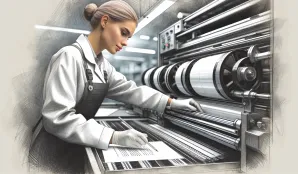
Microfilm salary
Latest available salary statistics are for 2025. Compare average pay, salary range and related job listings.
41 400 - 45 700 SEK / month
Women earn 98% of what men do.
Industriell tillverkning
Related tools
Salary progression Microfilm
What does a Microfilmer do? – Tasks and work environment
A Microfilmer works with converting physical documents, images, or drawings into microfilm format, which involves photographing and storing the material on film for long-term archiving and security. Tasks include handling advanced camera equipment, quality assurance of image results, as well as documentation and cataloging of materials. The work is often performed in an office environment or specialized archives and requires high precision, technical knowledge, and the ability to work systematically with large amounts of information. Collaboration with archivists, librarians, and technical staff is common to ensure proper and efficient handling of materials.
Salary development over time
Over the past three years, Microfilmers have experienced a clear increase in salary. In 2022, the average salary was 32,600 SEK per month, which increased to 38 100 SEK in 2023 and has now risen to 42 600 SEK in 2024. This development corresponds to a total salary increase of approximately 17 % over the period, with a particularly strong rise in the most recent year. The positive trend can mainly be linked to increased digitization, higher demands for secure information storage, and a greater demand for preservation technologies within both public and private sectors. Technical skills and specialization within the field have also contributed to raising the profession's status and, consequently, salaries.
Microfilmer salary – complete overview
- Average salary: 42 600 SEK/month
- Lowest salary: 36,000 SEK/month
- Highest salary: 39,800 SEK/month
- Hourly wage: 229 SEK
- Gender differences: Women earn 36,900 SEK (98 % of men's salary), men earn 38,500 SEK
- Regional differences: (Data not available)
Education and qualifications
To work as a Microfilmer, a high school education with a technical or administrative focus is usually required, often supplemented with post-secondary courses in image management, archival science, or information systems. Practical experience in photography, document handling, and digitization is advantageous and can be decisive during recruitment. Specialized internal training is offered by larger employers, while some also provide internships or trainee programs.
- Formal education: High school (3 years), preferably with a technical or administrative focus
- Post-secondary courses: Image management, archival science, information systems
- Internship/trainee: Internships are often advantageous and common at larger employers
- Certifications: Some employers offer internal training and certificates
- Prerequisites: Precision, technical interest, and basic computer skills
Microfilmers often work closely with archive staff and librarians to preserve unique documents and cultural heritage. The profession offers the opportunity to work with historical original materials and contribute to preserving important societal documents for future generations.
Common benefits and compensations
Microfilmers are often offered benefits such as wellness allowances, flexible working hours, and opportunities for further training in technology and information management. Pensions, insurance, and support for ergonomic work conditions are also common, especially with larger employers within the public sector or bigger private companies.
Competition and challenges
The competition for positions as a Microfilmer can vary depending on the region and employer, but the limited number of specialist roles means experienced candidates often have an advantage. Digitization of archive materials reduces the need for traditional microfilming to some extent, while digital image management skills are becoming increasingly important. Technical updates and increased demands for secure information storage mean that the profession is rapidly evolving. Challenges may also arise regarding the work environment, as the work sometimes involves monotonous tasks and requires high precision over longer periods.
Tips for aspiring Microfilmers
To succeed as a Microfilmer, it is good to combine technical curiosity with a strong attention to detail. A structured approach and the ability to work focused for extended periods are valuable qualities, especially when handling large volumes of material. Being service-oriented facilitates collaboration with colleagues in archives and libraries, while an analytical mind helps during quality checks and troubleshooting. Taking the initiative for further education in digital image management or archival science enhances future career opportunities. Flexibility to adapt to new methods and technologies is also a big advantage, as the profession is developing rapidly with technological advancements.
Key facts about Microfilmers
- Education level: High school education (3 years), often supplemented with post-secondary courses
- Work environment: Office or archive-based with a technical focus
- Typical employment: Full-time, but part-time positions also occur
- Demand: 1,437 available jobs within the profession (May 2024)
- Special skills: Image management, documentation, precision
Career paths and future prospects
After three to five years as a Microfilmer, there may be opportunities to advance to specialist roles within digitization, archive technology, or project management at larger institutions. Some choose to deepen their knowledge in digital image management and document preservation, while others move on to consulting roles or further training in the field. Forecasts from the Employment Service show that, due to limited data, there is no specific assessment of future job prospects for Microfilmers. However, there are a total of 1,437 available jobs within the broader group of machine operators in chemical and photographic products, indicating ongoing demand for skills in the field.
Frequently asked questions about Microfilmers
- What is the salary of a Microfilmer?
- A Microfilmer has an average salary of 42 600 SEK per month. - How do gender salary differences look for Microfilmers?
- Men earn 38,500 SEK while women earn 36,900 SEK, which means women earn 98 % of men's salaries. - What education is required to become a Microfilmer?
- High school education with a technical or administrative focus, preferably supplemented with post-secondary courses in image management or archival science. - What tasks does a Microfilmer perform?
- Tasks include photographing documents, quality assurance, cataloging, and collaborating with archive staff. - What are the future prospects for the profession?
- No specific forecast exists, but the profession currently has 1,437 available jobs according to the latest survey. - What benefits are common for a Microfilmer?
- Wellness allowances, flexible working hours, and opportunities for further training are common benefits. - What are the highest and lowest salaries for a Microfilmer?
- The highest salary is 39,800 SEK (male, private sector, post-secondary education less than 3 years), the lowest salary is 36,000 SEK (female, high school education).

Salary distributed by age and sector
| Age | Base salary | Monthly salary | |
|---|---|---|---|
| 25-34 | 36100 kr | 41900 kr | |
| 35-44 | 37300 kr | 42900 kr | |
| 45-54 | 37800 kr | 43400 kr | |
| 55-64 | 37900 kr | 44000 kr | |
| Snitt | 98% | 36900 kr | 42600 kr |
| Age | Base salary | Monthly salary | |
|---|---|---|---|
| 25-34 | 36100 kr | 41900 kr | |
| 35-44 | 37300 kr | 42900 kr | |
| 45-54 | 37800 kr | 43400 kr | |
| 55-64 | 37900 kr | 44000 kr | |
| Snitt | 98% | 36900 kr | 42600 kr |
| Age | Base salary | Monthly salary | |
|---|---|---|---|
| 25-34 | 36100 kr | 41900 kr | |
| 35-44 | 37300 kr | 42900 kr | |
| 45-54 | 37800 kr | 43400 kr | |
| 55-64 | 37900 kr | 44000 kr | |
| Snitt | 98% | 36900 kr | 42600 kr |
| Age | Base salary | Monthly salary | |
|---|---|---|---|
| 25-34 | 36300 kr | 42300 kr | |
| 35-44 | 37400 kr | 42800 kr | |
| 45-54 | 38000 kr | 43500 kr | |
| 55-64 | 38000 kr | 44300 kr | |
| Snitt | 98% | 37100 kr | 42700 kr |
| Age | Base salary | Monthly salary | |
|---|---|---|---|
| 25-34 | 36300 kr | 42300 kr | |
| 35-44 | 37400 kr | 42800 kr | |
| 45-54 | 38000 kr | 43500 kr | |
| 55-64 | 38000 kr | 44300 kr | |
| Snitt | 98% | 37100 kr | 42700 kr |
| Age | Base salary | Monthly salary | |
|---|---|---|---|
| 25-34 | 36300 kr | 42300 kr | |
| 35-44 | 37400 kr | 42800 kr | |
| 45-54 | 38000 kr | 43500 kr | |
| 55-64 | 38000 kr | 44300 kr | |
| Snitt | 98% | 37100 kr | 42700 kr |
| Age | Base salary | Monthly salary | |
|---|---|---|---|
| Snitt | 98% | 36200 kr | 42000 kr |
| Age | Base salary | Monthly salary | |
|---|---|---|---|
| Snitt | 98% | 36200 kr | 42000 kr |
| Age | Base salary | Monthly salary | |
|---|---|---|---|
| Snitt | 98% | 36200 kr | 42000 kr |

About the data
All information displayed on this page is based on data from the Swedish Central Bureau of Statistics (SCB), the Swedish Tax Agency and the Swedish employment agency. Learn more about our data and data sources here.
All figures are gross salaries, meaning salaries before tax. The average salary, or mean salary, is calculated by adding up the total salary for all individuals within the profession and dividing it by the number of individuals. For specific job categories, we have also considered various criteria such as experience and education.
Profession Microfilm has the SSYK code 8132, which we use to match against the SCB database to obtain the latest salary statistics.
-
Production Operator at Vanadis Energy in Rosersberg
Machine operators, chemical technology and photographic products
Fri, 10 Jul 2026 - 22:01 -

Operator – Optical Thin Film Coatings
Machine operators, chemical technology and photographic products
Wed, 1 Jul 2026 - 09:04 -
Operator – Optical Thin Film Coatings
Machine operators, chemical technology and photographic products
Wed, 1 Jul 2026 - 06:29 -

Summer Production and Packing Job in Höganäs
Machine operators, chemical technology and photographic products
Tue, 23 Jun 2026 - 22:06 -

Production Technician for Shift Work in Järfalla – 30h/week with Full-Time Pay
Machine operators, chemical technology and photographic products
Fri, 19 Jun 2026 - 00:27
Compare salary, work tasks and job outlook in adjacent occupations to find roles with similar skills or pay levels.
-
Average salary: 33 700 SEK/month • Industriell tillverkning
Other machine operators, food industry etc.
Compare with Microfilm
Tue, 14 Jul 2026 - 11:56 -

Average salary: 37 800 SEK/month • Industriell tillverkning
Machine operators, cement, stone and concrete products
Compare with Microfilm
Mon, 13 Jul 2026 - 10:26 -

Average salary: 42 500 SEK/month • Industriell tillverkning
Process operators, paper
Compare with Microfilm
Tue, 14 Jul 2026 - 08:16 -
Wallpaper roller engravers salary
Average salary: 35 300 SEK/month • Industriell tillverkning
Prepress technicians
Compare with Microfilm
Tue, 14 Jul 2026 - 11:05 -

Average salary: 36 900 SEK/month • Industriell tillverkning
Other process and machine operators
Compare with Microfilm
Tue, 14 Jul 2026 - 13:04 -

Hasplare, textile industry salary
Average salary: 32 200 SEK/month • Industriell tillverkning
Other machine operators, textile, leather and leather industry
Compare with Microfilm
Tue, 14 Jul 2026 - 11:54


