- Salary statistics
- Flap pickler salary
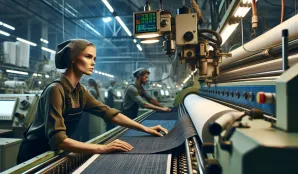
Flap pickler salary
Latest available salary statistics are for 2025. Compare average pay, salary range and related job listings.
31 300 - 34 400 SEK / month
Women earn 94% of what men do.
Industriell tillverkning
Related tools
Salary progression Flap pickler
What does a linen breaker do? – tasks and work environment
A linen breaker works within the textile industry and primarily processes linen fibers into thread or yarn. The work is mainly carried out on specialized machines where raw material is treated through hacking, cleaning, and refining into a usable product. The work environment is often industrial, with noise, dust, and repetitive movements, requiring precision and patience. Safety routines and the use of protective equipment are common to minimize risks in daily production.
Salary development over time
Linen breakers have experienced stable salary growth in recent years. In 2022, the average salary was 27,700 SEK per month, increasing to 30 400 in 2023 and further to 32 200 in 2024. This salary increase corresponds to a growth of just over 9.8% over three years, which is slightly higher than the average for similar industrial occupations. The development is driven by a combination of general wage inflation and increased demand for skilled operators in the textile sector. Despite limited recruitment in some locations, the industry continues to value experience and technical skill, reflected in salary increases.
Salary overview for linen breakers
- Average salary: 32 200 SEK/month
- Lowest salary: 29,400 SEK (female, private employee, high school education 3 years)
- Highest salary: 32,200 SEK (male, regional sector, high school education up to 2 years)
- Hourly wage (average): 183 SEK/hour
- Gender differences: Men earn 33 200 SEK, women 31 300 SEK (women earn 94 % of men's salary)
- Regional differences: Some variation exists depending on employer and sector, but detailed data is limited.
Education and qualifications
To become a linen breaker, a high school education with an industrial or textile focus is typically required, supplemented with internal training and machine familiarity. Many employers value practical experience from the textile industry or similar production, and some offer introductory programs for new operators. Formal requirements are relatively few, but the ability to handle technical equipment and follow safety procedures is essential.
- High school education: Industrial or textile focus, 2–3 years
- Introductory training: Often provided internally upon employment
- Practical training: Practical tasks during education or as a trainee
- Prerequisites: Good physical health, patience, technical interest
- Certificates/courses: Some workplaces require certification in machine safety
Although machines and automation have increased in the textile industry, the linen breaker’s expertise in material quality and machine adjustment remains invaluable for achieving the best results. Knowledge of different linen fibers and their properties requires a trained eye, and many employers value experience and craftsmanship highly.
Common benefits and compensations
Linen breakers are often offered benefits such as collective agreement-based occupational pension, wellness subsidies, and work clothing. Additional pay for unsocial hours and opportunities for further training and skills development within the company are also common. Some employers offer bonuses tied to production targets and safety work.
Competition and challenges
The competition for positions as a linen breaker varies depending on region and company size. Since the profession is specialized and belongs to a smaller occupational group, there are limited advertised jobs but relatively few applicants with the right experience. A major challenge is staying updated on new technology and changing work methods, while the work environment can be physically demanding and repetitive. Automation and digitalization pressure workers to continually develop their skills to remain attractive on the job market.
Tips for those who want to become a linen breaker
To succeed as a linen breaker, it’s important to be precise and patient, as the work involves repeated tasks with high quality demands. An interest in technology facilitates understanding of machines and processes, making it easier to identify and fix minor faults. Flexibility and willingness to learn new things are key qualities, especially in a sector where technology evolves rapidly. Good physical endurance is needed to handle sometimes monotonous and physically demanding work. Being cooperative and able to communicate with colleagues contributes to a better work environment and more efficient production. Attention to safety routines and workplace regulations is crucial to minimize risks. Finally, an interest in textile materials and their properties can give an advantage in the role.
Key facts about linen breakers
- Education level: High school education with industrial or textile focus
- Work environment: Industrial environment with machines and noise
- Work form: Shift work is common
- Demand: 1,437 available jobs in 2024
- Gender distribution: Small salary differences, women earn 94 % of men's salary
Career paths and future prospects
After three to five years as a linen breaker, there are opportunities to advance to supervisor, production manager, or technical specialist in machine maintenance. Within the broader group of machine operators in the textile, leather, and fur industries, there are also opportunities to switch to roles such as process operator or specialized machine technician. According to the Swedish Public Employment Service, forecasts are uncertain for linen breakers due to limited statistics, but there are a total of 1,437 available jobs in related occupational groups. Digitalization and technological development are expected to influence the profession, but demand for operators with practical experience and material knowledge remains.
Frequently asked questions about linen breakers
- What does a linen breaker earn?
- The average salary for a linen breaker is 32 200 SEK per month. - What are the gender differences in salaries for linen breakers?
- Women earn an average of 31 300 SEK, which is 94 % of men's salary. - What education is required to become a linen breaker?
- High school education with an industrial or textile focus, combined with internal training, is most common. - What are the future prospects for linen breakers?
- Prognoses are uncertain, but there are 1,437 available jobs in related occupational groups. - What is the highest and lowest salary for a linen breaker?
- The highest salary is 32,200 SEK, and the lowest is 29,400 SEK. - Does a linen breaker work mainly day shifts or shifts?
- Shift work is common in the profession. - Are there regional differences in salaries for linen breakers?
- Regional differences exist, but detailed statistics are limited.

Salary distributed by age and sector
| Age | Base salary | Monthly salary | |
|---|---|---|---|
| 25-34 | 29100 kr | 31500 kr | |
| 35-44 | 95% | 29900 kr | 31800 kr |
| 45-54 | 92% | 30900 kr | 32600 kr |
| 55-64 | 93% | 31200 kr | 33000 kr |
| Snitt | 94% | 30300 kr | 32200 kr |
| Age | Base salary | Monthly salary | |
|---|---|---|---|
| 25-34 | 29100 kr | 31500 kr | |
| 35-44 | 95% | 29900 kr | 31800 kr |
| 45-54 | 92% | 30900 kr | 32600 kr |
| 55-64 | 93% | 31200 kr | 33000 kr |
| Snitt | 94% | 30300 kr | 32200 kr |
| Age | Base salary | Monthly salary | |
|---|---|---|---|
| 25-34 | 29100 kr | 31500 kr | |
| 35-44 | 95% | 29900 kr | 31800 kr |
| 45-54 | 92% | 30900 kr | 32600 kr |
| 55-64 | 93% | 31200 kr | 33000 kr |
| Snitt | 94% | 30300 kr | 32200 kr |
| Age | Base salary | Monthly salary | |
|---|---|---|---|
| 25-34 | 29600 kr | 32500 kr | |
| 35-44 | 95% | 29800 kr | 32500 kr |
| 45-54 | 92% | 31800 kr | 34000 kr |
| 55-64 | 93% | 31700 kr | 34500 kr |
| Snitt | 94% | 30500 kr | 33200 kr |
| Age | Base salary | Monthly salary | |
|---|---|---|---|
| 25-34 | 29600 kr | 32500 kr | |
| 35-44 | 95% | 29800 kr | 32500 kr |
| 45-54 | 92% | 31800 kr | 34000 kr |
| 55-64 | 93% | 31700 kr | 34500 kr |
| Snitt | 94% | 30500 kr | 33200 kr |
| Age | Base salary | Monthly salary | |
|---|---|---|---|
| 25-34 | 29600 kr | 32500 kr | |
| 35-44 | 95% | 29800 kr | 32500 kr |
| 45-54 | 92% | 31800 kr | 34000 kr |
| 55-64 | 93% | 31700 kr | 34500 kr |
| Snitt | 94% | 30500 kr | 33200 kr |
| Age | Base salary | Monthly salary | |
|---|---|---|---|
| 35-44 | 95% | 30000 kr | 30900 kr |
| 45-54 | 92% | 30200 kr | 31400 kr |
| 55-64 | 93% | 30900 kr | 32000 kr |
| Snitt | 94% | 30000 kr | 31300 kr |
| Age | Base salary | Monthly salary | |
|---|---|---|---|
| 35-44 | 95% | 30000 kr | 30900 kr |
| 45-54 | 92% | 30200 kr | 31400 kr |
| 55-64 | 93% | 30900 kr | 32000 kr |
| Snitt | 94% | 30000 kr | 31300 kr |
| Age | Base salary | Monthly salary | |
|---|---|---|---|
| 35-44 | 95% | 30000 kr | 30900 kr |
| 45-54 | 92% | 30200 kr | 31400 kr |
| 55-64 | 93% | 30900 kr | 32000 kr |
| Snitt | 94% | 30000 kr | 31300 kr |

About the data
All information displayed on this page is based on data from the Swedish Central Bureau of Statistics (SCB), the Swedish Tax Agency and the Swedish employment agency. Learn more about our data and data sources here.
All figures are gross salaries, meaning salaries before tax. The average salary, or mean salary, is calculated by adding up the total salary for all individuals within the profession and dividing it by the number of individuals. For specific job categories, we have also considered various criteria such as experience and education.
Profession Flap pickler has the SSYK code 8159, which we use to match against the SCB database to obtain the latest salary statistics.
-

Machine Operator at Nordifa in Halmstad
Other machine operators, textile, leather and leather industry
Wed, 8 Jul 2026 - 06:22 -

Industrial Seamstress for Germa in Kristianstad
Other machine operators, textile, leather and leather industry
Tue, 7 Jul 2026 - 21:42 -

Sewer/Seamstress for NHC in Umeå
Other machine operators, textile, leather and leather industry
Mon, 6 Jul 2026 - 21:26 -
Sewer/Seamstress for NHC in Timrå
Other machine operators, textile, leather and leather industry
Mon, 6 Jul 2026 - 17:06 -
Process Operator at TreeToTextile – Develop the Next Generation of Sustainable Textile Fiber
Other machine operators, textile, leather and leather industry
Thu, 2 Jul 2026 - 00:37
Compare salary, work tasks and job outlook in adjacent occupations to find roles with similar skills or pay levels.
-

Average salary: 34 800 SEK/month • Industriell tillverkning
Machine operators, filling, packing and labeling
Compare with Flap pickler
Tue, 14 Jul 2026 - 15:04 -

Average salary: 32 200 SEK/month • Industriell tillverkning
Other machine operators, textile, leather and leather industry
Compare with Flap pickler
Tue, 14 Jul 2026 - 09:18 -

Average salary: 35 200 SEK/month • Industriell tillverkning
Machine operators, mill, bakery and confectionery industry
Compare with Flap pickler
Tue, 14 Jul 2026 - 07:40 -

Machine operator, plasterboard salary
Average salary: 37 800 SEK/month • Industriell tillverkning
Machine operators, cement, stone and concrete products
Compare with Flap pickler
Tue, 14 Jul 2026 - 11:42 -

Average salary: 39 900 SEK/month • Industriell tillverkning
Stonemasons etc.
Compare with Flap pickler
Mon, 13 Jul 2026 - 05:37 -

Average salary: 35 700 SEK/month • Industriell tillverkning
Vehicle assemblers
Compare with Flap pickler
Tue, 14 Jul 2026 - 11:56


