- Salary statistics
- Lift machinist salary
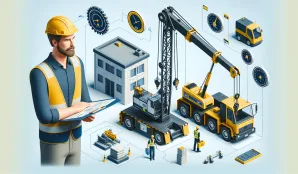
Lift machinist salary
Latest available salary statistics are for 2025. Compare average pay, salary range and related job listings.
37 500 - 39 200 SEK / month
Bygg & anläggning
Related tools
Salary progression Lift machinist
What does a lift operator do? – Tasks and work environment
A lift operator works with maneuvering, maintaining, and monitoring various types of lifting equipment, such as mobile work platforms, scissor lifts, and boom lifts. The tasks often include moving people or materials on construction sites, during assembly work, or at events where access to high elevations is needed. Safety is central in the profession, as every lift must be performed according to regulations and routines to minimize the risk of accidents. The work can be physically demanding and often takes place outdoors, sometimes in harsh weather conditions, but also indoors during industrial installations.
Salary development over time
Over the past three years, salary development for lift operators has shown both variation and stability. In 2022, the average salary was 35,500 SEK per month. The following year, 2023, it increased to 36 100 SEK, which corresponds to an increase of about 4.8%. In 2024, the average salary has slightly decreased to 39 200 SEK per month, representing a decline of approximately 3% compared to the previous year. This change can partly be explained by economic fluctuations within the construction and civil engineering sector, as well as supply and demand for skilled lift operators. At the same time, the three-year period shows that the profession generally maintains a stable salary level over time.
Lift operator salary – complete overview
- Average salary: 39 200 SEK/month
- Lowest/Highest salary: Data not available
- Hourly wage: 217 SEK (based on 166 hours/month)
- Gender differences: Only data for men (39 200 SEK/month), data for women is missing
- Regional differences: Data not available
Education and qualifications
To work as a lift operator, a combination of practical training and certification in lifting techniques is usually required. Many obtain their training through vocational programs at high school or via on-the-job training. Employers often require valid certificates for specific lifting equipment, as well as completed safety training.
- High school education: Construction and civil engineering program, 3 years
- Certificates: Lift training according to the Occupational Safety and Health Authority's regulations
- Internship: Practical training or apprenticeship periods are often required
- Prerequisites: Good physical condition and technical interest
- Additional training: Courses in work environment and safety
Many lift operators work at temporary sites, giving them the opportunity to see different projects and environments, which provides great variation in daily work and enhances problem-solving skills.
Common benefits and compensations
Lift operators are often covered by collective agreements that entitle them to compensation for unsocial hours, overtime, and per diems when working away from their home base. Other benefits may include wellness allowances, work clothing, and opportunities for further training in lifting techniques and work environment safety.
Competition and challenges
Competition for positions as a lift operator can vary depending on the economic situation within the construction and civil engineering sectors. The profession requires high accuracy and responsible safety practices, which demand proper training and experience. A challenge is that the job market is affected by seasonal variations, with higher demand during certain periods. Since many workplaces are temporary, this can also mean irregular working hours and travel to different locations. Despite these challenges, there are good opportunities for those who are flexible and willing to further develop their skills.
Tips for those who want to become lift operators
To succeed as a lift operator, it is important to have a strong sense of safety and be meticulous, as each lift requires precision and risk assessment. Flexibility and adaptability are vital, as workplaces and assignments often change. Good teamwork skills facilitate the work, since collaboration with colleagues and management is essential for smooth project execution. An interest in technology and a willingness to learn new machines and systems make it easier to stay updated in the profession. Being able to handle stress helps when the pace is high or when unexpected situations arise. Engagement and responsibility are qualities appreciated by employers and can create good opportunities for advancement within the profession.
Key facts about lift operators
- Education level: High school with certification
- Work environment: Varies, often outdoors and at temporary sites
- Demand: 379 job openings within the profession
- Occupational group: Crane operators etc.
Career paths and future prospects
After gaining some years of experience as a lift operator, there are opportunities to advance to supervisory roles or specialize in larger and more advanced lifting equipment. Further training can lead to positions as instructor or inspector within lifting technology. According to the Employment Service's forecasts, no specific assessment is made for lift operators, but there are 379 job openings within the profession, indicating relatively stable demand. However, the job market is influenced by the development of the construction sector and regional investments.
Frequently asked questions about lift operators
- What does a lift operator earn?
- A lift operator has an average salary of 39 200 SEK per month. - How do you become a lift operator?
- The most common route is to attend the construction and civil engineering program at high school and complete an approved lift training course. - Are there jobs available for lift operators?
- There are 379 job openings within the profession in Sweden. - What certificates are required?
- Certificates for lifts and safety training are required according to the Occupational Safety and Health Authority's regulations. - What is the work environment like?
- The work often takes place outdoors at temporary sites and can be physically demanding. - Can I further my education?
- Yes, there are opportunities to further train as an instructor or supervisor.

Salary distributed by age and sector
| Age | Base salary | Monthly salary | |
|---|---|---|---|
| Snitt | 37500 kr | 39200 kr |
| Age | Base salary | Monthly salary | |
|---|---|---|---|
| Snitt | 37500 kr | 39200 kr |
| Age | Base salary | Monthly salary | |
|---|---|---|---|
| Snitt | 37500 kr | 39200 kr |
| Age | Base salary | Monthly salary | |
|---|---|---|---|
| Snitt | 37700 kr | 39200 kr |
| Age | Base salary | Monthly salary | |
|---|---|---|---|
| Snitt | 37700 kr | 39200 kr |
| Age | Base salary | Monthly salary | |
|---|---|---|---|
| Snitt | 37700 kr | 39200 kr |

About the data
All information displayed on this page is based on data from the Swedish Central Bureau of Statistics (SCB), the Swedish Tax Agency and the Swedish employment agency. Learn more about our data and data sources here.
All figures are gross salaries, meaning salaries before tax. The average salary, or mean salary, is calculated by adding up the total salary for all individuals within the profession and dividing it by the number of individuals. For specific job categories, we have also considered various criteria such as experience and education.
Profession Lift machinist has the SSYK code 8343, which we use to match against the SCB database to obtain the latest salary statistics.
-

Machine Operator/Ski Lift Operator at Loussabacken, Kiruna
Crane operators etc.
Mon, 13 Jul 2026 - 06:48 -
Machine Operator/Ski Lift Operator at Loussabacken – 2 Positions
Crane operators etc.
Mon, 13 Jul 2026 - 06:47 -

Machine Operator at Hercules – Foundation & Infrastructure
Crane operators etc.
Wed, 8 Jul 2026 - 09:06 -
Machine Operator at Hercules – Foundation & Infrastructure
Crane operators etc.
Wed, 8 Jul 2026 - 09:05 -
Machine Operator at Hercules – Foundation & Infrastructure
Crane operators etc.
Wed, 8 Jul 2026 - 09:05
Compare salary, work tasks and job outlook in adjacent occupations to find roles with similar skills or pay levels.
-

Average salary: 42 300 SEK/month • Bygg & anläggning
HVAC installers etc.
Compare with Lift machinist
Tue, 14 Jul 2026 - 10:23 -

Measuring assistant, facility salary
Average salary: 37 800 SEK/month • Bygg & anläggning
Construction laborers
Compare with Lift machinist
Tue, 14 Jul 2026 - 10:59 -

Average salary: 54 900 SEK/month • Bygg & anläggning
Civil engineering professions in construction and engineering
Compare with Lift machinist
Tue, 14 Jul 2026 - 07:12 -

Average salary: 42 300 SEK/month • Bygg & anläggning
HVAC installers etc.
Compare with Lift machinist
Tue, 14 Jul 2026 - 11:55 -

Average salary: 40 400 SEK/month • Bygg & anläggning
Construction workers
Compare with Lift machinist
Mon, 13 Jul 2026 - 12:18 -

Average salary: 40 400 SEK/month • Bygg & anläggning
Refrigeration and heat pump technicians etc.
Compare with Lift machinist
Mon, 13 Jul 2026 - 10:06


