- Salary statistics
- Chainsaw salary
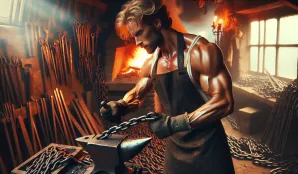
Chainsaw salary
Latest available salary statistics are for 2025. Compare average pay, salary range and related job listings.
36 800 - 38 800 SEK / month
Hantverksyrken
Related tools
Salary progression Chainsaw
What does a chain maker do? – Tasks and work environment
A chain maker primarily works with manufacturing, repairing, and maintaining chains and related metal products, often for industrial and maritime purposes. Tasks include heating, shaping, and welding metal, checking strength, and quality control of finished products. The profession involves working in a workshop environment, where high temperatures, noise, and heavy lifting are common. Safety routines are central, and the work requires both precision and physical endurance to handle the robust materials used.
Salary development over time
The salary for a chain maker has shown variation over the past three years. In 2022, the average salary was 32,300 kronor per month, which increased significantly to 36 000 kronor in 2023, corresponding to an increase of about 17.3%. In 2024, the average salary decreased to 38 800 kronor, a decline of approximately 5% from the previous year. This fluctuation may be due to changes in demand within the industry, availability of trained labor, and economic fluctuations affecting large industrial projects and thus the need for chain makers. The salary trend also reflects the general pattern within metal and blacksmithing trades, where specialized skills are in demand but the number of jobs can vary over time depending on market needs.
Chain maker salary – comprehensive overview
- Average salary: 38 800 kr/month
- Lowest/Highest salary: Data unavailable
- Hourly wage: 216 kr/hour (based on 166 hours/month)
- Gender differences: Men earn 38 800 kr/month, data on women is missing
- Regional differences: No specific data available
Education and qualifications
To work as a chain maker, a high school education with a focus on metalwork or industry is usually required, often supplemented with practical training or an apprenticeship. Many employers value experience from workshop environments and knowledge of metalworking and welding. Certifications in welding and safety are often advantageous, and some companies may offer internal training to meet specific needs.
- High school education: Industrial technical programs with a focus on blacksmithing (3 years)
- Practical training/apprenticeship: Usually 6–12 months
- Certifications: Welding certificates and safety training
- Prerequisites: Basic eligibility, technical interest
- Tips for choosing: Select programs with extensive practical workshop training
Chain makers often possess a unique combination of traditional craftsmanship and modern technology. Many workshops still use classic methods, making the profession a link between past and present industrial skills.
Common benefits and compensations
Chain makers are often offered benefits such as collective agreement-based occupational pension, wellness allowances, and work clothing. Some employers also provide additional insurances, subsidized lunches, and opportunities for skills development through internal training or certification courses. Overtime pay and shift allowances may apply depending on the workplace and working hours.
Competition and challenges
The competition within the profession of chain maker is relatively low, but the number of available positions can vary greatly depending on the economic situation and region. Since the profession is relatively niche and specialized, there are fewer trained individuals on the labor market, which can benefit those with the right skills. A major challenge is that the work is physically demanding and involves exposure to noise and high temperatures, requiring good health and safety awareness. Technological development and automation may change the tasks over time, making continuous skill updating important. Work environment and safety routines are also central issues that need careful management.
Tips for aspiring chain makers
To succeed as a chain maker, it is beneficial to have a strong technical interest and a desire to work practically. Precision is crucial, especially during quality control and welding, as small errors can have significant consequences. Physical endurance and strength facilitate daily work, as the tasks are often heavy and performed in demanding environments. Good teamwork skills are also important, as many work tasks are performed in teams. For those solution-oriented and who enjoy working with their hands, there are great opportunities to develop their craft, especially by initiating further education or specialization in new techniques. Flexibility and the ability to quickly adapt to different tasks are also valuable traits in an industry with high variability.
Key facts about chain makers
- Education level: High school education with a vocational focus
- Work environment: Workshop, often noisy and physical
- Number of job openings (2024): 341 within the profession
- Demand: Stable but limited; small professional groups
- Special skills: Welding and metalworking
Career paths and future outlook
After three to five years as a chain maker, there are opportunities to advance to supervisory roles within the workshop, such as team leader or production coordinator. Some choose to specialize in welding, quality control, or machinery maintenance, which can lead to higher responsibility and more qualified tasks. According to the Swedish Employment Service's forecasts, no specific assessment is made for chain makers due to limited data, but within the blacksmith group, there were 341 job openings in 2024, indicating a stable demand. Automation and technological development will influence the future, but the need for traditional craftsmanship remains, especially in specialized industrial sectors. Opportunities for further training and certification can enhance competitiveness on the job market.
Common questions about chain makers
- What does a chain maker earn?
- The average salary for a chain maker is 38 800 kronor per month. - How do you become a chain maker?
- Most commonly, you attend an industrial technical high school with a focus on blacksmithing and then gain practical experience in a workshop. - Are there salary differences between men and women?
- Data on women's salaries is lacking, but men earn an average of 38 800 kronor per month. - What is the work environment like for a chain maker?
- The working environment is often physical, noisy, and involves working with heavy materials and high temperatures. - What are the future prospects for chain makers?
- No specific forecast is available for chain makers, but there are 341 job openings within the blacksmith profession. - What personal qualities are important?
- Precision, physical endurance, technical interest, and teamwork skills are central qualities. - What benefits are common?
- Common benefits include occupational pension, wellness allowance, and work clothing.

Salary distributed by age and sector
| Age | Base salary | Monthly salary | |
|---|---|---|---|
| 25-34 | 36800 kr | 38600 kr | |
| 35-44 | 36800 kr | 38300 kr | |
| Snitt | 36800 kr | 38800 kr |
| Age | Base salary | Monthly salary | |
|---|---|---|---|
| Snitt | 39500 kr | 39500 kr |
| Age | Base salary | Monthly salary | |
|---|---|---|---|
| Snitt | 39500 kr | 39500 kr |
| Age | Base salary | Monthly salary | |
|---|---|---|---|
| 25-34 | 36800 kr | 38700 kr | |
| 35-44 | 36800 kr | 38300 kr | |
| Snitt | 36800 kr | 38800 kr |
| Age | Base salary | Monthly salary | |
|---|---|---|---|
| 25-34 | 36800 kr | 38700 kr | |
| 35-44 | 36800 kr | 38300 kr | |
| Snitt | 36800 kr | 38800 kr |
| Age | Base salary | Monthly salary | |
|---|---|---|---|
| 35-44 | 36800 kr | 38300 kr | |
| Snitt | 36900 kr | 38800 kr |
| Age | Base salary | Monthly salary | |
|---|---|---|---|
| Snitt | 39500 kr | 39500 kr |
| Age | Base salary | Monthly salary | |
|---|---|---|---|
| Snitt | 39500 kr | 39500 kr |
| Age | Base salary | Monthly salary | |
|---|---|---|---|
| 35-44 | 36800 kr | 38300 kr | |
| Snitt | 36900 kr | 38800 kr |
| Age | Base salary | Monthly salary | |
|---|---|---|---|
| 35-44 | 36800 kr | 38300 kr | |
| Snitt | 36900 kr | 38800 kr |

About the data
All information displayed on this page is based on data from the Swedish Central Bureau of Statistics (SCB), the Swedish Tax Agency and the Swedish employment agency. Learn more about our data and data sources here.
All figures are gross salaries, meaning salaries before tax. The average salary, or mean salary, is calculated by adding up the total salary for all individuals within the profession and dividing it by the number of individuals. For specific job categories, we have also considered various criteria such as experience and education.
Profession Chainsaw has the SSYK code 7221, which we use to match against the SCB database to obtain the latest salary statistics.
-
Experienced Smith/Fitter Needed for Building Ironwork in Gothenburg Area
Blacksmiths
Mon, 6 Jul 2026 - 18:42



Compare salary, work tasks and job outlook in adjacent occupations to find roles with similar skills or pay levels.
-

Cabin assistant, glass cabin salary
Average salary: 34 000 SEK/month • Hantverksyrken
Musical instrument makers and other artisans
Compare with Chainsaw
Mon, 13 Jul 2026 - 18:19 -

Average salary: 34 200 SEK/month • Hantverksyrken
Fine, interior and furniture carpenters
Compare with Chainsaw
Wed, 8 Jul 2026 - 18:06 -

Average salary: 34 000 SEK/month • Hantverksyrken
Musical instrument makers and other artisans
Compare with Chainsaw
Tue, 14 Jul 2026 - 05:42 -

Average salary: 34 200 SEK/month • Hantverksyrken
Fine, interior and furniture carpenters
Compare with Chainsaw
Mon, 13 Jul 2026 - 11:47 -

Average salary: 40 900 SEK/month • Hantverksyrken
Precision mechanics
Compare with Chainsaw
Mon, 13 Jul 2026 - 14:21 -

Average salary: 34 000 SEK/month • Hantverksyrken
Musical instrument makers and other artisans
Compare with Chainsaw
Tue, 14 Jul 2026 - 05:19


