- Salary statistics
- Folders, sheet metal salary
Folders, sheet metal salary
Latest available salary statistics are for 2025. Compare average pay, salary range and related job listings.
37 300 - 37 500 SEK / month
Industriell tillverkning
Related tools
Salary progression Folders, sheet metal
What does a sheet metal worker do? – Tasks and work environment
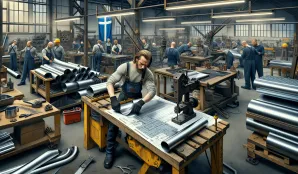
A sheet metal worker primarily works with joining, bending, and shaping sheet metal materials, often through bending. The tasks include manufacturing and installing various sheet metal components for buildings, ventilation systems, or industrial applications. The role involves following technical drawings, using both hand tools and machines, and ensuring the final product meets high standards of quality and airtightness. The work environment is often workshop-based but can also involve outdoor work at construction sites, where accuracy and physical stamina are important factors.
Salary development over time
The salary for a sheet metal worker has shown steady growth in recent years. In 2022, the average salary was 32,200 SEK per month, increasing to 35 700 SEK in 2023. The latest data from 2024 shows a further increase to 37 500 SEK, representing a total rise of approximately 10.9% over three years. This positive trend reflects increased demand for skilled sheet metal workers, while technological advancements and retirements influence salary levels. Despite the clear increase, the rate of change aligns with the general development of similar industrial professions in Sweden.
Sheet metal worker salary – comprehensive overview
- Average salary: 37 500 SEK/month
- Lowest/Highest salary: Data not available for exact ranges
- Hourly wage: 215 SEK/hour
- Gender differences: Men earn 37 600 SEK/month; data for women is unavailable
- Regional differences: Data not available
Education and qualifications
To work as a sheet metal worker, a vocational education in sheet metal work or industrial production is usually required, often with a focus on sheet metal tasks. The education includes both theoretical and practical components, with on-the-job training being an important part of developing skills. Many employers also require certifications or documented special skills in sheet metal processing.
- Vocational high school: Construction and civil engineering program, focus on sheet metal work (3 years)
- Adult education: Vocational adult education in sheet metal work, varying in length
- Internships: Longer practical periods are typically included in the training
- Certifications: Possibility to obtain professional certificates or industry certifications
- Prerequisites: Passed grades in basic subjects, technical interest
Many sheet metal workers have the opportunity to work with both traditional craftsmanship and modern technology, making the profession particularly varied and rewarding. Digital drawings and CNC-controlled machines are becoming increasingly common, providing room for both technical and creative aspects in daily work.
Common benefits and compensations
Sheet metal workers are often covered by collective agreements that include occupational pensions, insurances, and extra compensation for inconvenient working hours. Many employers also offer wellness subsidies, work clothing, and opportunities for further training and skill development. Benefits may vary depending on the collective agreement and company size.
Competition and challenges
The job market for sheet metal workers features good employment opportunities but also some competition for the most attractive positions. According to the Swedish Public Employment Service, there are large prospects for work nationwide, although the profession faces a paradoxical recruitment situation where many leave the industry while demand remains high. Challenges include technical requirements, physical strain, and the need to continuously update skills in new materials and methods.
Tips for aspiring sheet metal workers
To succeed as a sheet metal worker, it is good to combine technical interest with precision and practical problem-solving skills. Being persistent and physically fit helps, as the work is often physically demanding and performed in awkward positions. The ability to read and interpret technical drawings is crucial, as is the willingness to learn new techniques and machines. Being service-minded and able to collaborate with others are important, since many projects are team-based. A proactive attitude and an eye for detail contribute to high-quality work and increased opportunities for career development.
Key facts about sheet metal workers
- Educational level: Vocational high school or adult education
- Work environment: Workshops and construction sites, indoors and outdoors
- Demand: Large employment opportunities nationwide
- Special skills: Bending, sheet metal processing, and reading drawings
- Job openings in the profession: 1437 (May 2024)
Career paths and future prospects
After three to five years as a sheet metal worker, there may be opportunities to advance into more specialized roles, such as supervisor, production technician, or trainer in sheet metal processing. Some choose to develop skills in CNC machining or project management. According to the Swedish Public Employment Service, demand for sheet metal workers is expected to remain unchanged over the next five years, with good job prospects nationwide. Recruitment difficulties and retirements contribute to the continued attractiveness of the profession for new applicants.
Frequently asked questions about sheet metal workers
- What does a sheet metal worker earn?
- The average salary is 37 500 SEK per month according to current statistics. - What education is required to work as a sheet metal worker?
- A vocational high school education with a focus on sheet metal work or adult education is recommended. - What is the demand like in the job market?
- Opportunities for employment are high, with many available jobs and a stable future outlook. - Are there wage differences between men and women?
- Wage data is mainly available for men, who earn 37 600 SEK/month; statistics for women are unavailable. - What are the most common work environments?
- Sheet metal workers primarily work in workshops and on construction sites. - What qualities are important in the profession?
- Precision, technical interest, teamwork skills, and physical endurance are central. - What does sheet metal bending involve?
- Bending involves joining and shaping sheet metal parts through folding, focusing on tightness and durability.

Salary distributed by age and sector
| Age | Base salary | Monthly salary | |
|---|---|---|---|
| 18-24 | 30300 kr | 30400 kr | |
| 25-34 | 37100 kr | 37300 kr | |
| 35-44 | 39500 kr | 39600 kr | |
| 45-54 | 40600 kr | 41100 kr | |
| 55-64 | 36000 kr | 36300 kr | |
| Snitt | 37300 kr | 37500 kr |
| Age | Base salary | Monthly salary | |
|---|---|---|---|
| 18-24 | 30300 kr | 30400 kr | |
| 25-34 | 37100 kr | 37300 kr | |
| 35-44 | 39500 kr | 39600 kr | |
| 45-54 | 40600 kr | 41100 kr | |
| 55-64 | 36000 kr | 36300 kr | |
| Snitt | 37300 kr | 37500 kr |
| Age | Base salary | Monthly salary | |
|---|---|---|---|
| 18-24 | 30300 kr | 30400 kr | |
| 25-34 | 37100 kr | 37300 kr | |
| 35-44 | 39500 kr | 39600 kr | |
| 45-54 | 40600 kr | 41100 kr | |
| 55-64 | 36000 kr | 36300 kr | |
| Snitt | 37300 kr | 37500 kr |
| Age | Base salary | Monthly salary | |
|---|---|---|---|
| 18-24 | 30400 kr | 30500 kr | |
| 25-34 | 37400 kr | 37600 kr | |
| 35-44 | 39700 kr | 39700 kr | |
| 45-54 | 40600 kr | 41100 kr | |
| 55-64 | 36000 kr | 36300 kr | |
| Snitt | 37400 kr | 37600 kr |
| Age | Base salary | Monthly salary | |
|---|---|---|---|
| 18-24 | 30400 kr | 30500 kr | |
| 25-34 | 37400 kr | 37600 kr | |
| 35-44 | 39700 kr | 39700 kr | |
| 45-54 | 40600 kr | 41100 kr | |
| 55-64 | 36000 kr | 36300 kr | |
| Snitt | 37400 kr | 37600 kr |
| Age | Base salary | Monthly salary | |
|---|---|---|---|
| 18-24 | 30400 kr | 30500 kr | |
| 25-34 | 37400 kr | 37600 kr | |
| 35-44 | 39700 kr | 39700 kr | |
| 45-54 | 40600 kr | 41100 kr | |
| 55-64 | 36000 kr | 36300 kr | |
| Snitt | 37400 kr | 37600 kr |

About the data
All information displayed on this page is based on data from the Swedish Central Bureau of Statistics (SCB), the Swedish Tax Agency and the Swedish employment agency. Learn more about our data and data sources here.
All figures are gross salaries, meaning salaries before tax. The average salary, or mean salary, is calculated by adding up the total salary for all individuals within the profession and dividing it by the number of individuals. For specific job categories, we have also considered various criteria such as experience and education.
Profession Folders, sheet metal has the SSYK code 7214, which we use to match against the SCB database to obtain the latest salary statistics.




Compare salary, work tasks and job outlook in adjacent occupations to find roles with similar skills or pay levels.
-
Average salary: 33 700 SEK/month • Industriell tillverkning
Other machine operators, food industry etc.
Compare with Folders, sheet metal
Tue, 14 Jul 2026 - 11:56 -

Average salary: 37 800 SEK/month • Industriell tillverkning
Machine operators, cement, stone and concrete products
Compare with Folders, sheet metal
Mon, 13 Jul 2026 - 10:26 -

Average salary: 42 500 SEK/month • Industriell tillverkning
Process operators, paper
Compare with Folders, sheet metal
Tue, 14 Jul 2026 - 08:16 -
Wallpaper roller engravers salary
Average salary: 35 300 SEK/month • Industriell tillverkning
Prepress technicians
Compare with Folders, sheet metal
Tue, 14 Jul 2026 - 11:05 -

Average salary: 36 900 SEK/month • Industriell tillverkning
Other process and machine operators
Compare with Folders, sheet metal
Tue, 14 Jul 2026 - 13:04 -

Hasplare, textile industry salary
Average salary: 32 200 SEK/month • Industriell tillverkning
Other machine operators, textile, leather and leather industry
Compare with Folders, sheet metal
Tue, 14 Jul 2026 - 11:54


