- Salary statistics
- Electric welder salary
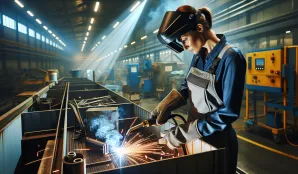
Electric welder salary
Latest available salary statistics are for 2025. Compare average pay, salary range and related job listings.
33 900 - 41 500 SEK / month
Women earn 93% of what men do.
Industriell tillverkning
Related tools
Salary progression Electric welder
What does an Electric Welder do? – Tasks and Work Environment
An Electric Welder primarily works on joining metal components using electrical welding equipment. Typical tasks include preparing materials, setting and inspecting welding machines, and quality control of weld joints. The work is often performed in industry, workshops, or construction sites where precision and safety are critical. The work environment can be noisy, hot, and sometimes cramped, making protective gear and strict safety routines a central part of the workday.
Salary Development Over Time
Wages for Electric Welders have shown steady growth over the past three years. In 2022, the average salary was 32,600 SEK per month, which increased to 35 900 SEK in 2023. In 2024, the average salary has risen further to 36 800 SEK, representing a total increase of approximately 10.1 % during this period. This trend reflects continued high demand for skilled welders, especially in industry where technical requirements and safety standards are increasing. Salary increases can also be linked to a labor shortage in the profession and general industry wage adjustments. The trend is expected to continue as the need for welding skills remains high due to large infrastructure and industrial projects.
Electric Welder Salary – Complete Overview
- Average salary: 36 800 SEK/month
- Lowest salary: 32,500 SEK/month (men), 32,800 SEK/month (women)
- Highest salary: 38,200 SEK/month (men), 33,200 SEK/month (women)
- Hourly wage: 216 SEK
- Gender differences: Men 36 900 SEK, women 32,800 SEK (women earn 93 % of men's salary)
- Regional differences: Vary depending on industry and location
Education and Qualifications
To work as an Electric Welder, a high school education in industrial technology or equivalent is usually required, often with a focus on welding. In addition to formal education, certifications and practical experience are demanded, as the profession requires precision and safety. Further training and specialized courses in specific welding methods can provide advantages in the job market.
- High school education: Industrial technology program, 3 years
- Certifications: Welding tests/certificates according to ISO standards
- Practical training: On-the-job learning (OJL) often included in education
- Further training: Specialized courses in TIG, MIG/MAG, and robotic welding
- Prerequisites: Basic mathematics, technology, and good vision
In electric welding, technology advances rapidly, and automation with robots is becoming more common. Those interested in technology and practical work have good opportunities to specialize in advanced welding methods and secure an attractive role in the job market.
Common Benefits and Compensation
Electric Welders often have access to collective agreement benefits such as occupational pension, wellness allowance, and insurance. Shift work and irregular hours can entitle to additional compensation. In some cases, work clothing and subsidized meals or travel allowances are also offered depending on the employer and workplace.
Competition and Challenges
The job market for Electric Welders is characterized by a paradox: despite high unemployment in the profession, recruitment difficulties are reported. Many employers struggle to find the right skills, especially in specialized welding methods and high-quality work. Competition can therefore be fierce for the most attractive positions, while opportunities are good for those with the right education and certifications. Challenges in the profession also include physical strain, occupational risks, and the need for continuous skills development to meet new technology and safety standards.
Tips for Aspiring Electric Welders
To succeed as an Electric Welder, it’s good to combine precision with an interest in technology and problem-solving. Gaining practical experience early through internships or summer jobs provides valuable insights and increases employability. A strong work ethic and sense of responsibility are crucial, as the profession often involves independent work where quality and safety are paramount. Flexibility and adaptability are appreciated, as tasks and workplaces can vary. The ability to collaborate with colleagues is important, since projects are often team-based and under time pressure. Staying updated on new welding methods and techniques offers advantages in the job market, especially if aiming to specialize or advance to leadership roles. Finally, an eagerness to learn and develop should be seen as an asset, as the industry is constantly evolving.
Key Facts about Electric Welders
- Education level: High school (industrial technology program)
- Work environment: Industry, workshop, and construction sites
- Demand: Great opportunities for employment nationwide
- Special skills: Certification in welding often required
- Work form: Shift work and project-based assignments common
Career Paths and Future Outlook
After three to five years in the profession, an Electric Welder can advance to more specialized roles such as quality welder, welding inspector, or supervisor within production. Further training and experience in advanced welding techniques, such as TIG or robotic welding, open doors to higher wages and more qualified tasks. According to the Swedish Public Employment Service’s forecast, job opportunities for welders and gas cutters are large, and demand is expected to remain unchanged over the next five years. Despite many unemployed within the profession, there are reports of difficulties finding the right skills, creating good prospects for those who are qualified. A total of 1,437 job openings nationwide confirm the high demand on the labor market.
Common Questions about Electric Welders
- What does an Electric Welder earn?
- An Electric Welder has an average salary of 36 800 SEK per month. - What education is required to become an Electric Welder?
- Typically, a high school education in industrial technology and certification in welding are required. - Are there salary differences between men and women?
- Yes, women earn 93 % of what men do in the profession. - What is the job market like for Electric Welders?
- The job market is strong with great opportunities for employment and high demand for qualified welders. - What occupational health and safety risks exist?
- Risks include exposure to heat, sparks, noise, and the need for protective gear. - What are the highest and lowest salaries for Electric Welders?
- The highest salary is 38,200 SEK and the lowest is 32,500 SEK per month. - What career opportunities are available after a few years?
- Opportunities to advance to quality welder, welding inspector, or supervisor are available for experienced individuals.

Salary distributed by age and sector
| Age | Base salary | Monthly salary | |
|---|---|---|---|
| 18-24 | 31100 kr | 32300 kr | |
| 25-34 | 88% | 34800 kr | 36600 kr |
| 35-44 | 36100 kr | 37400 kr | |
| 45-54 | 36700 kr | 38000 kr | |
| 55-64 | 36400 kr | 37700 kr | |
| Snitt | 93% | 35400 kr | 36800 kr |
| Age | Base salary | Monthly salary | |
|---|---|---|---|
| 55-64 | 33800 kr | 34200 kr | |
| Snitt | 33700 kr | 33900 kr |
| Age | Base salary | Monthly salary | |
|---|---|---|---|
| 55-64 | 33800 kr | 34200 kr | |
| Snitt | 33700 kr | 33900 kr |
| Age | Base salary | Monthly salary | |
|---|---|---|---|
| 18-24 | 31100 kr | 32300 kr | |
| 25-34 | 88% | 34800 kr | 36600 kr |
| 35-44 | 36100 kr | 37400 kr | |
| 45-54 | 36700 kr | 38000 kr | |
| 55-64 | 36400 kr | 37700 kr | |
| Snitt | 93% | 35400 kr | 36800 kr |
| Age | Base salary | Monthly salary | |
|---|---|---|---|
| 18-24 | 31100 kr | 32300 kr | |
| 25-34 | 88% | 34800 kr | 36600 kr |
| 35-44 | 36100 kr | 37400 kr | |
| 45-54 | 36700 kr | 38000 kr | |
| 55-64 | 36400 kr | 37700 kr | |
| Snitt | 93% | 35400 kr | 36800 kr |
| Age | Base salary | Monthly salary | |
|---|---|---|---|
| 18-24 | 31000 kr | 32100 kr | |
| 25-34 | 88% | 35300 kr | 37100 kr |
| 35-44 | 36100 kr | 37500 kr | |
| 45-54 | 36700 kr | 38100 kr | |
| 55-64 | 36400 kr | 37800 kr | |
| Snitt | 93% | 35500 kr | 36900 kr |
| Age | Base salary | Monthly salary | |
|---|---|---|---|
| 55-64 | 33800 kr | 34200 kr | |
| Snitt | 33700 kr | 33900 kr |
| Age | Base salary | Monthly salary | |
|---|---|---|---|
| 55-64 | 33800 kr | 34200 kr | |
| Snitt | 33700 kr | 33900 kr |
| Age | Base salary | Monthly salary | |
|---|---|---|---|
| 18-24 | 31000 kr | 32100 kr | |
| 25-34 | 88% | 35300 kr | 37100 kr |
| 35-44 | 36100 kr | 37500 kr | |
| 45-54 | 36700 kr | 38100 kr | |
| 55-64 | 36400 kr | 37800 kr | |
| Snitt | 93% | 35500 kr | 36900 kr |
| Age | Base salary | Monthly salary | |
|---|---|---|---|
| 18-24 | 31000 kr | 32100 kr | |
| 25-34 | 88% | 35300 kr | 37100 kr |
| 35-44 | 36100 kr | 37500 kr | |
| 45-54 | 36700 kr | 38100 kr | |
| 55-64 | 36400 kr | 37800 kr | |
| Snitt | 93% | 35500 kr | 36900 kr |
| Age | Base salary | Monthly salary | |
|---|---|---|---|
| 25-34 | 88% | 32000 kr | 32800 kr |
| Snitt | 93% | 33300 kr | 34300 kr |
| Age | Base salary | Monthly salary | |
|---|---|---|---|
| 25-34 | 88% | 32000 kr | 32800 kr |
| Snitt | 93% | 33300 kr | 34300 kr |
| Age | Base salary | Monthly salary | |
|---|---|---|---|
| 25-34 | 88% | 32000 kr | 32800 kr |
| Snitt | 93% | 33300 kr | 34300 kr |

About the data
All information displayed on this page is based on data from the Swedish Central Bureau of Statistics (SCB), the Swedish Tax Agency and the Swedish employment agency. Learn more about our data and data sources here.
All figures are gross salaries, meaning salaries before tax. The average salary, or mean salary, is calculated by adding up the total salary for all individuals within the profession and dividing it by the number of individuals. For specific job categories, we have also considered various criteria such as experience and education.
Profession Electric welder has the SSYK code 7212, which we use to match against the SCB database to obtain the latest salary statistics.
-

TIG Welder for Varied Production with Focus on Quality
Welders and gas cutters
Mon, 13 Jul 2026 - 20:43




Compare salary, work tasks and job outlook in adjacent occupations to find roles with similar skills or pay levels.
-

Turbine fitter, manufacturing salary
Average salary: 35 700 SEK/month • Industriell tillverkning
Vehicle assemblers
Compare with Electric welder
Tue, 14 Jul 2026 - 11:57 -

Process operator, glass, ceramic products salary
Average salary: 36 900 SEK/month • Industriell tillverkning
Other process and machine operators
Compare with Electric welder
Tue, 14 Jul 2026 - 08:17 -

Fan fitter, manufacturing salary
Average salary: 33 500 SEK/month • Industriell tillverkning
Assemblers, metal, rubber and plastic products
Compare with Electric welder
Tue, 14 Jul 2026 - 14:00 -
Wallpaper roller engravers salary
Average salary: 35 300 SEK/month • Industriell tillverkning
Prepress technicians
Compare with Electric welder
Tue, 14 Jul 2026 - 11:05 -

Average salary: 37 900 SEK/month • Industriell tillverkning
Toolmakers
Compare with Electric welder
Tue, 14 Jul 2026 - 04:06 -

Average salary: 31 900 SEK/month • Industriell tillverkning
Hand packers and other factory workers
Compare with Electric welder
Tue, 14 Jul 2026 - 07:40


