- Salary statistics
- Board maker, metal salary
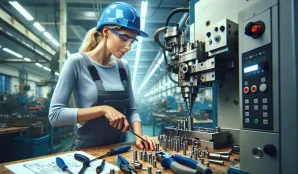
Board maker, metal salary
Latest available salary statistics are for 2025. Compare average pay, salary range and related job listings.
37 300 - 37 900 SEK / month
Industriell tillverkning
Related tools
Salary progression Board maker, metal
What does a sheet metal worker do – tasks and work environment
A sheet metal worker in metalworks is responsible for manufacturing, shaping, and customizing metal components, often using advanced tools and machinery. Tasks include manual processing and machine-based production where precision and accuracy are crucial. Common tasks involve cutting, bending, grinding, and assembling metal pieces, typically within manufacturing or workshop settings. The work environment is characterized by workshop conditions with machines, where safety routines and protective gear are a natural part of daily work. Collaboration with engineers, designers, and other specialists is common to ensure the final product meets quality and technical standards.
Salary development over time
The salary for a sheet metal worker has shown stable and positive growth over the past three years. In 2022, the average salary was 33,500 kronor per month, increasing to 35 900 kronor in 2023. In 2024, the average salary has risen further to 37 900 kronor per month. This represents a salary increase of approximately 7.2% over the three-year period. This trend is driven by increased demand for skilled metal craftsmen, where technical competence and experience are highly valued. Despite industry fluctuations due to economic cycles and regional differences, there is a clear trend of rising wages, especially for skilled specialists. The salary increases also reflect industry investments in technological development and skills enhancement.
Sheet metal worker salary – comprehensive overview
- Average salary: 37 900 kr/month
- Lowest/Highest salary: Data not available
- Hourly wage: 216 kr/hour
- Gender differences: Men 38 000 kr/month, women: data not available
- Regional differences: Data not available
Education and qualifications
To work as a sheet metal worker in metalworks, a vocational upper secondary education in industrial technology is usually required, preferably with a focus on toolmaking or similar. The education often includes practical training, where hands-on skills are developed under supervision. Some employers may also require specific certifications or further training depending on the workplace and machinery used. Self-study, online courses, and experience in related trades can be advantageous and improve employment prospects.
- Type of education: Vocational upper secondary education (industrial technology, toolmaking)
- Practical training: Usually included during education
- Certifications: May be required for certain machines or tasks
- Prerequisites: Basic mathematics and technical understanding
- Tips: Combine studies with practical training for optimal skills development
Sheet metal workers often need to quickly adapt to new technical solutions and machinery. Flexibility and problem-solving skills are therefore important qualities for success in the profession, as technological development in the industry advances rapidly.
Common benefits and compensations
Sheet metal workers are often offered benefits such as wellness allowances, work clothing, opportunities for skill development, and sometimes bonus or incentive systems. Occupational pension schemes and insurance coverage are usually included in employment conditions. Some employers also provide subsidized lunches or employee discounts.
Competition and challenges
The profession of sheet metal worker is part of a broad occupational group where competition for jobs varies depending on region and economic conditions. Due to limited data, no precise forecast exists for the profession, but demand for skilled toolmakers remains generally stable within the industry. Challenges include staying updated on new technology and maintaining high quality under time pressure. The work can also be physically demanding and require high precision. Periods of high workload may occur during larger production projects.
Tips for those aspiring to become a sheet metal worker
To succeed as a sheet metal worker, it’s beneficial to have a genuine interest in technology and problem-solving, as the job often requires quickly finding new solutions. Attention to detail is crucial, so training in precision during education is important. Resilience and stress tolerance help when working at a high pace and concentrating for extended periods. Social skills and teamwork are valuable, especially when working with other professionals. Securing internships early provides a good understanding of the profession and enhances employment chances after training. Flexibility and willingness to continuously learn new techniques make it easier to meet industry demands. Lastly, adhering to safety routines and workplace safety from the start is essential.
Key facts about sheet metal workers
- Education level: Vocational upper secondary education
- Work environment: Workshop setting with machinery and safety requirements
- Work form: Full-time, often daytime but shifts may occur
- Demand: 1,437 available jobs within the toolmaking profession
- Special skills: Machinery operation and metal processing
Career paths and future outlook
After three to five years in the profession, a sheet metal worker can advance to more qualified roles such as supervisor, production technician, or specialist in toolmaking. There are also opportunities for further training in CAD/CAM technology or automation, opening doors to new areas in industry. According to the Swedish Public Employment Service, no specific forecast exists due to limited data, but the large number of job openings within the toolmaking group indicates steady demand. The ongoing technological development suggests that demand for competent sheet metal workers will remain stable, especially for those who stay updated on new methods and machinery.
Frequently asked questions about sheet metal workers
- What does a sheet metal worker earn?
- The average salary is 37 900 kronor per month, with an hourly wage of 216 kronor. - What education is required to become a sheet metal worker?
- A vocational upper secondary education in industrial technology or toolmaking is recommended. - Are there many job opportunities in this profession?
- There are 1,437 available jobs within the toolmaking profession. - What is the work environment like for a sheet metal worker?
- Work mainly takes place in a workshop environment with machinery and safety focus. - What personal qualities are important?
- Accuracy, technical interest, and problem-solving skills are central qualities. - Are there salary differences between men and women?
- Men earn an average of 38 000 kronor, but specific data about women is unavailable. - How can one develop in the profession?
- Through further education and experience, you can progress to supervisory or specialist roles.

Salary distributed by age and sector
| Age | Base salary | Monthly salary | |
|---|---|---|---|
| 25-34 | 36300 kr | 36900 kr | |
| 35-44 | 36200 kr | 36800 kr | |
| 45-54 | 37400 kr | 37800 kr | |
| 55-64 | 39000 kr | 39600 kr | |
| Snitt | 37300 kr | 37900 kr |
| Age | Base salary | Monthly salary | |
|---|---|---|---|
| 25-34 | 36300 kr | 36900 kr | |
| 35-44 | 36200 kr | 36800 kr | |
| 45-54 | 37400 kr | 37800 kr | |
| 55-64 | 39000 kr | 39600 kr | |
| Snitt | 37300 kr | 37900 kr |
| Age | Base salary | Monthly salary | |
|---|---|---|---|
| 25-34 | 36300 kr | 36900 kr | |
| 35-44 | 36200 kr | 36800 kr | |
| 45-54 | 37400 kr | 37800 kr | |
| 55-64 | 39000 kr | 39600 kr | |
| Snitt | 37300 kr | 37900 kr |
| Age | Base salary | Monthly salary | |
|---|---|---|---|
| 35-44 | 36400 kr | 37100 kr | |
| 45-54 | 37400 kr | 37800 kr | |
| 55-64 | 39100 kr | 39700 kr | |
| Snitt | 37400 kr | 38000 kr |
| Age | Base salary | Monthly salary | |
|---|---|---|---|
| 35-44 | 36400 kr | 37100 kr | |
| 45-54 | 37400 kr | 37800 kr | |
| 55-64 | 39100 kr | 39700 kr | |
| Snitt | 37400 kr | 38000 kr |
| Age | Base salary | Monthly salary | |
|---|---|---|---|
| 35-44 | 36400 kr | 37100 kr | |
| 45-54 | 37400 kr | 37800 kr | |
| 55-64 | 39100 kr | 39700 kr | |
| Snitt | 37400 kr | 38000 kr |

About the data
All information displayed on this page is based on data from the Swedish Central Bureau of Statistics (SCB), the Swedish Tax Agency and the Swedish employment agency. Learn more about our data and data sources here.
All figures are gross salaries, meaning salaries before tax. The average salary, or mean salary, is calculated by adding up the total salary for all individuals within the profession and dividing it by the number of individuals. For specific job categories, we have also considered various criteria such as experience and education.
Profession Board maker, metal has the SSYK code 7222, which we use to match against the SCB database to obtain the latest salary statistics.
-

Prototype Technician at Zenvo Automotive – Build the World's Most Exclusive Hypercars
Toolmakers
Thu, 25 Jun 2026 - 00:12




Compare salary, work tasks and job outlook in adjacent occupations to find roles with similar skills or pay levels.
-

Metal construction fitter salary
Average salary: 39 700 SEK/month • Industriell tillverkning
Steel construction assemblers and heavy plate workers
Compare with Board maker, metal
Mon, 13 Jul 2026 - 10:41 -

Wood industry worker, wood fiber salary
Average salary: 38 300 SEK/month • Industriell tillverkning
Operators in sawmills, planing mills and plywood etc.
Compare with Board maker, metal
Tue, 14 Jul 2026 - 07:16 -

Average salary: 36 300 SEK/month • Industriell tillverkning
Machine setters and machine operators, metal work
Compare with Board maker, metal
Mon, 13 Jul 2026 - 05:38 -

Average salary: 32 200 SEK/month • Industriell tillverkning
Other machine operators, textile, leather and leather industry
Compare with Board maker, metal
Sun, 12 Jul 2026 - 21:48 -

Average salary: 42 500 SEK/month • Industriell tillverkning
Process operators, paper
Compare with Board maker, metal
Tue, 14 Jul 2026 - 07:14 -

Machine operator, food industry, fruit and vegetables salary
Average salary: 33 700 SEK/month • Industriell tillverkning
Other machine operators, food industry etc.
Compare with Board maker, metal
Sun, 12 Jul 2026 - 19:00


