- Salary statistics
- Inspectors, gold and silver products salary
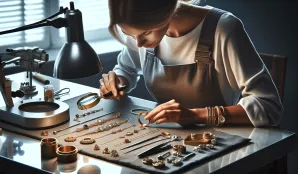
Inspectors, gold and silver products salary
Latest available salary statistics are for 2025. Compare average pay, salary range and related job listings.
36 607 - 36 738 SEK / month
Hantverksyrken
Related tools
Salary progression Inspectors, gold and silver products
What does an inspector within gold and silver products do? – Tasks and work environment
An inspector within gold and silver products is responsible for carefully examining and assessing precious metal items before they reach the market or customer. The work involves inspecting jewelry, cutlery, and other objects made of gold and silver to ensure they meet quality standards, are free from defects, and conform to specified requirements. The review is usually done manually using magnifying glasses, measuring instruments, and sometimes chemical tests. The work environment is often workshop-based, with high demands on concentration and attention to detail, and may also involve collaboration with blacksmiths, designers, and quality managers.
Salary development over time
The salary for inspectors within gold and silver products has been relatively stable over the past three years. In 2022, the average salary was 34,382 SEK per month, which increased slightly to 34 807 SEK in 2023. In 2024, the average salary is 36 738 SEK per month, representing a total increase of about 1.2 % over the period. The slow but steady salary growth can be explained by consistent demand for the role, as well as the profession belonging to a relatively small and specialized labor market. Since the role requires specific expertise and precision, the salary remains competitive within the craft sector but is also influenced by the limited number of employers and low staff turnover.
Working as an inspector in this industry requires not only technical precision but also a developed sense of aesthetics and historical details. Many of the products inspected are handmade and can have significant cultural and historical value, making the work especially stimulating for those interested in art and design.
Inspectors, gold and silver products salary – complete overview
- Average salary: 36 738 SEK/month
- Lowest/Highest salary: Data unavailable
- Hourly wage: 209 SEK
- Gender differences: Not available
- Regional differences: Not specified
Education and qualifications
To work as an inspector focusing on gold and silver products, a basic education in metal craftsmanship is usually required, preferably with specialization in gold and silver smithing. Practical experience is often crucial, and some employers may require specific courses in material science and quality control. Many professionals supplement their skills through further training and industry-specific certifications.
- Education: High school diploma in craftsmanship or metalwork, 3 years
- Vocational college: Opportunities for specialization in jewelry design and metal craftsmanship, 1–2 years
- Internship: Longer internships or apprenticeship positions are recommended
- Certifications: Courses in quality control and precious metal analysis
- Prerequisites: Good eyesight and attention to detail
Common benefits and compensation
Inspectors within gold and silver products often have access to benefits such as wellness allowances, work clothing, subsidized meals, and sometimes employee discounts on company products. Occupational pension and insurance are usually included in employment terms, especially with larger employers in the jewelry and metal industry.
Competition and challenges
Competition for positions as an inspector in the gold and silver industry is moderate but can vary depending on region and economic conditions. Since the profession is specialized and requires craftsmanship and technical knowledge, the pool of qualified candidates is limited. Challenges for professionals include technological changes in production, increased certification requirements, and competition from automated inspection systems. Additionally, the availability of job openings varies as the labor market is relatively small, with recruitment needs often driven by economic cycles and export conditions.
Tips for aspiring inspectors within gold and silver products
To succeed as an inspector within gold and silver products, it is beneficial to have a meticulous and persistent personality, as the work requires examining each detail with great precision. An analytical mindset helps in assessing metal quality and detecting deviations. Being cooperative is also an asset, as the role often involves contact and dialogue with blacksmiths and other professionals. Showing interest in further education and certifications in quality control can make you more attractive on the job market. Patience and the ability to work under pressure are important, especially during periods of high order volume. Finally, curiosity about materials and technology provides a solid foundation for development within the profession.
Key facts about inspectors within gold and silver products
- Education level: High school or vocational college with a craft focus
- Work environment: Workshop or studio, often with high demands on precision
- Employment form: Full-time is most common, but hourly employment occurs
- Demand: 341 available jobs within the profession (2024)
- Special skills: Material analysis and quality control of precious metals
Career paths and future prospects
After three to five years in the profession, there are opportunities to advance to more specialized roles, such as quality manager or production supervisor in precious metal manufacturing. Some choose to further their education in jewelry design, restoration, or start their own craft business. The employment agency's forecasts for gold and silver smiths do not provide an exact assessment for inspectors, but the job market is considered stable with some competition and a continuous but limited recruitment need. Those combining technical skills with creativity have good chances to develop in the industry, especially if willing to pursue ongoing training and follow technological developments.
Common questions about inspectors within gold and silver products
- What does an inspector within gold and silver products earn?
- The average salary is 36 738 SEK per month according to the latest available statistics. - What education is required to become an inspector?
- High school education in craftsmanship or metalwork, preferably supplemented with vocational college and practical training. - What is the job market like for inspectors?
- There are 341 available jobs in the profession, but competition is moderate and the market is specialized. - What personal qualities are important in the profession?
- Meticulousness, patience, analytical ability, and interest in material science are central qualities. - Are there opportunities for further education?
- Yes, there are both advanced courses and certifications in quality control and metal analysis. - What benefits are common?
- Wellness allowances, work clothing, employee discounts, and occupational pension are common. - Can one work as an inspector part-time?
- Yes, but full-time is more common. Hourly employment occurs, especially in smaller companies.

Salary distributed by age and sector

About the data
All information displayed on this page is based on data from the Swedish Central Bureau of Statistics (SCB), the Swedish Tax Agency and the Swedish employment agency. Learn more about our data and data sources here.
All figures are gross salaries, meaning salaries before tax. The average salary, or mean salary, is calculated by adding up the total salary for all individuals within the profession and dividing it by the number of individuals. For specific job categories, we have also considered various criteria such as experience and education.
Profession Inspectors, gold and silver products has the SSYK code 7312, which we use to match against the SCB database to obtain the latest salary statistics.
-

Goldsmith at Haileys Jewelry House – Restoration & Repair
Gold and silversmiths
Wed, 13 May 2026 - 00:47


Compare salary, work tasks and job outlook in adjacent occupations to find roles with similar skills or pay levels.
-

Average salary: 40 900 SEK/month • Hantverksyrken
Precision mechanics
Compare with Inspectors, gold and silver products
Tue, 14 Jul 2026 - 17:12 -

Average salary: 35 000 SEK/month • Hantverksyrken
Glass technicians
Compare with Inspectors, gold and silver products
Tue, 14 Jul 2026 - 19:52 -

Average salary: 34 000 SEK/month • Hantverksyrken
Musical instrument makers and other artisans
Compare with Inspectors, gold and silver products
Tue, 14 Jul 2026 - 18:48 -

Average salary: 34 000 SEK/month • Hantverksyrken
Musical instrument makers and other artisans
Compare with Inspectors, gold and silver products
Tue, 14 Jul 2026 - 17:10 -

Average salary: 38 800 SEK/month • Hantverksyrken
Blacksmiths
Compare with Inspectors, gold and silver products
Tue, 14 Jul 2026 - 11:07 -

Average salary: 34 000 SEK/month • Hantverksyrken
Musical instrument makers and other artisans
Compare with Inspectors, gold and silver products
Tue, 14 Jul 2026 - 16:17


