- Salary statistics
- Automatic welder salary
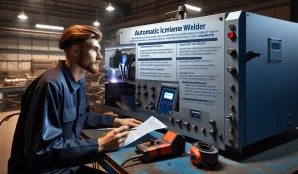
Automatic welder salary
Latest available salary statistics are for 2025. Compare average pay, salary range and related job listings.
33 600 - 37 300 SEK / month
Women earn 97% of what men do.
Industriell tillverkning
Related tools
Salary progression Automatic welder
What does an automated welder do? – Tasks and work environment
An automated welder works with monitoring and controlling automated welding processes within the industry, often in the production of metal components. The profession involves setting up and programming welding robots, inspecting weld quality, and performing maintenance on machines. The work is usually carried out in industrial environments, where precision and safety are crucial. Automated welders often collaborate with other operators, technicians, and engineers to ensure production maintains the correct pace and quality. The work environment can be noisy and requires protective equipment, but automation helps reduce the most strenuous tasks compared to manual welding.
Wage development over time
Over the past three years, wages for automated welders have developed positively. In 2022, the average salary was 33,000 SEK. It increased to 35 200 SEK in 2023 and has further risen in 2024 to 36 300 SEK per month. This represents a total increase of approximately 6.7% over the period. The driving factors behind the wage increase include high demand for skilled workers in welding automation, alongside a shortage of competence on the labor market. Changes also reflect increased automation within the industry, where employers seek personnel with technical understanding of advanced machinery. Despite these increases, there are still clear gender wage gaps, which is a challenge for the industry. Regional variations may occur, with generally higher wages in metropolitan areas and large industrial clusters.
Automated welders often work with advanced robots and programming, making technical curiosity and an interest in industrial automation valuable assets in the profession. Many get the opportunity to introduce new technical solutions, which can give significant influence over production processes.
Automated welder salary – complete overview
- Average salary: 36 300 SEK/month
- Lowest salary: 31,400 SEK/month (female, private sector, pre-high school education)
- Highest salary: 36,100 SEK/month (male, post-secondary education shorter than 3 years)
- Hourly wage (average): 212 SEK
- Women’s salary as a percentage of men’s: 97%
- Men’s average salary: 36 500 SEK/month
- Women’s average salary: 35 300 SEK/month
Education and qualifications
The path to becoming an automated welder often goes through a technical high school focusing on industrial technology or welding, followed by specialized courses in automated welding and robotics. Employers frequently require certifications and practical experience, and it is common to combine education with internships or trainee positions. To succeed in the profession, both technical skills and the ability to work carefully and independently are required.
- Basic education: Industrial technical high school (3 years)
- Special courses: Automated welding, robot programming
- Certifications: Welding license, robot operator certificate
- Internship: Common within education or as a trainee
- Further education: Opportunities for courses and certifications via employers or vocational colleges
Common benefits and compensations
Automated welders are often offered benefits such as shift allowances, wellness grants, extra vacation, and opportunities for skill development and further training. Occupational pension schemes and insurance are included in most collective agreements. Employers in the industry also invest in safety equipment and ergonomic working environment improvements.
Competition and challenges
The profession of automated welding is characterized by rapid technological development and increasing automation, which requires continuous skills development. Currently, there is a shortage of qualified automated welders, but in the longer term, demand is expected to decrease due to ongoing technological advancements and more efficient production processes. Competition for jobs may therefore increase in the future, especially for those without updated technical skills or certifications. The ability to quickly learn new systems and adapt to changing work methods becomes increasingly important. The industry is also challenged by the need to attract more women and reduce gender wage and working condition disparities.
Tips for those who want to become automated welders
To succeed as an automated welder, it is good to have a strong technical curiosity and be solution-oriented, which facilitates learning new machines and programming. Precision is crucial, as weld quality must be checked accurately and safety standards are high. Good teamwork skills help you communicate effectively with colleagues and other production staff. Flexibility and willingness to further education are important, as technology and work methods change rapidly in the industry. Being resilient and capable of handling multiple tasks simultaneously is an advantage in production environments where the pace can be high. Initiative is appreciated by employers, especially when it involves proposing improvements in production processes. Finally, responsibility for machinery and work environment makes you a reliable and valued employee.
Key facts about Automated Welders
- Educational level: High school diploma with a technical focus, supplemented with specialized courses
- Work environment: Industrial, often shift work and requirement for protective equipment
- Demand: Large shortage today, but decreasing over 5 years according to the Swedish Public Employment Service
- Job openings: 1,437 in the job group of machine setters and operators, metal work
- Special skills: Robot programming and automated welding
Career paths and future outlooks
After three to five years in the profession, an automated welder can develop into a supervisor, production technician, or specialist in automation and robot programming. There are also opportunities to move into roles such as maintenance technician or process developer within the industry. According to the Swedish Public Employment Service's forecasts, job opportunities are currently plentiful, but demand is expected to decrease over five years due to technological development and increased automation. However, the profession remains important for the industry’s competitiveness, and those who stay updated with new technology have good chances to advance or switch to related roles.
Frequently asked questions about Automated Welders
- What does an automated welder earn?
- An automated welder has an average salary of 36 300 SEK per month, with variations depending on experience, region, and education level. - How do gender differences in wages look for automated welders?
- Women earn on average 35 300 SEK, which corresponds to approximately 97% of men's average salary of 36 500 SEK. - What education is required to become an automated welder?
- Typically, a technical high school with a focus on welding or industry, supplemented with specialized courses and certifications in automated welding. - What are the future prospects for automated welders?
- Job opportunities are currently good, but demand is expected to decrease over the next five years due to automation. - What are the most common tasks for an automated welder?
- Monitoring and programming welding robots, performing quality checks, and maintaining and troubleshooting automated welding machines. - Are there regional differences in wages for automated welders?
- Yes, salary levels tend to be somewhat higher in metropolitan regions and larger industrial clusters. - What career paths are available for an automated welder?
- After a few years of experience, it is common to advance to supervisor, production technician, or specialist in automation.

Salary distributed by age and sector
| Age | Base salary | Monthly salary | |
|---|---|---|---|
| 18-24 | 100% | 31900 kr | 34300 kr |
| 25-34 | 98% | 34200 kr | 36400 kr |
| 35-44 | 96% | 34400 kr | 36400 kr |
| 45-54 | 96% | 35100 kr | 36900 kr |
| 55-64 | 95% | 35100 kr | 36700 kr |
| 65-68 | 33500 kr | 34800 kr | |
| Snitt | 97% | 34300 kr | 36300 kr |
| Age | Base salary | Monthly salary | |
|---|---|---|---|
| 25-34 | 32900 kr | 35600 kr | |
| 35-44 | 35600 kr | 36700 kr | |
| 45-54 | 32700 kr | 32700 kr | |
| 55-64 | 33300 kr | 34300 kr | |
| Snitt | 33300 kr | 34300 kr |
| Age | Base salary | Monthly salary | |
|---|---|---|---|
| 25-34 | 32900 kr | 35600 kr | |
| 35-44 | 35600 kr | 36700 kr | |
| 45-54 | 32700 kr | 32700 kr | |
| 55-64 | 33300 kr | 34300 kr | |
| Snitt | 33300 kr | 34300 kr |
| Age | Base salary | Monthly salary | |
|---|---|---|---|
| 18-24 | 100% | 31900 kr | 34300 kr |
| 25-34 | 98% | 34200 kr | 36400 kr |
| 35-44 | 96% | 34400 kr | 36400 kr |
| 45-54 | 96% | 35100 kr | 37000 kr |
| 55-64 | 95% | 35100 kr | 36700 kr |
| 65-68 | 33500 kr | 34800 kr | |
| Snitt | 97% | 34300 kr | 36300 kr |
| Age | Base salary | Monthly salary | |
|---|---|---|---|
| 18-24 | 100% | 31900 kr | 34300 kr |
| 25-34 | 98% | 34200 kr | 36400 kr |
| 35-44 | 96% | 34400 kr | 36400 kr |
| 45-54 | 96% | 35100 kr | 37000 kr |
| 55-64 | 95% | 35100 kr | 36700 kr |
| 65-68 | 33500 kr | 34800 kr | |
| Snitt | 97% | 34300 kr | 36300 kr |
| Age | Base salary | Monthly salary | |
|---|---|---|---|
| 18-24 | 100% | 32000 kr | 34300 kr |
| 25-34 | 98% | 34200 kr | 36500 kr |
| 35-44 | 96% | 34600 kr | 36700 kr |
| 45-54 | 96% | 35300 kr | 37200 kr |
| 55-64 | 95% | 35300 kr | 37000 kr |
| 65-68 | 33600 kr | 34800 kr | |
| Snitt | 97% | 34500 kr | 36500 kr |
| Age | Base salary | Monthly salary | |
|---|---|---|---|
| 25-34 | 32800 kr | 36400 kr | |
| 35-44 | 35600 kr | 36700 kr | |
| 45-54 | 32700 kr | 32700 kr | |
| 55-64 | 33300 kr | 34300 kr | |
| Snitt | 33300 kr | 34300 kr |
| Age | Base salary | Monthly salary | |
|---|---|---|---|
| 25-34 | 32800 kr | 36400 kr | |
| 35-44 | 35600 kr | 36700 kr | |
| 45-54 | 32700 kr | 32700 kr | |
| 55-64 | 33300 kr | 34300 kr | |
| Snitt | 33300 kr | 34300 kr |
| Age | Base salary | Monthly salary | |
|---|---|---|---|
| 18-24 | 100% | 32000 kr | 34300 kr |
| 25-34 | 98% | 34200 kr | 36500 kr |
| 35-44 | 96% | 34600 kr | 36700 kr |
| 45-54 | 96% | 35300 kr | 37200 kr |
| 55-64 | 95% | 35300 kr | 37000 kr |
| 65-68 | 33600 kr | 34800 kr | |
| Snitt | 97% | 34500 kr | 36500 kr |
| Age | Base salary | Monthly salary | |
|---|---|---|---|
| 18-24 | 100% | 32000 kr | 34300 kr |
| 25-34 | 98% | 34200 kr | 36500 kr |
| 35-44 | 96% | 34600 kr | 36700 kr |
| 45-54 | 96% | 35300 kr | 37200 kr |
| 55-64 | 95% | 35300 kr | 37000 kr |
| 65-68 | 33600 kr | 34800 kr | |
| Snitt | 97% | 34500 kr | 36500 kr |
| Age | Base salary | Monthly salary | |
|---|---|---|---|
| 18-24 | 100% | 31900 kr | 34300 kr |
| 25-34 | 98% | 34100 kr | 35900 kr |
| 35-44 | 96% | 33400 kr | 35300 kr |
| 45-54 | 96% | 33800 kr | 35700 kr |
| 55-64 | 95% | 33500 kr | 35200 kr |
| Snitt | 97% | 33400 kr | 35300 kr |
| Age | Base salary | Monthly salary | |
|---|---|---|---|
| 18-24 | 100% | 31900 kr | 34300 kr |
| 25-34 | 98% | 34100 kr | 35900 kr |
| 35-44 | 96% | 33400 kr | 35300 kr |
| 45-54 | 96% | 33800 kr | 35700 kr |
| 55-64 | 95% | 33500 kr | 35200 kr |
| Snitt | 97% | 33400 kr | 35300 kr |
| Age | Base salary | Monthly salary | |
|---|---|---|---|
| 18-24 | 100% | 31900 kr | 34300 kr |
| 25-34 | 98% | 34100 kr | 35900 kr |
| 35-44 | 96% | 33400 kr | 35300 kr |
| 45-54 | 96% | 33800 kr | 35700 kr |
| 55-64 | 95% | 33500 kr | 35200 kr |
| Snitt | 97% | 33400 kr | 35300 kr |

About the data
All information displayed on this page is based on data from the Swedish Central Bureau of Statistics (SCB), the Swedish Tax Agency and the Swedish employment agency. Learn more about our data and data sources here.
All figures are gross salaries, meaning salaries before tax. The average salary, or mean salary, is calculated by adding up the total salary for all individuals within the profession and dividing it by the number of individuals. For specific job categories, we have also considered various criteria such as experience and education.
Profession Automatic welder has the SSYK code 7223, which we use to match against the SCB database to obtain the latest salary statistics.
-
Machine Operator for Precision Industry in Northern Stockholm
Machine setters and machine operators, metal work
Mon, 13 Jul 2026 - 21:55 -
Bending Press Operator Wanted at Plåtteknik i Kumla AB
Machine setters and machine operators, metal work
Mon, 13 Jul 2026 - 21:36 -

Machine Operator for Established Operation in Västerås
Machine setters and machine operators, metal work
Mon, 13 Jul 2026 - 21:30 -

Machine setters and machine operators, metal work
Mon, 13 Jul 2026 - 21:27 -

CNC Operator in Årjäng – Opportunity for Permanent Employment
Machine setters and machine operators, metal work
Mon, 13 Jul 2026 - 21:26
Compare salary, work tasks and job outlook in adjacent occupations to find roles with similar skills or pay levels.
-

Metal construction fitter salary
Average salary: 39 700 SEK/month • Industriell tillverkning
Steel construction assemblers and heavy plate workers
Compare with Automatic welder
Mon, 13 Jul 2026 - 10:41 -

Wood industry worker, wood fiber salary
Average salary: 38 300 SEK/month • Industriell tillverkning
Operators in sawmills, planing mills and plywood etc.
Compare with Automatic welder
Tue, 14 Jul 2026 - 07:16 -

Average salary: 36 300 SEK/month • Industriell tillverkning
Machine setters and machine operators, metal work
Compare with Automatic welder
Mon, 13 Jul 2026 - 05:38 -

Average salary: 32 200 SEK/month • Industriell tillverkning
Other machine operators, textile, leather and leather industry
Compare with Automatic welder
Sun, 12 Jul 2026 - 21:48 -

Average salary: 42 500 SEK/month • Industriell tillverkning
Process operators, paper
Compare with Automatic welder
Tue, 14 Jul 2026 - 07:14 -

Machine operator, food industry, fruit and vegetables salary
Average salary: 33 700 SEK/month • Industriell tillverkning
Other machine operators, food industry etc.
Compare with Automatic welder
Sun, 12 Jul 2026 - 19:00


