- Salary statistics
- Pipe cutter salary
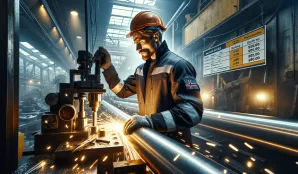
Pipe cutter salary
Latest available salary statistics are for 2025. Compare average pay, salary range and related job listings.
33 600 - 37 300 SEK / month
Women earn 97% of what men do.
Industriell tillverkning
Related tools
Salary progression Pipe cutter
What does a pipe cutter do? – Tasks and work environment
A pipe cutter mainly works with cutting, processing, and customizing metal pipes according to specific measurements and drawings for various industries and construction projects. The tasks include handling advanced machines, tools, and sometimes manual methods to ensure the pipes are of correct length and quality. The work often takes place in production environments such as workshops, factories, or construction sites, where collaboration with other trades is common. The work environment can be noisy and require protective equipment, and precision and safety awareness are important in daily work.
Salary development over time
The salary development for pipe cutters has been steadily positive in recent years. In 2022, the average salary was 33,000 SEK per month. During 2023, the average salary increased to 35 200 SEK, corresponding to an increase of about 3%. By 2024, the salary has continued upward to 36 300 SEK, a further increase of over 3.5%. The total salary increase of over 6% over three years reflects a continued demand for skilled metal workers, despite technological development and automation beginning to influence the industry. The market still shows a shortage of trained personnel, which contributes to the positive salary trend for pipe cutters, although future forecasts indicate that demand may decrease in the longer term.
Pipe cutter salary – comprehensive overview
- Average salary: 36 300 SEK/month
- Lowest salary: 31,400 SEK/month (female, private employee, less than 9 years of education)
- Highest salary: 36,100 SEK/month (male, various sectors, more than 3 years of post-secondary education)
- Hourly wage: 212 SEK/hour (average, based on 166 hours/month)
- Gender differences: Men 36 500 SEK/month, women 35 300 SEK/month (women earn 97% of men's salary)
- Regional differences: Data not available
Education and qualifications
The path to becoming a pipe cutter usually goes through high school industrial technology programs or equivalent adult education, where fundamentals in metalworking and machine operation are taught. Practical experience is crucial, and many employers also value certifications in machinery safety and material handling. Typically, no university education is required for the profession, but further training and specialization increase opportunities for higher salary and responsibility.
- High school education: Industrial technology program, 3 years
- Adult education: Industrial technology courses, 1–2 years
- Certifications: Machinery safety, hot works, crane license
- Internship: Often via school or as a trainee at a company
- Prerequisites: Basic mathematics and technical skills
Many pipe cutters develop a special sense of touch for materials and machines, which allows them to quickly identify small deviations in production. This ability is appreciated in the job market and can open doors to more specialized roles within the industry.
Common benefits and compensations
Pipe cutters are often covered by collective agreements that provide rights to occupational pension, sick pay, holiday pay, and shift allowances. Other common benefits may include wellness contributions, work clothing, and sometimes bonuses for production targets. In some cases, further training or certification courses are offered as part of employment.
Competition and challenges
The profession of pipe cutter is characterized by high competition for the most attractive jobs, especially in regions with a high concentration of industry. At the same time, there is a nationwide shortage of trained workforce, which offers good employment opportunities for those with the right skills. Challenges in the profession include requirements for accuracy, technical understanding, and the ability to adapt to new machines and methods. Automation and digitalization are rapidly changing the work environment, demanding continuous skills development. Physical workload and monotonous tasks can also be challenging, but modern workplaces actively work on ergonomics and safety.
Tips for those who want to become a pipe cutter
To succeed as a pipe cutter, it is good to combine technical interest with practical problem-solving skills. Precision is crucial, especially when cutting and measuring materials, so always double-check your work. Good teamwork skills make it easier to work in a team and contribute to a safe work environment. Flexibility and willingness to learn new machines or methods facilitate when technology advances quickly in the industry. Physical endurance is also an asset, as the work is often standing and can be monotonous. Showing initiative and interest in further training provides better opportunities for development and higher salary. Lastly, punctuality and responsibility are highly valued by employers in metalworking.
Key facts about pipe cutters
- Salary range: 31,400–36,100 SEK/month
- Education level: High school (industrial technology) or equivalent adult education
- Work environment: Industry, workshop, and construction sites
- Demand: High now, but expected to decrease in the long term
- Number of job openings: 1,437 within the profession (May 2024)
Career paths and future prospects
After three to five years in the profession, a pipe cutter can advance to roles such as supervisor, production technician, or machine operator with specialized skills in CNC technology. Further education in automation or quality control opens up more qualified positions and higher salaries. According to the Employment Service's forecasts, job opportunities remain large, but demand is expected to decrease over five years due to technological development and increased automation. The shortage of trained personnel remains significant, so those who stay updated and continue their education have good prospects for a stable career in the industry.
Frequently asked questions about pipe cutters
- What does a pipe cutter earn?
- A pipe cutter has an average monthly salary of 36 300 SEK. - How does the salary development look for pipe cutters?
- The salary has increased from 33,000 SEK in 2022 to 36 300 SEK in 2024. - Are there differences between men's and women's salaries?
- Yes, men earn on average 36 500 SEK and women 35 300 SEK, which means women earn 97% of men's salary. - What education is required to become a pipe cutter?
- High school education in industrial technology or equivalent adult education is recommended. - What does the job market look like for pipe cutters?
- There is currently a shortage of pipe cutters, but demand is expected to decrease within five years according to the Employment Service. - In what work environments does a pipe cutter work?
- Usually in industries, workshops, or construction sites. - Are there opportunities for career development?
- Yes, further education and experience can lead to supervisory roles or specialization within the industry.

Salary distributed by age and sector
| Age | Base salary | Monthly salary | |
|---|---|---|---|
| 18-24 | 100% | 31900 kr | 34300 kr |
| 25-34 | 98% | 34200 kr | 36400 kr |
| 35-44 | 96% | 34400 kr | 36400 kr |
| 45-54 | 96% | 35100 kr | 36900 kr |
| 55-64 | 95% | 35100 kr | 36700 kr |
| 65-68 | 33500 kr | 34800 kr | |
| Snitt | 97% | 34300 kr | 36300 kr |
| Age | Base salary | Monthly salary | |
|---|---|---|---|
| 25-34 | 32900 kr | 35600 kr | |
| 35-44 | 35600 kr | 36700 kr | |
| 45-54 | 32700 kr | 32700 kr | |
| 55-64 | 33300 kr | 34300 kr | |
| Snitt | 33300 kr | 34300 kr |
| Age | Base salary | Monthly salary | |
|---|---|---|---|
| 25-34 | 32900 kr | 35600 kr | |
| 35-44 | 35600 kr | 36700 kr | |
| 45-54 | 32700 kr | 32700 kr | |
| 55-64 | 33300 kr | 34300 kr | |
| Snitt | 33300 kr | 34300 kr |
| Age | Base salary | Monthly salary | |
|---|---|---|---|
| 18-24 | 100% | 31900 kr | 34300 kr |
| 25-34 | 98% | 34200 kr | 36400 kr |
| 35-44 | 96% | 34400 kr | 36400 kr |
| 45-54 | 96% | 35100 kr | 37000 kr |
| 55-64 | 95% | 35100 kr | 36700 kr |
| 65-68 | 33500 kr | 34800 kr | |
| Snitt | 97% | 34300 kr | 36300 kr |
| Age | Base salary | Monthly salary | |
|---|---|---|---|
| 18-24 | 100% | 31900 kr | 34300 kr |
| 25-34 | 98% | 34200 kr | 36400 kr |
| 35-44 | 96% | 34400 kr | 36400 kr |
| 45-54 | 96% | 35100 kr | 37000 kr |
| 55-64 | 95% | 35100 kr | 36700 kr |
| 65-68 | 33500 kr | 34800 kr | |
| Snitt | 97% | 34300 kr | 36300 kr |
| Age | Base salary | Monthly salary | |
|---|---|---|---|
| 18-24 | 100% | 32000 kr | 34300 kr |
| 25-34 | 98% | 34200 kr | 36500 kr |
| 35-44 | 96% | 34600 kr | 36700 kr |
| 45-54 | 96% | 35300 kr | 37200 kr |
| 55-64 | 95% | 35300 kr | 37000 kr |
| 65-68 | 33600 kr | 34800 kr | |
| Snitt | 97% | 34500 kr | 36500 kr |
| Age | Base salary | Monthly salary | |
|---|---|---|---|
| 25-34 | 32800 kr | 36400 kr | |
| 35-44 | 35600 kr | 36700 kr | |
| 45-54 | 32700 kr | 32700 kr | |
| 55-64 | 33300 kr | 34300 kr | |
| Snitt | 33300 kr | 34300 kr |
| Age | Base salary | Monthly salary | |
|---|---|---|---|
| 25-34 | 32800 kr | 36400 kr | |
| 35-44 | 35600 kr | 36700 kr | |
| 45-54 | 32700 kr | 32700 kr | |
| 55-64 | 33300 kr | 34300 kr | |
| Snitt | 33300 kr | 34300 kr |
| Age | Base salary | Monthly salary | |
|---|---|---|---|
| 18-24 | 100% | 32000 kr | 34300 kr |
| 25-34 | 98% | 34200 kr | 36500 kr |
| 35-44 | 96% | 34600 kr | 36700 kr |
| 45-54 | 96% | 35300 kr | 37200 kr |
| 55-64 | 95% | 35300 kr | 37000 kr |
| 65-68 | 33600 kr | 34800 kr | |
| Snitt | 97% | 34500 kr | 36500 kr |
| Age | Base salary | Monthly salary | |
|---|---|---|---|
| 18-24 | 100% | 32000 kr | 34300 kr |
| 25-34 | 98% | 34200 kr | 36500 kr |
| 35-44 | 96% | 34600 kr | 36700 kr |
| 45-54 | 96% | 35300 kr | 37200 kr |
| 55-64 | 95% | 35300 kr | 37000 kr |
| 65-68 | 33600 kr | 34800 kr | |
| Snitt | 97% | 34500 kr | 36500 kr |
| Age | Base salary | Monthly salary | |
|---|---|---|---|
| 18-24 | 100% | 31900 kr | 34300 kr |
| 25-34 | 98% | 34100 kr | 35900 kr |
| 35-44 | 96% | 33400 kr | 35300 kr |
| 45-54 | 96% | 33800 kr | 35700 kr |
| 55-64 | 95% | 33500 kr | 35200 kr |
| Snitt | 97% | 33400 kr | 35300 kr |
| Age | Base salary | Monthly salary | |
|---|---|---|---|
| 18-24 | 100% | 31900 kr | 34300 kr |
| 25-34 | 98% | 34100 kr | 35900 kr |
| 35-44 | 96% | 33400 kr | 35300 kr |
| 45-54 | 96% | 33800 kr | 35700 kr |
| 55-64 | 95% | 33500 kr | 35200 kr |
| Snitt | 97% | 33400 kr | 35300 kr |
| Age | Base salary | Monthly salary | |
|---|---|---|---|
| 18-24 | 100% | 31900 kr | 34300 kr |
| 25-34 | 98% | 34100 kr | 35900 kr |
| 35-44 | 96% | 33400 kr | 35300 kr |
| 45-54 | 96% | 33800 kr | 35700 kr |
| 55-64 | 95% | 33500 kr | 35200 kr |
| Snitt | 97% | 33400 kr | 35300 kr |

About the data
All information displayed on this page is based on data from the Swedish Central Bureau of Statistics (SCB), the Swedish Tax Agency and the Swedish employment agency. Learn more about our data and data sources here.
All figures are gross salaries, meaning salaries before tax. The average salary, or mean salary, is calculated by adding up the total salary for all individuals within the profession and dividing it by the number of individuals. For specific job categories, we have also considered various criteria such as experience and education.
Profession Pipe cutter has the SSYK code 7223, which we use to match against the SCB database to obtain the latest salary statistics.
-

Machine Operator for Precision Industry in Northern Stockholm
Machine setters and machine operators, metal work
Mon, 13 Jul 2026 - 21:55 -

Bending Press Operator Wanted at Plåtteknik i Kumla AB
Machine setters and machine operators, metal work
Mon, 13 Jul 2026 - 21:36 -

Machine Operator for Established Operation in Västerås
Machine setters and machine operators, metal work
Mon, 13 Jul 2026 - 21:30 -

Machine setters and machine operators, metal work
Mon, 13 Jul 2026 - 21:27 -

CNC Operator in Årjäng – Opportunity for Permanent Employment
Machine setters and machine operators, metal work
Mon, 13 Jul 2026 - 21:26
Compare salary, work tasks and job outlook in adjacent occupations to find roles with similar skills or pay levels.
-

Window fitter, manufacturing salary
Average salary: 34 400 SEK/month • Industriell tillverkning
Assemblers, wood products
Compare with Pipe cutter
Mon, 13 Jul 2026 - 20:16 -

Average salary: 39 900 SEK/month • Industriell tillverkning
Machine operators, pharmaceutical products
Compare with Pipe cutter
Mon, 13 Jul 2026 - 13:46 -

Average salary: 40 300 SEK/month • Industriell tillverkning
Machine operators, paper goods industry
Compare with Pipe cutter
Sat, 11 Jul 2026 - 17:51 -

Machine operator, food industry, tea, coffee, cocoa salary
Average salary: 33 700 SEK/month • Industriell tillverkning
Other machine operators, food industry etc.
Compare with Pipe cutter
Tue, 14 Jul 2026 - 04:42 -

Average salary: 32 200 SEK/month • Industriell tillverkning
Other machine operators, textile, leather and leather industry
Compare with Pipe cutter
Mon, 6 Jul 2026 - 15:34 -

Average salary: 34 700 SEK/month • Industriell tillverkning
Machine carpenters and machine operators, wood industry
Compare with Pipe cutter
Tue, 14 Jul 2026 - 01:43


