- Salary statistics
- Glove maker salary
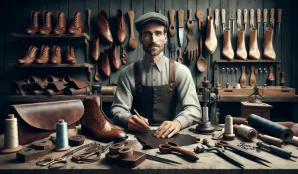
Glove maker salary
Latest available salary statistics are for 2025. Compare average pay, salary range and related job listings.
34 100 - 34 100 SEK / month
Hantverksyrken
Related tools
Salary progression Glove maker
What does a glove maker do? – Tasks and work environment
A glove maker specializes in manufacturing, repairing, and maintaining gloves made from leather and other materials. Tasks include pattern construction, material cutting, sewing, and detailed craftsmanship to create functional and aesthetically pleasing gloves. Glove makers often work in small workshops, but some are employed by larger manufacturers or in the theater and fashion industries. The profession requires great precision, a feel for materials, and the ability to work with both hands and machines in an environment where accuracy is crucial.
Salary development over time
Glove makers have seen a clear improvement in salary over the past three years. In 2022, the average salary was 28,600 SEK per month. In 2023, it increased to 33 300 SEK, which corresponds to an increase of about 2.4%. Between 2023 and 2024, the salary rose sharply to 34 100 SEK, representing an increase of over 13.6% in just one year. This positive trend is linked to increased demand for skilled craftsmanship, as well as a certain shortage of trained glove makers in the labor market. Despite being a niche profession, interest in traditional craftsmanship and sustainable products has contributed to raising salary levels.
Glove maker salary – a comprehensive overview
- Average salary: 34 100 SEK/month
- Lowest/Highest salary: Data unavailable, but variation occurs depending on experience and workplace
- Hourly wage: 200 SEK (hourly paid, based on 166 working hours per month)
- Gender differences: Men earn 34 000 SEK/month; no specific statistics for women
- Regional differences: Data unavailable, but salary levels may vary depending on demand and the size of the labor market
Education and qualifications
The path to becoming a glove maker often involves an apprenticeship or a vocational program focused on leather crafts. Formal education is not always required, but practical skills and experience are crucial for success. Many glove makers combine traditional techniques with modern methods, requiring both theoretical and practical competence. Below are some common routes and qualifications.
- Vocational training: Crafts program with specialization in textiles, leather, or shoemaking (3 years)
- Apprenticeship: Practical training with an experienced glove maker or in a workshop
- Courses and further training: Specialized courses in leather craftsmanship, pattern construction, and machine sewing
- Prerequisites: Good fine motor skills, interest in crafts, and material knowledge
- Tips for choosing: Site visits, internships, or summer jobs in relevant environments provide valuable insights
The glove making profession is one of the few crafts where each product is often unique and tailored exactly to the customer's hand. The personal contact with clients and the creative problem-solving make the work very varied and satisfying for those who appreciate traditional craftsmanship.
Common benefits and compensations
Glove makers often enjoy benefits such as flexible working hours, the possibility of running their own workshop or home-based production, and some equipment and materials provided by the employer. Other common benefits include health subsidies, insurance, and sometimes opportunities for further education in the craft. In some cases, commission or bonuses may be offered for larger orders or special projects.
Competition and challenges
The competition within the glove making profession is relatively low due to the limited number of practitioners and stable demand for custom-made gloves, especially in exclusive segments. The main challenge is to maintain and develop traditional craftsmanship skills in a time when industrial production and cheaper imported products dominate the market. Continuous adaptation to new materials and techniques, as well as marketing skills—especially for those working as self-employed—are essential. The work can be physically demanding and often involves long periods of concentrated precision work.
Tips for those wanting to become a glove maker
To succeed as a glove maker, it is beneficial to combine meticulousness with a creative flair and a genuine interest in materials. Developing patience and perseverance is crucial, as the work requires each step to be performed with great precision. A good sense of color and form facilitates designing gloves according to customer preferences, while social skills help build long-term customer relationships. Being curious about new techniques and willing to learn from experienced colleagues opens doors to further development in the profession. Finally, gaining practical experience early through internships or part-time jobs helps build confidence and craftsmanship skills.
Key facts about glove makers
- Education level: Vocational training or apprenticeship in crafts
- Work environment: Smaller workshop, often craft-based and creative
- Demand: Stable, but limited number of practitioners
- Available jobs in the profession: 341 (May 2024)
- Special skills: Leather handling, pattern construction, and precision sewing
Career paths and future prospects
After three to five years as a glove maker, there are opportunities to advance to supervisor, product developer, or self-employed craftsman in leatherwork. Some choose to specialize further in areas such as theater, film, or fashion, where the need for custom-made gloves is high. According to the Swedish Public Employment Service, it is challenging to provide an exact forecast for the profession’s future due to limited data, but the number of available jobs in the leather crafts and shoemaking sectors indicates stable demand. Trends in digitalization and sustainability may also create new opportunities for glove makers who want to develop their offerings or niche further.
Frequently asked questions about glove makers
- What does a glove maker earn?
- A glove maker has an average salary of 34 100 SEK per month in Sweden. - How do you become a glove maker?
- The most common way is to complete a vocational training in crafts or to become an apprentice with an experienced glove maker. - Are there jobs for glove makers?
- Within the leather crafts and shoemaking sectors, there were 341 available jobs in May 2024. - What tasks does a glove maker perform?
- Tasks include manufacturing, repairing, and customizing gloves made from various materials. - What is required to succeed in the profession?
- Attention to detail, creativity, and practical experience are key factors for success as a glove maker. - Are there salary differences between men and women?
- Men earn an average of 34 000 SEK per month; specific statistics for women are not available. - Can I work as a self-employed person?
- Many glove makers run their own workshops or combine employment with their own business.

Salary distributed by age and sector
| Age | Base salary | Monthly salary | |
|---|---|---|---|
| Snitt | 34100 kr | 34100 kr |
| Age | Base salary | Monthly salary | |
|---|---|---|---|
| Snitt | 34100 kr | 34100 kr |
| Age | Base salary | Monthly salary | |
|---|---|---|---|
| Snitt | 34100 kr | 34100 kr |
| Age | Base salary | Monthly salary | |
|---|---|---|---|
| Snitt | 33900 kr | 34000 kr |
| Age | Base salary | Monthly salary | |
|---|---|---|---|
| Snitt | 33900 kr | 34000 kr |
| Age | Base salary | Monthly salary | |
|---|---|---|---|
| Snitt | 33900 kr | 34000 kr |

About the data
All information displayed on this page is based on data from the Swedish Central Bureau of Statistics (SCB), the Swedish Tax Agency and the Swedish employment agency. Learn more about our data and data sources here.
All figures are gross salaries, meaning salaries before tax. The average salary, or mean salary, is calculated by adding up the total salary for all individuals within the profession and dividing it by the number of individuals. For specific job categories, we have also considered various criteria such as experience and education.
Profession Glove maker has the SSYK code 7534, which we use to match against the SCB database to obtain the latest salary statistics.
-

Orthotist/Prosthetist Position at Ottobock Care in Solna
Leather craftsmen and shoemakers
Sat, 30 May 2026 - 02:15 -
Orthopedic Technical Patient Receptionist in Jönköping
Leather craftsmen and shoemakers
Wed, 20 May 2026 - 22:43
Compare salary, work tasks and job outlook in adjacent occupations to find roles with similar skills or pay levels.
-

Cabin assistant, glass cabin salary
Average salary: 34 000 SEK/month • Hantverksyrken
Musical instrument makers and other artisans
Compare with Glove maker
Mon, 13 Jul 2026 - 18:19 -

Average salary: 34 200 SEK/month • Hantverksyrken
Fine, interior and furniture carpenters
Compare with Glove maker
Wed, 8 Jul 2026 - 18:06 -

Average salary: 34 000 SEK/month • Hantverksyrken
Musical instrument makers and other artisans
Compare with Glove maker
Tue, 14 Jul 2026 - 05:42 -

Average salary: 34 200 SEK/month • Hantverksyrken
Fine, interior and furniture carpenters
Compare with Glove maker
Mon, 13 Jul 2026 - 11:47 -

Average salary: 40 900 SEK/month • Hantverksyrken
Precision mechanics
Compare with Glove maker
Mon, 13 Jul 2026 - 14:21 -

Average salary: 34 000 SEK/month • Hantverksyrken
Musical instrument makers and other artisans
Compare with Glove maker
Tue, 14 Jul 2026 - 05:19


