- Salary statistics
- Sheep farmer salary
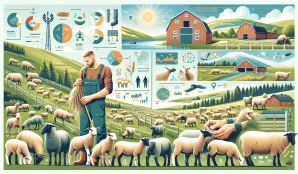
Sheep farmer salary
Latest available salary statistics are for 2025. Compare average pay, salary range and related job listings.
29 000 - 33 900 SEK / month
Women earn 100% of what men do.
Naturbruk
Related tools
Salary progression Sheep farmer
What does a sheep farmer do? – Tasks and work environment
A sheep farmer is responsible for the daily care and breeding of sheep, focusing on both animal welfare and the production of meat, wool, and sometimes milk. Tasks include feeding, cleaning stables, health checks, lambing, wool shearing, and maintaining pastures and fences. The job requires presence outdoors in varying weather conditions and often involves physically demanding work. Many sheep farms are small-scale and run as family businesses, which can lead to irregular and sometimes long working hours, especially during lambing season.
Salary development over time
The salary for a sheep farmer has shown a slight positive trend in recent years. In 2022, the average salary was 27,200 SEK per month, while both 2023 and 2024 show stabilization at 29 400 SEK. This represents an increase of approximately 4.4% between 2022 and 2023, but the salary level has remained unchanged thereafter. The development may be linked to steady demand for labor in agriculture, but also to difficulties in recruiting personnel with the right skills. Salaries are largely influenced by farm size, production focus, and whether the work is as an owner or employee.
Sheep farmer salary – comprehensive overview
- Average salary: 29 400 SEK/month
- Lowest salary: 27,000 SEK/month (female, private sector, high school education 3 years)
- Highest salary: 32,500 SEK/month (female, public sector, high school education up to 2 years)
- Hourly wage: 171 SEK/hour (based on 166 hours/month)
- Women: 29 300 SEK/month (100% of men's salary)
- Men: 29,700 SEK/month
- Regional differences: Data on regional differences is not available
Education and qualifications
To work as a sheep farmer, a high school education in natural resource management is usually required, often with practical experience from farm work. Many supplement their skills through courses in animal health, economics, and machinery handling. Formal requirements vary depending on the employer and whether the work is as an owner or employee.
- High school education: Natural resource program, 3 years
- Courses/certifications: Animal husbandry, animal welfare, machinery handling
- Internship: Recommended during or after education
- Prerequisites: Basic knowledge of biology and animal husbandry
- Further education: Possible via YH or folk high schools in agriculture
Many sheep farmers combine traditional animal husbandry with tourism or farm shop sales of their own products, providing variation in daily work and new income opportunities.
Common benefits and compensations
Sheep farmers often have access to benefits such as free or subsidized housing on the farm, work clothing, wellness allowances, and sometimes opportunities for further training through the employer. Entrepreneurs also have the flexibility to influence working hours and vacations but are responsible for insurances and pension contributions themselves.
Competition and challenges
The competition for jobs as a sheep farmer is relatively low, but challenges include seasonal variations, long working hours, and economic pressures from market price changes. Recruitment difficulties are common since many positions are part-time. The industry is characterized by high demands for flexibility and broad skills, as tasks vary throughout the year. Additionally, increased requirements for animal welfare, documentation, and environmental considerations necessitate ongoing training and adaptation to new regulations.
Tips for aspiring sheep farmers
To succeed as a sheep farmer, it’s beneficial to combine a genuine interest in animals with practical problem-solving skills and perseverance. Building networks with other farmers and participating in courses on animal health and entrepreneurship can facilitate entry into the profession. Attention to detail and patience are important, as the work often involves long days and unexpected challenges, especially during lambing season. Initiative is needed to develop the business and find new income sources, such as farm sales or visitor activities. Good physical condition makes daily work easier, and an interest in technology and machinery is advantageous for maintaining equipment and facilities. Finally, planning and prioritization are crucial to manage workload variations throughout the year.
Key facts about Sheep Farmers
- Education level: High school education (natural resource management) most common
- Work environment: Outdoors, physically demanding, seasonal
- Work form: Owner or employee on a farm
- Demand: Great opportunities for employment nationwide
- Special skills: Animal health, machinery handling, entrepreneurship
Career paths and future prospects
After 3–5 years in the profession, many sheep farmers deepen their knowledge in animal production, breeding, or specialize in organic production or farm processing. There are opportunities to advance to supervisory roles on larger farms or start their own business. The labor market for breeders and caretakers of farm animals is considered good, with 360 registered job openings nationwide. The Employment Service forecasts that demand for sheep farmers is expected to remain stable in the coming five years, but recruitment may be challenging as many work part-time and it’s difficult to find personnel with the right skills.
Frequently asked questions about Sheep Farmers
- What is the average salary of a Sheep Farmer?
- A sheep farmer has an average monthly salary of 29 400 SEK. - How large is the salary difference between women and men?
- Women earn 29 300 SEK on average, which is 100% of what men earn. - What is the highest salary for a Sheep Farmer?
- The highest recorded salary is 32,500 SEK per month. - What education is required to become a sheep farmer?
- Most commonly, high school education in natural resource management, often supplemented with practical experience and courses. - What does the job market look like for sheep farmers?
- Opportunities are plentiful, and demand is expected to remain unchanged in the coming years. - What does work as a sheep farmer involve?
- The profession includes caring for sheep, feeding, lambing, wool shearing, and maintaining farm land and buildings. - What does a typical workday look like?
- The workday involves outdoor physical labor and varies depending on season and farm size.

Salary distributed by age and sector
| Age | Base salary | Monthly salary | |
|---|---|---|---|
| 18-24 | 25200 kr | 26300 kr | |
| 25-34 | 28700 kr | 29300 kr | |
| 35-44 | 29700 kr | 30600 kr | |
| 45-54 | 30900 kr | 31400 kr | |
| 55-64 | 29900 kr | 30300 kr | |
| Snitt | 100% | 28700 kr | 29400 kr |
| Age | Base salary | Monthly salary | |
|---|---|---|---|
| 18-24 | 28400 kr | 30800 kr | |
| 25-34 | 99% | 29200 kr | 30800 kr |
| 35-44 | 115% | 31500 kr | 32600 kr |
| 45-54 | 32100 kr | 33400 kr | |
| 55-64 | 98% | 31000 kr | 32400 kr |
| Snitt | 99% | 30300 kr | 31800 kr |
| Age | Base salary | Monthly salary | |
|---|---|---|---|
| 18-24 | 28400 kr | 30800 kr | |
| 25-34 | 99% | 29200 kr | 30800 kr |
| 35-44 | 115% | 31500 kr | 32600 kr |
| 45-54 | 32100 kr | 33400 kr | |
| 55-64 | 98% | 31000 kr | 32400 kr |
| Snitt | 99% | 30300 kr | 31800 kr |
| Age | Base salary | Monthly salary | |
|---|---|---|---|
| 18-24 | 25200 kr | 26200 kr | |
| 25-34 | 28700 kr | 29300 kr | |
| Snitt | 99% | 28600 kr | 29300 kr |
| Age | Base salary | Monthly salary | |
|---|---|---|---|
| 18-24 | 25200 kr | 26200 kr | |
| 25-34 | 28700 kr | 29300 kr | |
| Snitt | 99% | 28600 kr | 29300 kr |
| Age | Base salary | Monthly salary | |
|---|---|---|---|
| Snitt | 100% | 29100 kr | 29500 kr |
| Age | Base salary | Monthly salary | |
|---|---|---|---|
| 25-34 | 99% | 29900 kr | 31000 kr |
| 35-44 | 115% | 28100 kr | 28800 kr |
| 55-64 | 98% | 30300 kr | 32900 kr |
| Snitt | 99% | 29600 kr | 32000 kr |
| Age | Base salary | Monthly salary | |
|---|---|---|---|
| 25-34 | 99% | 29900 kr | 31000 kr |
| 35-44 | 115% | 28100 kr | 28800 kr |
| 55-64 | 98% | 30300 kr | 32900 kr |
| Snitt | 99% | 29600 kr | 32000 kr |
| Age | Base salary | Monthly salary | |
|---|---|---|---|
| Snitt | 99% | 29100 kr | 29500 kr |
| Age | Base salary | Monthly salary | |
|---|---|---|---|
| Snitt | 99% | 29100 kr | 29500 kr |
| Age | Base salary | Monthly salary | |
|---|---|---|---|
| 18-24 | 24200 kr | 25700 kr | |
| 25-34 | 29400 kr | 30000 kr | |
| Snitt | 100% | 28300 kr | 29300 kr |
| Age | Base salary | Monthly salary | |
|---|---|---|---|
| 18-24 | 28300 kr | 30400 kr | |
| 25-34 | 99% | 29100 kr | 30700 kr |
| 35-44 | 115% | 32000 kr | 33100 kr |
| 45-54 | 32300 kr | 33200 kr | |
| 55-64 | 98% | 31100 kr | 32400 kr |
| Snitt | 99% | 30400 kr | 31800 kr |
| Age | Base salary | Monthly salary | |
|---|---|---|---|
| 18-24 | 28300 kr | 30400 kr | |
| 25-34 | 99% | 29100 kr | 30700 kr |
| 35-44 | 115% | 32000 kr | 33100 kr |
| 45-54 | 32300 kr | 33200 kr | |
| 55-64 | 98% | 31100 kr | 32400 kr |
| Snitt | 99% | 30400 kr | 31800 kr |
| Age | Base salary | Monthly salary | |
|---|---|---|---|
| 25-34 | 29400 kr | 30000 kr | |
| Snitt | 99% | 28300 kr | 29300 kr |
| Age | Base salary | Monthly salary | |
|---|---|---|---|
| 25-34 | 29400 kr | 30000 kr | |
| Snitt | 99% | 28300 kr | 29300 kr |

About the data
All information displayed on this page is based on data from the Swedish Central Bureau of Statistics (SCB), the Swedish Tax Agency and the Swedish employment agency. Learn more about our data and data sources here.
All figures are gross salaries, meaning salaries before tax. The average salary, or mean salary, is calculated by adding up the total salary for all individuals within the profession and dividing it by the number of individuals. For specific job categories, we have also considered various criteria such as experience and education.
Profession Sheep farmer has the SSYK code 6121, which we use to match against the SCB database to obtain the latest salary statistics.
-

Stable Assistant Needed for Weekday Mornings – Östra Torns Equestrian Club
Breeders and caretakers of farm animals
Sat, 11 Jul 2026 - 20:33 -

Animal Caretaker for Pig Production – Full Time in Rural Setting
Breeders and caretakers of farm animals
Fri, 10 Jul 2026 - 21:33 -

Stable Technician at Lövsta Agricultural Research, Uppsala
Breeders and caretakers of farm animals
Thu, 9 Jul 2026 - 01:54 -

Employee Wanted for Dairy Farm (600 Cows)
Breeders and caretakers of farm animals
Mon, 6 Jul 2026 - 23:46 -

Animal Caretaker / Farm Manager at Aviagen SweChick AB
Breeders and caretakers of farm animals
Mon, 6 Jul 2026 - 17:44
Compare salary, work tasks and job outlook in adjacent occupations to find roles with similar skills or pay levels.
-

Farmer, plant cultivation salary
Average salary: 31 752 SEK/month • Naturbruk
Growers of agricultural crops, fruit and berries
Compare with Sheep farmer
Mon, 13 Jul 2026 - 17:09 -

Agricultural foreman, mixed operation salary
Average salary: 28 900 SEK/month • Naturbruk
Plant growers and animal breeders, mixed operations
Compare with Sheep farmer
Mon, 13 Jul 2026 - 07:18 -
Average salary: 44 800 SEK/month • Naturbruk
Specialists and advisors in forestry
Compare with Sheep farmer
Tue, 14 Jul 2026 - 07:13 -

Average salary: 29 784 SEK/month • Naturbruk
Breeders and caretakers of pets
Compare with Sheep farmer
Tue, 14 Jul 2026 - 05:53 -

Average salary: 32 000 SEK/month • Naturbruk
Gardeners etc.
Compare with Sheep farmer
Tue, 14 Jul 2026 - 04:59 -

Average salary: 28 200 SEK/month • Naturbruk
Berry pickers and planters etc.
Compare with Sheep farmer
Sun, 12 Jul 2026 - 06:51


