- Salary statistics
- Farmer, breeding, farm pets salary
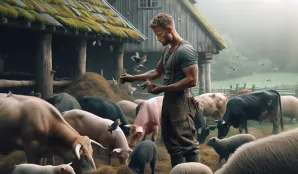
Farmer, breeding, farm pets salary
Latest available salary statistics are for 2025. Compare average pay, salary range and related job listings.
29 000 - 33 900 SEK / month
Women earn 100% of what men do.
Naturbruk
Related tools
Salary progression Farmer, breeding, farm pets
What does a farmer specializing in livestock breeding do? – Tasks and work environment
A farmer specializing in livestock breeding is responsible for managing and developing operations focused on animal husbandry. The work includes daily care of animals such as cows, pigs, sheep, and poultry, monitoring their health, feeding, breeding, and documenting production. In addition, tasks often involve maintenance of machinery, buildings, and grazing land, as well as administration and financial planning. The work environment is both physical and varied, with tasks outdoors or in barns, often year-round and regardless of weather conditions. The profession requires presence during irregular hours, especially during calving, lambing, or other critical periods.
Salary development over time
The salary for a farmer specializing in livestock breeding has shown steady growth in recent years. In 2022, the average salary was 27,200 SEK per month, increasing to 29 400 SEK in both 2023 and 2024. This represents a salary increase of approximately 4.4% from 2022 to 2023, but the salary has remained unchanged since then. This stability is linked to steady demand for the role and a market characterized by narrow margins in agriculture. Despite high workload and significant responsibility, salary growth for this group has not kept pace with some other industries, partly due to price pressures in food production and competition from larger agricultural companies.
Farmer specializing in livestock breeding salary – complete overview
- Average salary: 29 400 SEK/month
- Lowest salary: 27,000 SEK/month (female, private sector, 3-year secondary education)
- Highest salary: 32,500 SEK/month (female, public sector, up to 2-year secondary education)
- Hourly wage (average): 171 SEK
- Gender differences: Men earn on average 29,700 SEK; women 29 300 SEK (women earn 100 % of men's salary)
- Regional differences: Salaries may vary depending on region and type of employer
Education and qualifications
To work as a farmer focusing on livestock breeding, a secondary education in natural resources is usually required, preferably with a specialization in farm animals. Practical experience is highly valued, and many combine education with farm internships. Further training and courses in animal husbandry, economics, or machinery can provide competitive advantages and enable greater responsibility within the operation.
- Secondary education: Natural Resources Program (3 years) with a focus on farm animals
- Certifications: Courses in animal welfare, disease control, and environmental management
- Internships: Recommended during education or through trainee positions on farms
- Prerequisites: Interest in animals and practical work, often B driving license
- Further education: Opportunities for YH (Higher Vocational Education) or continuing education in entrepreneurship and technology
Many farmers involved in animal breeding often combine their profession with other activities, such as crop production or on-farm sales, to diversify risks and generate additional income sources. This versatility makes the profession one of the most dynamic and independent on the countryside.
Common benefits and compensations
Common benefits for a farmer specializing in livestock breeding often include free or subsidized housing on the farm, access to work clothes, and sometimes a company car or work vehicle. Many employers also offer wellness allowances and training opportunities. In family-owned businesses, benefits may include ownership shares or the possibility of gradually taking over the operation.
Competition and challenges
The competition in the profession is characterized by a paradox: many work part-time in the industry, but there are also recruitment difficulties for full-time positions. The work is physically demanding and requires a high level of responsibility, which can deter some applicants. Economic challenges, such as price pressures on animal products and rising costs for feed and energy, affect profitability. Staying updated on animal welfare, legislation, and technology is crucial for success. Despite these challenges, good job opportunities exist, especially for those with the right education and experience.
Tips for those who want to become a farmer specializing in livestock breeding
To succeed as a farmer focusing on livestock breeding, it is important to have a strong sense of responsibility, as animal welfare must always be prioritized. A genuine interest in animals and nature facilitates daily work and makes the job meaningful even during tough periods. Flexibility and problem-solving skills are valuable when dealing with unforeseen events, such as disease outbreaks or machinery breakdowns. Social skills are also important, as many collaborations involve veterinarians, advisors, and other farmers. Lastly, business acumen and the ability to plan long-term are essential, especially for those wanting to run their own business or develop new areas.
Key facts about a farmer specializing in livestock breeding
- Education level: Secondary education (natural resources, 3 years) is most common
- Work environment: Physically demanding, both indoors and outdoors, often irregular hours
- Demand: Great opportunities for employment nationwide, according to the Employment Service
- Typical employment: Self-employed or employed on a farm/agricultural business
- Special skills: Animal care, breeding, machinery, and economics
Career paths and future prospects
After three to five years in the profession, a farmer specializing in livestock breeding can take on greater responsibilities, such as farm manager, farm administrator, or animal production advisor. Many choose to further their education in agricultural economics, animal health, or technology to develop their business or start their own company. The forecast from the Employment Service indicates substantial job opportunities, with demand expected to remain unchanged over the next five years. Recruitment challenges persist in finding full-time workers, making skills and experience highly valued. The most recent data shows 360 job openings in the field, indicating a continued strong labor market.
Frequently asked questions about a farmer specializing in livestock breeding
- What does a farmer specializing in livestock breeding earn?
- The average salary is 29 400 SEK per month, with variations depending on experience, gender, and employer. - What education is required to work as a farmer in this field?
- A secondary education in natural resources, preferably with a focus on farm animals, is most common. - What are the gender differences in salary?
- Women earn 100 % of men's salaries; men have an average of 29,700 SEK, women 29 300 SEK. - What tasks are included in the profession?
- Animal care, feeding, health checks, breeding, farm maintenance, and administration. - What are the future prospects for the profession?
- The Employment Service assesses that job opportunities are plentiful and demand remains stable in the coming years. - What are the highest and lowest salaries in the profession?
- Highest salary: 32,500 SEK (female, public sector). Lowest salary: 27,000 SEK (female, private sector). - Are there regional differences in salary?
- Yes, salaries may vary depending on region and type of employer.

Salary distributed by age and sector
| Age | Base salary | Monthly salary | |
|---|---|---|---|
| 18-24 | 25200 kr | 26300 kr | |
| 25-34 | 28700 kr | 29300 kr | |
| 35-44 | 29700 kr | 30600 kr | |
| 45-54 | 30900 kr | 31400 kr | |
| 55-64 | 29900 kr | 30300 kr | |
| Snitt | 100% | 28700 kr | 29400 kr |
| Age | Base salary | Monthly salary | |
|---|---|---|---|
| 18-24 | 28400 kr | 30800 kr | |
| 25-34 | 99% | 29200 kr | 30800 kr |
| 35-44 | 115% | 31500 kr | 32600 kr |
| 45-54 | 32100 kr | 33400 kr | |
| 55-64 | 98% | 31000 kr | 32400 kr |
| Snitt | 99% | 30300 kr | 31800 kr |
| Age | Base salary | Monthly salary | |
|---|---|---|---|
| 18-24 | 28400 kr | 30800 kr | |
| 25-34 | 99% | 29200 kr | 30800 kr |
| 35-44 | 115% | 31500 kr | 32600 kr |
| 45-54 | 32100 kr | 33400 kr | |
| 55-64 | 98% | 31000 kr | 32400 kr |
| Snitt | 99% | 30300 kr | 31800 kr |
| Age | Base salary | Monthly salary | |
|---|---|---|---|
| 18-24 | 25200 kr | 26200 kr | |
| 25-34 | 28700 kr | 29300 kr | |
| Snitt | 99% | 28600 kr | 29300 kr |
| Age | Base salary | Monthly salary | |
|---|---|---|---|
| 18-24 | 25200 kr | 26200 kr | |
| 25-34 | 28700 kr | 29300 kr | |
| Snitt | 99% | 28600 kr | 29300 kr |
| Age | Base salary | Monthly salary | |
|---|---|---|---|
| Snitt | 100% | 29100 kr | 29500 kr |
| Age | Base salary | Monthly salary | |
|---|---|---|---|
| 25-34 | 99% | 29900 kr | 31000 kr |
| 35-44 | 115% | 28100 kr | 28800 kr |
| 55-64 | 98% | 30300 kr | 32900 kr |
| Snitt | 99% | 29600 kr | 32000 kr |
| Age | Base salary | Monthly salary | |
|---|---|---|---|
| 25-34 | 99% | 29900 kr | 31000 kr |
| 35-44 | 115% | 28100 kr | 28800 kr |
| 55-64 | 98% | 30300 kr | 32900 kr |
| Snitt | 99% | 29600 kr | 32000 kr |
| Age | Base salary | Monthly salary | |
|---|---|---|---|
| Snitt | 99% | 29100 kr | 29500 kr |
| Age | Base salary | Monthly salary | |
|---|---|---|---|
| Snitt | 99% | 29100 kr | 29500 kr |
| Age | Base salary | Monthly salary | |
|---|---|---|---|
| 18-24 | 24200 kr | 25700 kr | |
| 25-34 | 29400 kr | 30000 kr | |
| Snitt | 100% | 28300 kr | 29300 kr |
| Age | Base salary | Monthly salary | |
|---|---|---|---|
| 18-24 | 28300 kr | 30400 kr | |
| 25-34 | 99% | 29100 kr | 30700 kr |
| 35-44 | 115% | 32000 kr | 33100 kr |
| 45-54 | 32300 kr | 33200 kr | |
| 55-64 | 98% | 31100 kr | 32400 kr |
| Snitt | 99% | 30400 kr | 31800 kr |
| Age | Base salary | Monthly salary | |
|---|---|---|---|
| 18-24 | 28300 kr | 30400 kr | |
| 25-34 | 99% | 29100 kr | 30700 kr |
| 35-44 | 115% | 32000 kr | 33100 kr |
| 45-54 | 32300 kr | 33200 kr | |
| 55-64 | 98% | 31100 kr | 32400 kr |
| Snitt | 99% | 30400 kr | 31800 kr |
| Age | Base salary | Monthly salary | |
|---|---|---|---|
| 25-34 | 29400 kr | 30000 kr | |
| Snitt | 99% | 28300 kr | 29300 kr |
| Age | Base salary | Monthly salary | |
|---|---|---|---|
| 25-34 | 29400 kr | 30000 kr | |
| Snitt | 99% | 28300 kr | 29300 kr |

About the data
All information displayed on this page is based on data from the Swedish Central Bureau of Statistics (SCB), the Swedish Tax Agency and the Swedish employment agency. Learn more about our data and data sources here.
All figures are gross salaries, meaning salaries before tax. The average salary, or mean salary, is calculated by adding up the total salary for all individuals within the profession and dividing it by the number of individuals. For specific job categories, we have also considered various criteria such as experience and education.
Profession Farmer, breeding, farm pets has the SSYK code 6121, which we use to match against the SCB database to obtain the latest salary statistics.
-

Stable Assistant Needed for Weekday Mornings – Östra Torns Equestrian Club
Breeders and caretakers of farm animals
Sat, 11 Jul 2026 - 20:33 -

Animal Caretaker for Pig Production – Full Time in Rural Setting
Breeders and caretakers of farm animals
Fri, 10 Jul 2026 - 21:33 -

Stable Technician at Lövsta Agricultural Research, Uppsala
Breeders and caretakers of farm animals
Thu, 9 Jul 2026 - 01:54 -

Employee Wanted for Dairy Farm (600 Cows)
Breeders and caretakers of farm animals
Mon, 6 Jul 2026 - 23:46 -

Animal Caretaker / Farm Manager at Aviagen SweChick AB
Breeders and caretakers of farm animals
Mon, 6 Jul 2026 - 17:44
Compare salary, work tasks and job outlook in adjacent occupations to find roles with similar skills or pay levels.
-

Farmer, mixed plant species salary
Average salary: 31 752 SEK/month • Naturbruk
Growers of agricultural crops, fruit and berries
Compare with Farmer, breeding, farm pets
Mon, 13 Jul 2026 - 15:41 -

Average salary: 29 784 SEK/month • Naturbruk
Breeders and caretakers of pets
Compare with Farmer, breeding, farm pets
Mon, 13 Jul 2026 - 18:43 -

Average salary: 29 400 SEK/month • Naturbruk
Breeders and caretakers of farm animals
Compare with Farmer, breeding, farm pets
Tue, 14 Jul 2026 - 07:13 -

Tenant, breeding, agricultural pets salary
Average salary: 29 400 SEK/month • Naturbruk
Breeders and caretakers of farm animals
Compare with Farmer, breeding, farm pets
Mon, 13 Jul 2026 - 09:58 -

Average salary: 29 784 SEK/month • Naturbruk
Breeders and caretakers of pets
Compare with Farmer, breeding, farm pets
Tue, 14 Jul 2026 - 07:11 -

Operations manager, agriculture, beekeepers and screen growers salary
Average salary: 30 000 SEK/month • Naturbruk
Other animal breeders and animal caretakers
Compare with Farmer, breeding, farm pets
Tue, 14 Jul 2026 - 07:16


