- Salary statistics
- Blaster, metal salary
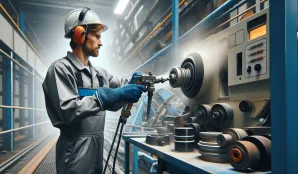
Blaster, metal salary
Latest available salary statistics are for 2025. Compare average pay, salary range and related job listings.
33 300 - 37 200 SEK / month
Women earn 91% of what men do.
Industriell tillverkning
Related tools
Salary progression Blaster, metal
What does a sandblaster in metalwork do – tasks and work environment
A sandblaster in metalwork primarily works with cleaning, grinding, and preparing metal surfaces for further treatment, such as painting or coating. Tasks include using various blasting machines and techniques to remove rust, paint residues, or other contaminants from metal surfaces. The work is often performed in industrial environments, workshops, or large-scale projects where precision and safety are critical. Protective equipment is an essential part of daily work to reduce exposure to dust and noise. Sandblasters often collaborate with other professionals in production and maintenance, which requires good communication and teamwork skills.
Salary development over time
Over the past three years, the salary for sandblasters in metalwork has shown steady growth. In 2022, the average salary was 31,100 SEK per month, rising in 2023 to 35 200 SEK. The latest recorded salary for 2024 is 35,200 SEK, representing an approximate 13% increase over three years. This trend reflects a strong demand for skills in surface treatment, with employers offering competitive wages to attract and retain qualified personnel. Salary increases can also be linked to increased complexity of tasks and higher safety and quality standards in the industry. Despite this positive trend, gender differences persist, with men earning more on average than women in the same role.
Sandblaster, metal salary – comprehensive overview
- Average salary: 35,200 SEK/month
- Lowest salary: 32,400 SEK/month (female)
- Highest salary: 36,200 SEK/month (male, regional sector)
- Hourly wage: 212 SEK/hour
- Gender differences: Men 36 600 SEK, women 32,400 SEK (women earn 91% of men's salary)
- Regional differences: Highest wages are found within the regional sector
Education and qualifications
To work as a sandblaster focusing on metal, a high school education in industry, workshop, or a similar technical program is usually required. Practical experience and knowledge of machinery, work environment, and safety are highly valuable. Many employers also require specific certifications in occupational safety and handling protective equipment. Opportunities for further education and specialization exist, especially for those aiming for more advanced or supervisory roles.
- High school education: Industry or workshop programs, 3 years
- Certifications: Occupational safety training, hot work permits, machine operator licenses
- Practical training: Apprenticeships or internships in industry/workshop
- Prerequisites: Basic technical understanding and familiarity with machinery
- Further education: Possible to specialize via courses or internal training
Many sandblasters develop an exceptional sense of detail and material quality, making them invaluable in restoring older structures or executing specialized projects within the industry. Those who enjoy seeing visible results from their work can find great satisfaction in this profession.
Common benefits and compensations
Sandblasters in metalwork are often offered collective agreement benefits such as occupational pension, insurance, and wellness allowances. Shift and overtime pay are common in many industries, along with access to work clothing and protective gear. Some employers also provide training support and opportunities for skill development.
Competition and challenges
The competition for jobs as a sandblaster in metalwork is generally moderate but can vary depending on regional demand and economic conditions. Challenges include physically demanding environments, exposure to noise and dust, and the need for precision to ensure quality and safety. Technological advances and automation increase demands for digital skills and adaptability. Staying updated on new methods and safety regulations is crucial for maintaining employability and workplace standards. The underrepresentation of women in the profession contributes to gender salary gaps and low female participation.
Tips for those aspiring to become a sandblaster in metalwork
To succeed as a sandblaster in metalwork, attention to detail and responsibility are important, as the quality of work is often closely scrutinized. Following safety routines and being responsible in protective measures are essential, especially in environments with high safety requirements. Good physical endurance helps manage the physically demanding and sometimes monotonous work. Flexibility and teamwork skills are valued by employers, as well as a willingness to continually develop technical skills. Problem-solving ability is beneficial when unexpected challenges arise. For those proactive and eager to learn new methods, opportunities for advancement are good. Finally, being communicative helps ensure clear teamwork, reducing misunderstandings and promoting a safer work environment.
Key facts about Sandblaster, metalwork
- Education level: High school education in industry/workshop
- Work environment: Industrial settings with high safety requirements
- Work pattern: Shift work and/or daytime, often collective agreement
- Demand: 1,437 job openings in 2024
- Gender distribution: Men dominate the profession, women are underrepresented
Career paths and future prospects
After gaining a few years of experience as a sandblaster in metalwork, there are opportunities to move into supervisory roles, quality control, or specialized machine operation within surface treatment. Some choose to further their education to become inspectors or trainers, while others transition to related fields such as material processing or maintenance. Forecasts from the Employment Service show that there is currently no detailed future assessment for this specific role, but within the machine operator and surface treatment group, there are 1,437 job openings, indicating ongoing demand. Developments in automation and new materials may influence job tasks in the future, but the need for skilled sandblasters remains within the industry.
Frequently asked questions about Sandblaster, metalwork
- What is the average salary of a sandblaster in metalwork?
- A sandblaster in metalwork earns an average of 35,200 SEK per month. - What does the salary gap between men and women look like?
- Men earn an average of 36 600 SEK, while women earn 32,400 SEK, meaning women earn 91% of men's salaries. - What education is required to become a sandblaster in metalwork?
- High school education in industry or workshop programs is recommended, often combined with practical training and certifications. - Are there many job openings for sandblasters in metalwork?
- Yes, within the occupational group of machine operators, surface treatment, there were 1,437 job openings in 2024. - What is the highest salary for a sandblaster in metalwork?
- The highest reported salary is 36,200 SEK, belonging to a man in the regional sector with a high school education. - What benefits are usually included in the profession?
- Common benefits include occupational pension, insurance, overtime pay, and wellness allowances. - What are the future prospects for the profession?
- No exact forecast exists, but demand remains stable within the industry, and automation may change job tasks over time.

Salary distributed by age and sector
| Age | Base salary | Monthly salary | |
|---|---|---|---|
| 18-24 | 29900 kr | 33900 kr | |
| 25-34 | 31700 kr | 35400 kr | |
| 35-44 | 32500 kr | 35900 kr | |
| 45-54 | 34100 kr | 37000 kr | |
| 55-64 | 33800 kr | 36500 kr | |
| Snitt | 91% | 32700 kr | 36000 kr |
| Age | Base salary | Monthly salary | |
|---|---|---|---|
| 18-24 | 29900 kr | 33900 kr | |
| 25-34 | 31700 kr | 35400 kr | |
| 35-44 | 32500 kr | 35900 kr | |
| 45-54 | 34100 kr | 37000 kr | |
| 55-64 | 33800 kr | 36500 kr | |
| Snitt | 91% | 32700 kr | 36000 kr |
| Age | Base salary | Monthly salary | |
|---|---|---|---|
| 18-24 | 29900 kr | 33900 kr | |
| 25-34 | 31700 kr | 35400 kr | |
| 35-44 | 32500 kr | 35900 kr | |
| 45-54 | 34100 kr | 37000 kr | |
| 55-64 | 33800 kr | 36500 kr | |
| Snitt | 91% | 32700 kr | 36000 kr |
| Age | Base salary | Monthly salary | |
|---|---|---|---|
| 25-34 | 31900 kr | 35700 kr | |
| 35-44 | 33000 kr | 36500 kr | |
| 45-54 | 34700 kr | 37800 kr | |
| 55-64 | 34500 kr | 37300 kr | |
| Snitt | 91% | 33200 kr | 36600 kr |
| Age | Base salary | Monthly salary | |
|---|---|---|---|
| 25-34 | 31900 kr | 35700 kr | |
| 35-44 | 33000 kr | 36500 kr | |
| 45-54 | 34700 kr | 37800 kr | |
| 55-64 | 34500 kr | 37300 kr | |
| Snitt | 91% | 33200 kr | 36600 kr |
| Age | Base salary | Monthly salary | |
|---|---|---|---|
| 25-34 | 31900 kr | 35700 kr | |
| 35-44 | 33000 kr | 36500 kr | |
| 45-54 | 34700 kr | 37800 kr | |
| 55-64 | 34500 kr | 37300 kr | |
| Snitt | 91% | 33200 kr | 36600 kr |
| Age | Base salary | Monthly salary | |
|---|---|---|---|
| Snitt | 91% | 30700 kr | 33300 kr |
| Age | Base salary | Monthly salary | |
|---|---|---|---|
| Snitt | 91% | 30700 kr | 33300 kr |
| Age | Base salary | Monthly salary | |
|---|---|---|---|
| Snitt | 91% | 30700 kr | 33300 kr |

About the data
All information displayed on this page is based on data from the Swedish Central Bureau of Statistics (SCB), the Swedish Tax Agency and the Swedish employment agency. Learn more about our data and data sources here.
All figures are gross salaries, meaning salaries before tax. The average salary, or mean salary, is calculated by adding up the total salary for all individuals within the profession and dividing it by the number of individuals. For specific job categories, we have also considered various criteria such as experience and education.
Profession Blaster, metal has the SSYK code 8121, which we use to match against the SCB database to obtain the latest salary statistics.
-

Part-time Job in Industry and Warehousing in Falkenberg
Machine operators, surface treatment
Thu, 9 Jul 2026 - 01:16 -

Machine Operator for Paint Factory in Arlöv
Machine operators, surface treatment
Mon, 6 Jul 2026 - 23:28 -

Operator for Production Operations – Day Shift
Machine operators, surface treatment
Mon, 6 Jul 2026 - 22:02 -

Machine Operator for Precision Industry in Northern Stockholm
Machine operators, surface treatment
Sat, 4 Jul 2026 - 01:43 -

We are hiring new employees at Press Kogyo Sweden – Oskarshamn
Machine operators, surface treatment
Fri, 3 Jul 2026 - 22:37
Compare salary, work tasks and job outlook in adjacent occupations to find roles with similar skills or pay levels.
-

Window fitter, manufacturing salary
Average salary: 34 400 SEK/month • Industriell tillverkning
Assemblers, wood products
Compare with Blaster, metal
Mon, 13 Jul 2026 - 20:16 -

Average salary: 39 900 SEK/month • Industriell tillverkning
Machine operators, pharmaceutical products
Compare with Blaster, metal
Mon, 13 Jul 2026 - 13:46 -

Average salary: 40 300 SEK/month • Industriell tillverkning
Machine operators, paper goods industry
Compare with Blaster, metal
Sat, 11 Jul 2026 - 17:51 -

Machine operator, food industry, tea, coffee, cocoa salary
Average salary: 33 700 SEK/month • Industriell tillverkning
Other machine operators, food industry etc.
Compare with Blaster, metal
Tue, 14 Jul 2026 - 04:42 -

Average salary: 32 200 SEK/month • Industriell tillverkning
Other machine operators, textile, leather and leather industry
Compare with Blaster, metal
Mon, 6 Jul 2026 - 15:34 -

Average salary: 34 700 SEK/month • Industriell tillverkning
Machine carpenters and machine operators, wood industry
Compare with Blaster, metal
Tue, 14 Jul 2026 - 01:43


